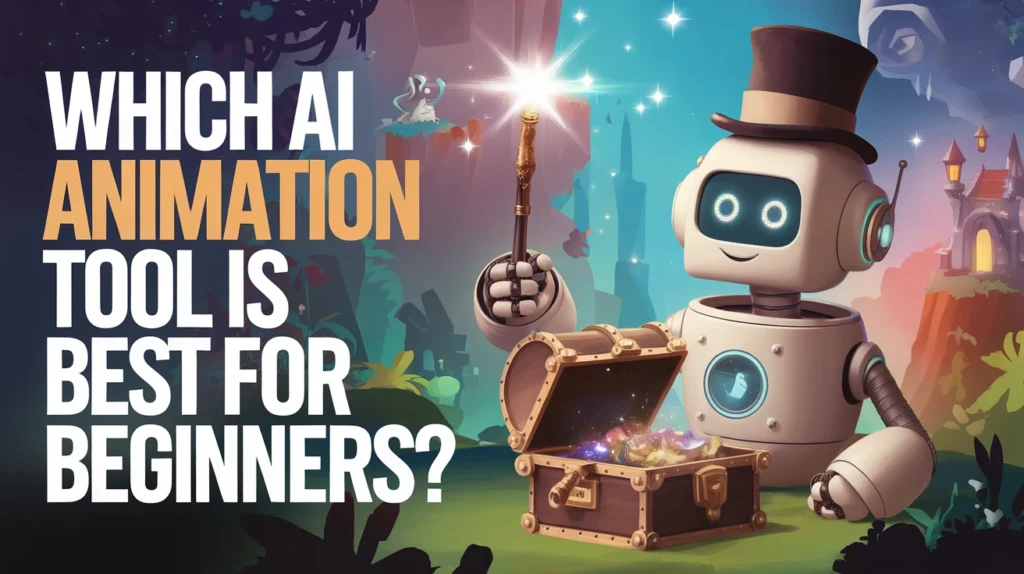
Which AI animation tool is best for beginners is a question many aspiring creators, storytellers, educators, and marketers now ask. With artificial intelligence making animation more accessible than ever, there are countless tools promising to help you bring ideas to life without needing years of technical training. But not all tools are created equal — some are powerful but complex, while others are simple but limited.
In this guide, we’ll dive deep into what makes an AI animation tool beginner-friendly, explore top tools in 2025, compare their strengths, and help you choose the best one for your creative goals.
Why AI Animation Tools Are a Game-Changer for Beginners
Reducing the Technical Barrier
Traditional animation — whether 2D or 3D — typically requires strong skills in drawing, rigging, keyframing, and lip-syncing. AI tools automate many of these tasks:
- Motion capture from video: AI can analyze a video of someone moving and convert that movement into 3D character animation. EduPlix+2Leylinepro+2
- Text-to-video generation: With just a text prompt, AI can generate animated scenes. Leylinepro
- Voice to lip-sync: AI can sync character mouth movements to audio automatically. GoEnhance AI+1
- Templates & assets: Many beginner tools offer pre-designed characters, props, and scenes—no need to draw from scratch. digitalday.co.in+1
All of this means beginners can create animations faster, without investing months or years into learning every technical detail.
Speeding Up the Creative Process
AI-driven animation tools let you iterate quickly. You can try out new ideas, generate scenes, and refine them in a fraction of the time it would take with manual methods.
For example, a prompt-based tool like Pika Labs lets users generate short animated videos in minutes by describing a scene in natural language. Cybernews+1 You can experiment, tweak, and regenerate — that’s a huge advantage for those just starting out.
Lower Cost & Lower Risk
Many AI animation tools have free tiers or affordable entry-level plans. Beginners can test creative ideas without spending heavily on professional-grade animation software or hardware. Darvideo+1
Because the barrier to entry is lower, you can explore what you enjoy animating — whether it’s 2D explainer videos, experimental generative clips, or 3D motion-captured characters — before committing to more advanced or expensive tools.
What “Beginner-Friendly” Means When Choosing an AI Animation Tool
To answer which AI animation tool is best for beginners, it’s helpful to define what “beginner-friendly” means in this context. Here are key attributes:
- No or minimal coding – The tool should let you animate without writing code or building rigs manually.
- Intuitive interface – A clean, drag-and-drop UI or a prompt-based system is ideal.
- High-level automation – Tasks like lip-syncing, motion capture, and camera movement should be handled by AI.
- Asset library – Prebuilt characters, backgrounds, and props help you get started immediately.
- Prompt support – For AI tools that work via text, good prompt guidance matters.
- Export flexibility – You should easily export to common video formats or integrate with other tools.
- Affordability – A free tier, trial, or low-cost plan is crucial for experimentation.
- Learning resources – Tutorials, templates, and community support help you grow.
Top AI Animation Tools for Beginners in 2025
Here are some of the best AI animation tools available now that are particularly well-suited for beginners, along with their pros and ideal use cases.
1. Animaker AI
Why it’s great for beginners
- Offers a drag-and-drop editor with ready-made characters, backgrounds, and props. GoEnhance AI
- Includes AI voice synthesis and lip-sync features. digitalday.co.in+1
- Templates make it easy to create explainer videos, educational content, or marketing clips. GoEnhance AI
- Web-based, so no heavy downloads required.
Ideal for: Marketers, educators, and content creators who want to build animated stories or explainer videos without deep animation skills.
2. Runway ML
Why it’s beginner-friendly
- Powerful text-to-video and image-to-video AI capabilities. EduPlix+1
- Motion tracking and green-screen support to animate existing footage. Leylinepro
- Intuitive web interface; no need to install complex software. Leylinepro
- Real-time collaboration feature, helpful for team projects. EduPlix
Ideal for: Content creators, indie filmmakers, and marketers who want to experiment with generative video and AI-assisted editing.
3. DeepMotion
Why it’s a strong choice for beginners
- AI-powered motion capture – use video input to animate 3D characters. EduPlix
- Auto-rigging for characters, reducing the technical challenge of skeleton setup. EduPlix
- Integrates with popular 3D tools such as Unity and Blender. EduPlix+1
- Cloud processing helps offload computational load.
Ideal for: Beginners interested in realistic 3D character animation, game dev, or virtual production, but who lack motion-capture gear.
4. Kaiber AI
Why beginners may love it
- Converts images or music into animated videos using text prompts or image uploads. EduPlix+1
- Simple storyboard tool helps you plan scene-by-scene. Best AI Agents
- Artistic style options — great for visually creative or musical projects. GoEnhance AI+1
- Offers a free plan or trial so beginners can test. Best AI Agents
Ideal for: Musicians, visual artists, or beginner creators who want to animate photos or combine visuals with music or prompts.
5. Pika Labs
Why it’s beginner-friendly and creative
- Text-to-video generation: you describe a scene, and it animates it. Cybernews
- Offers stylized, experimental visuals—not hyperrealistic, but visually striking. Cybernews+1
- Free plan available (or freemium model) for testing ideas. Cybernews
- Allows creative experimentation without requiring detailed key framing.
Ideal for: Creators, content marketers, and digital artists who want to prototype animated ideas or make short, stylized videos.
6. Synthesia (or HeyGen)
Why it’s great for absolute beginners
- Builds AI avatars that “speak” your text — no animation skills needed. Neta.art
- Works by typing scripts; AI handles lip-sync, gestures, and voice. GoEnhance AI
- Supports multiple languages, making it ideal for training, explainer, or presentation videos. Neta.art
- Very beginner-friendly: you don’t need to draw, animate, or rig anything.
Ideal for: Educators, corporate trainers, marketers, and anyone who wants to produce talking-head or avatar-led videos easily.
7. VideoScribe
Why it’s beginner-friendly
- Focuses on whiteboard-style animation: drag, drop, draw, animate. CyberLink
- Includes a large asset library: icons, sketches, images, scenes. CyberLink
- Intuitive interface with very little learning curve. CyberLink
- AI-powered voice tool for narrating your story directly inside the app. CyberLink
Ideal for: Educators, storytellers, and marketers who want to tell narratives or explain concepts in an easy, hand-drawn style.
8. GoEnhance AI
Why beginners might like it
- Listed among the top AI animation tools because it supports face animation, style conversion, lip-sync, and cartoonification. GoEnhance AI
- Easy-to-use video-to-animation conversion — you can upload real-life video and apply stylized effects. GoEnhance AI
- Designed with beginners in mind, offering simplified controls with powerful outputs.
Ideal for: Social media creators, animators experimenting with style, or anyone wanting to convert real-life footage into animated or stylized video.
Emerging AI Animation Tools & Research to Watch
If you’re exploring which AI animation tool is best for beginners, it’s helpful to also know about tools on the cutting edge or soon-to-be more accessible.
- AnimateDiff: A research framework that lets users animate personalized text-to-image diffusion models. This can make motion generation more accessible. arXiv
- Audio2Rig: A deep learning tool that generates facial animation from audio, designed for stylized facial rigging based on existing production rigs. arXiv
- Puppeteer: A research system that can auto-rig 3D models and generate animations, removing a big technical hurdle for beginners working with static 3D assets. arXiv
These research tools are not always plug-and-play products yet, but they indicate future directions — where AI could make animation even more accessible.
How to Choose Which AI Animation Tool Is Best for You (as a Beginner)
Here are practical steps to decide which AI animation tool is best for beginners in your particular case:
- Define Your Goals
- Are you animating characters, explainer videos, or social media visuals?
- Do you want 2D, 3D, stylized, realistic, or avatar-led animation?
- Consider Your Output Medium
- Will you export to video? Use animations in social media? E-learning modules?
- Make sure the tool supports the output format and quality you need.
- Evaluate Your Comfort with Prompts
- If you prefer describing scenes in text, tools like Pika Labs or Kaiber may be ideal.
- If you want visual drag-and-drop, then Animaker or VideoScribe may suit you more.
- Test Free or Trial Plans
- Take advantage of free tiers or trials to test how intuitive the tool feels.
- Try creating a small animation scene or short clip to explore workflow.
- Check Resource Availability
- Does the tool provide tutorials, templates, or community forums to help you learn?
- For example, Animaker has many templates and resources for beginners. digitalday.co.in
- Assess Cost vs Value
- Look at the pricing, but also think about how much time it saves you.
- Free tiers are great, but if you plan to scale or create more content, you may need a paid plan.
- Look for Integration
- If you’re producing content for a team, check if the tool integrates with your other software (e.g., video editors, collaboration tools).
- Plan for Growth
- Start with a beginner-friendly tool, but choose one that allows you to scale. If you grow into more advanced animation, you want a platform that won’t box you in.
Real-Life Use Cases: How Beginners Are Using These Tools
Educator Making Explainer Videos
- Tool: Animaker AI
- Scenario: A teacher wants to explain complex science topics to students with animated characters and voiceover.
- Workflow: Use Animaker’s template for explainer videos → write a simple script → use AI voice to generate narration → animate scenes with prebuilt props.
- Outcome: A polished, engaging video ready for classroom or online sharing — with little animation experience required.
Indie YouTuber Creating Visual Shorts
- Tool: Runway ML
- Scenario: A content creator wants to make a short generative video for their YouTube channel using prompt-based scenes.
- Workflow: Write descriptive prompts → generate video segments → apply motion tracking and visual effects → export final video.
- Outcome: Artistic, experimental animations that help their channel stand out without hiring an animator.
Musician Making Visual Music Videos
- Tool: Kaiber AI
- Scenario: An independent musician wants to create animated visuals synced to their song.
- Workflow: Upload a still image or album art → input the audio track → let Kaiber animate visuals based on the music → tweak style and scenes → export.
- Outcome: A visually compelling music video without needing a traditional animator or studio.
Corporate Trainer or Educator Producing Avatar Videos
- Tool: Synthesia / HeyGen
- Scenario: A course creator or L&D professional needs to produce “talking head” videos to teach online.
- Workflow: Write the script in plain text → pick an avatar and voice → generate video with lip-sync → download and embed in training modules.
- Outcome: Professional-looking video lectures or corporate training content without hiring actors or video producers.
Pros and Cons: A Comparison for Beginners
Here’s a side-by-side look at advantages and trade-offs for some of the top beginner AI animation tools:
ToolAdvantages for BeginnersPotential LimitationsAnimaker AIVery intuitive, template-based, voice + lip-sync built-inLess suited for very realistic or high-frame-rate 3D animationRunway MLPowerful AI generation and motion; modern UIRendering cost/time; complexity if pushing advanced featuresDeepMotionRealistic motion capture without hardwareRequires footage to animate; not ideal for abstract or stylized scenesKaiber AICreative, image + music-driven animationCredit-based model; quality depends on prompt or input imagePika LabsGenerative, highly creative, prompt-drivenShort video length, stylized output may not suit all use casesSynthesia / HeyGenNo drawing or rigging; script to videoLimited to avatar-style videos; less customizable motionVideoScribeSimple whiteboard-style animations; drag-and-dropNot suited for complex or highly dynamic scenes
Risks & Considerations When Using AI Animation Tools
While AI animation tools make a lot of things easier, beginners should be aware of some common risks and pitfalls:
- Over-reliance on AI
- You might let AI define your creative direction too much and miss developing your own style.
- Prompt Quality
- With text-to-video tools, poor prompts lead to poor animation. You need to learn how to write effective prompts.
- Credit Limits / Pricing
- Many AI tools use credit systems for generation. Running out of credits can stall a project.
- Export & Resolution Limits
- Free or basic plans may limit video resolution or export options.
- Copyright & Licensing
- Be careful with third-party assets. Even AI-generated animations may include copyrighted elements, depending on the tool.
- Data Privacy
- If you’re using real voice or image data (e.g., for motion capture), make sure the tool’s data policy meets your needs.
- Creative Limits
- Some AI tools are not yet as flexible as traditional animation software for extremely custom, frame-by-frame work.
The Future of AI Animation: What Beginners Should Keep an Eye On
- Research Innovations: Tools like AnimateDiff show how diffusion models can generate motion from static images without retraining. arXiv
- Facial Animation from Audio: With research like Audio2Rig, even beginners may soon rig detailed facial expressions using only audio. arXiv
- Automatic Rigging + Animation: Projects like Puppeteer aim to auto-rig 3D models and animate them — a huge step for non-technical creators. arXiv
- More Accessible Agent Tools: As AI animation evolves, we may see “agent”-style AI animators that plan, generate, and iterate animation on behalf of creators, making it even more beginner-friendly.
My Recommendation: Which AI Animation Tool Is Best for Beginners (2025)
If you are asking “which AI animation tool is best for beginners,” here’s my recommendation based on your goals:
- For explainer videos, education, or marketing → Animaker AI is the most beginner-friendly overall.
- For creative, generative animations from text or images → Pika Labs or Kaiber AI shine.
- For character motion and 3D animation derived from real movement → DeepMotion is a powerful but accessible choice.
- For avatar-based video production → Synthesia / HeyGen is ideal if you don’t want to animate but need presenter-style content.
- For whiteboard storytelling → VideoScribe offers simplicity, clarity, and ease for narrative-style animation.
Start with a free plan or trial, make a simple test animation, and see how the tool matches your creative workflow. As you grow more comfortable, you can explore deeper features or even more advanced AI animation tools.
FAQs: Which AI Animation Tool Is Best for Beginners
1. Do I need to know how to draw to use AI animation tools? No. Many beginner-focused AI tools like Animaker, Kaiber, and Synthesia allow you to animate without drawing skills by using templates, text prompts, or AI-driven processes.
2. Which AI animation tool is free for beginners? Several tools offer free tiers or trials: Runway ML, Pika Labs, and Kaiber all provide free or low-cost plans so you can experiment without a big investment. Best AI Agents+1
3. Can AI animation tools be used for professional projects later? Yes — many beginner tools scale. For example, Runway ML is powerful enough for creative professionals, and DeepMotion integrates with Unity and Blender for serious 3D work. EduPlix+1
4. How realistic are AI-generated animations? It depends on the tool. DeepMotion offers very realistic motion capture, while Pika Labs and Kaiber lean more toward stylized or artistic animation. Synthesia’s avatars look professional, but they’re not fully hand-drawn characters.
5. Is AI animation legal or ethical to use? Yes, as long as you respect copyright and licensing rules. Use tools’ terms of service, and be careful when using third-party assets. Also, if you animate someone’s likeness or voice, ensure you have the right permissions.