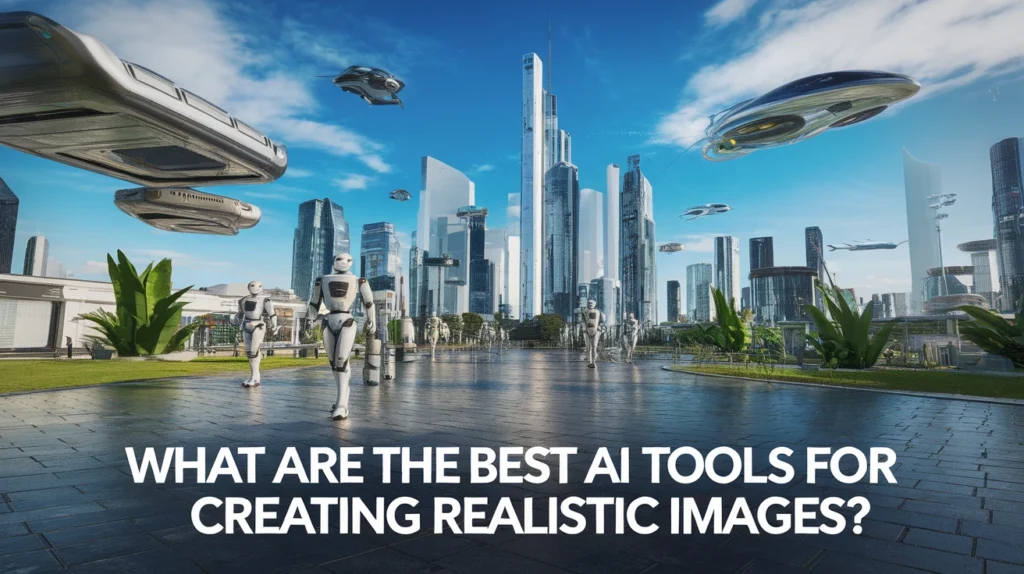
What are the best AI tools for creating realistic images? It’s a question that creative professionals, marketers, and everyday users ask as AI-generated visuals continue to transform design. The need for high-quality, believable images is higher than ever. Whether you work in advertising or e-commerce, or you just enjoy experimenting with new technologies, realistic AI images can elevate your creative work in remarkable ways.
This guide breaks down the top AI image generators, how they work, and how to choose the right one for your goals. It is written with clear, human-focused insights and SEO-optimized structure so you can quickly find what you need. You’ll also see real-world applications, examples, and expert-backed explanations to help you make confident decisions.
Why AI Tools for Realistic Images Matter More Than Ever
The demand for realistic AI images has surged for several reasons. First, businesses want fast, affordable visuals that stand out. Traditional photography is incredible, but it can be slow and expensive. In contrast, AI tools deliver images in seconds. These tools also give creators access to styles, scenes, and concepts that would be impossible or costly to produce manually.
According to insights shared by many creative agencies, brands now use AI-generated visuals for product mockups, lifestyle scenes, advertising campaigns, and even billboard designs. This shift speeds up the production cycle and reduces costs. Therefore, understanding these tools is more than a trend. It is a new creative skill.
Think of AI image generators like digital photographers or illustrators who work 24/7. They follow your instructions and adjust their results instantly. That level of flexibility changes everything.
How Realistic AI Image Generators Work
Before exploring the best tools, it helps to know what happens under the hood. Most AI image generators use deep learning models trained on millions of image–text pairs. They learn the relationships between words and visual elements. As a result, they can create new images that match your description.
Here are the key technologies behind them:
Diffusion Models
Diffusion models add noise to an image and then reverse the process to create clean visuals. They can produce stunning detail and natural textures.
Generative Adversarial Networks (GANs)
GANs use two networks: one creates images, and the other evaluates them. This competition pushes the system to produce highly realistic results.
Large Vision–Language Models
These models combine image understanding with natural language processing. They help tools interpret complex prompts and generate precise images.
These technologies allow AI systems to understand lighting, color, depth, and even emotion. For example, if you request a “sunset over a quiet lake with soft reflections,” the AI identifies key elements such as warm tones, shadows, and the mood suggested by the phrase “quiet.”
The Best AI Tools for Creating Realistic Images in 2025
Below are the most capable and widely trusted AI tools. Each has strengths, weaknesses, and ideal use cases. The following list will help you choose the right one depending on your needs.
DALL·E 3 and DALL·E 4
DALL·E is known for its exceptional realism and prompt accuracy. It excels at lifestyle photos, fictional scenes, illustrations, and product shots. Many designers highlight its ability to understand long, complex prompts and deliver high consistency.
Strengths
- Extremely realistic lighting and textures
- Highly accurate interpretation of prompts
- Great for editorial-style or cinematic images
- Seamlessly removes or adds elements
- Integrates smoothly with ChatGPT for enhanced prompt refinement
Weaknesses
- Limited customization compared with open-source tools
- Can require several prompt iterations for perfect results
Best For
Marketers, social media creators, product designers, and anyone who needs polished visuals quickly.
Midjourney
Midjourney is a favorite among artists and designers. It produces visually stunning, stylized images that still look realistic. Many users describe its aesthetics as “cinematic” or “high art.” It tends to enhance details beautifully, making each image feel handcrafted.
Strengths
- Artistic and dramatic visual output
- Advanced control over styles and composition
- Highly active creative community
- Excellent for portrait realism and landscapes
Weaknesses
- Requires Discord for access
- Sometimes over-stylizes images
- Less accurate for highly technical product visuals
Best For
Artworks, branding concepts, mood boards, digital portraits, and creative experimentation.
Adobe Firefly
Adobe Firefly integrates deeply with Photoshop, Illustrator, and Express. Its biggest advantage is the ability to generate realistic content within professional design workflows. Firefly’s “Generative Fill” feature is especially powerful for photo editing.
Strengths
- Professional-grade editing tools
- Strong brand safety focus
- Great for extending backgrounds and modifying images
- Ideal for marketing and commercial use
Weaknesses
- May look slightly less realistic than Midjourney or DALL·E in some cases
- Subscription required
Best For
Graphic designers, agencies, and brands already using Adobe Creative Cloud.
Stable Diffusion XL (SDXL)
Stable Diffusion XL is the leading open-source AI model for image generation. It offers impressive realism and extensive customization. Unlike closed platforms, you can run SDXL locally, protecting privacy and giving full creative control.
Strengths
- Fully customizable
- Strong developer community
- Supports advanced fine-tuning
- Ideal for highly unique or niche image styles
Weaknesses
- Requires technical knowledge
- Hardware-heavy for local setups
- Can take time to master
Best For
Developers, experienced creators, and privacy-focused teams.
Runway Gen-2
Runway is a powerful visual creation platform used in filmmaking, content creation, and motion design. Gen-2 supports both image and video generation. While it may not be as popular for static images, it still produces realistic visuals, especially in cinematic styles.
Strengths
- Excellent for creative storytelling
- AI video generation included
- Easy-to-use interface
- High-quality motion and scene consistency
Weaknesses
- Less control for high-detail product shots
- Focuses more on video than still photography
Best For
Filmmakers, YouTubers, social media creators, and production studios.
Canva AI Image Generator
Canva’s AI image generator is built for speed and simplicity. You can create images, use templates, and design complete graphics all in one place. While it’s not as advanced as Midjourney or DALL·E, it is ideal for beginner-friendly, realistic image creation.
Strengths
- Very easy to use
- Fast generation
- Integrated with thousands of templates
- Great for marketing materials and social posts
Weaknesses
- Limited realism compared with premium tools
- Less control over fine details
Best For
Small business owners, beginners, and social media managers.
Top Tools Comparison Table
Use this table to compare the tools at a glance:
ToolRealism LevelBest Use CaseEase of UseCustomizationDALL·E 3/4★★★★★Lifestyle, productsEasyMediumMidjourney★★★★★Artistic visualsMediumHighAdobe Firefly★★★★☆Editing, commercialEasyMediumStable Diffusion XL★★★★★Custom projectsHardVery HighRunway Gen-2★★★★☆Video, cinematic scenesEasyMediumCanva AI★★★☆☆Social mediaVery EasyLow
What Makes an AI Image Realistic?
Not all AI images look believable. Some look too smooth or too perfect. Others have texture issues or odd lighting. To choose the best tool for realistic output, consider these key factors:
Lighting
Realistic lighting reflects natural shadows, soft highlights, and ambient tones.
Texture
Human skin, fabrics, metals, and water all have distinct textures. Accurate texture makes an image feel real.
Depth
3D depth, perspective, and background blur add dimension.
Anatomy
For portraits, human anatomy and facial structure must look natural.
Detail
Fine details such as hair strands, reflections, and micro shadows enhance realism.
Consistency
Objects should fit the scene logically. For example, a product should match the environment around it.
When an AI tool combines all these elements, the result is a photo that could pass for reality.
How to Write Better Prompts for Realistic Images
Even the best AI tools depend on your prompts. Good prompts act like instructions to a photographer. Clear guidance creates better results.
Here are strategies for writing effective prompts:
Be Specific
Explain the subject, setting, mood, and style. Example: “A stainless steel water bottle on a wooden table with warm morning light.”
Add Photography Terms
Words such as “macro,” “bokeh,” “high dynamic range,” and “soft shadows” enhance realism.
Include Emotional Tones
Describe the feeling or atmosphere: cozy, dramatic, peaceful, or mysterious.
Define Colors and Textures
Warm tones, rough textures, matte surfaces, or glossy finishes all shape the output.
Provide Camera Details
This works especially well in Midjourney, SDXL, and DALL·E. Example: “Shot with a 50mm lens at f1.8.”
Use Negative Prompts
Some tools let you exclude elements such as distortion, extra fingers, or noise.
Real-World Uses of AI-Generated Realistic Images
AI-generated images already support many industries. Here are real-world scenarios where realistic visuals make a major impact.
Marketing and Advertising
Brands use AI to create lifestyle scenes for product campaigns. For example, a small business owner can generate photos of a coffee mug in a cozy living room or modern office without staging a photoshoot.
E-Commerce
Online stores create product mockups fast. In addition, AI helps test different background styles, lighting conditions, and layouts for A/B testing.
Film and Entertainment
Filmmakers use AI for concept art, storyboards, and visual planning. It reduces pre-production costs and speeds up idea development.
Architecture and Interior Design
Designers generate room layouts, furniture styles, and exterior visuals to present concepts to clients.
Social Media
Influencers create unique posts, thumbnails, and background scenes instantly.
Education and Research
Teachers and researchers use images to explain complex topics with simple visuals.
A Case Study: How AI Images Boosted a Small Brand’s Sales
Imagine a small handmade soap brand struggling with product photography. Hiring a photographer for every new scent became expensive. The founder turned to realistic AI tools to create background scenes that matched each scent’s mood.
For example, they generated a lavender-scented soap image placed on a soft purple towel with fresh lavender sprigs nearby. The result looked professionally photographed.
After updating product pages, the brand saw higher engagement and more sales. This real-life scenario shows how AI tools create opportunities for businesses with limited budgets.
Choosing the Best AI Tool: Key Questions to Ask
Before selecting an AI image generator, answer these questions:
- What is your primary goal? Are you creating product visuals, artistic scenes, or marketing content?
- Do you prefer simplicity or full control? Canva is simple. SDXL offers deep customization.
- What budget are you working with? Some tools require subscriptions. Others are free or open-source.
- Do you need commercial usage rights? Always review licensing policies.
- How important is resolution? Large projects may require high-resolution export options.
- Do you need video generation later? If so, Runway may be ideal.
Answering these questions will narrow your choices and help you find the perfect tool.
How AI Tools Impact Creativity
Some people worry that AI might replace the creative process. In reality, AI acts more like a supportive partner. It speeds up idea exploration and helps creators reach results that would take days manually.
For example, imagine creativity as a mountain. Climbing it without tools takes time and effort. AI is like a powerful hiking companion who helps you reach the summit faster while still letting you choose the path.
AI enhances, not replaces, human imagination.
Pros and Cons of Using AI for Realistic Images
Here is a balanced view to help you make informed decisions.
Pros
- Fast and efficient
- Affordable compared with traditional photography
- Highly customizable
- Accessible for beginners
- Great for creative exploration
- Offers photo editing and enhancement tools
Cons
- May create inaccuracies
- Overuse can lead to generic visuals
- Ethical concerns about training data
- Some tools add watermarks or licensing limits
Common Mistakes to Avoid
While using AI tools, avoid these pitfalls:
- Writing vague prompts
- Ignoring lighting and style descriptions
- Choosing low-resolution outputs
- Forgetting to check commercial rights
- Over-editing images, which may reduce realism
- Using too many adjectives, making prompts confusing
A strong prompt should be clear yet descriptive.
Conclusion: The Best AI Tools for Creating Realistic Images Today
In conclusion, what are the best AI tools for creating realistic images? The answer depends on your goals, skills, and creative style. DALL·E and Midjourney lead in realism and aesthetics. Adobe Firefly excels in professional editing. Stable Diffusion XL offers unmatched customization. Canva and Runway serve beginners and video creators well.
As AI technology grows, these tools will become even more powerful. Whether you create product images, artistic visuals, or cinematic scenes, AI gives you unlimited creative possibilities. Now is the perfect time to explore these tools and elevate your work.
FAQs About the Best AI Tools for Creating Realistic Images
What are the best AI tools for creating realistic images for beginners?
Canva AI, Adobe Firefly, and DALL·E are great for beginners. They are easy to use and offer clean, realistic results. Most users can start creating within minutes.
Which AI tool creates the most realistic images?
Midjourney and DALL·E are known for exceptional realism. They handle lighting, texture, and detail extremely well. However, Stable Diffusion XL can match them with the right setup and prompts.
Are AI-generated images safe to use for commercial projects?
Yes, many tools offer commercial usage rights. Always double-check each platform’s licensing terms. Adobe Firefly and DALL·E provide clear guidelines.
Can AI replace traditional photography?
AI can supplement photography but not fully replace it. Real photographers capture emotion, spontaneity, and authenticity. AI works best for mockups, concepts, and digital scenes.
How can I make my AI images more realistic?
Use precise prompts, photography terms, and detailed descriptions. Adding lighting, textures, and camera settings helps. You can also refine outputs with a photo editor.