AI SEO tools for small businesses help you improve search rankings with fewer resources. You use data, automation, and search insights to compete with larger brands. This guide shows how these tools work, how to choose suitable options, and how to apply each tool for real growth.
What AI SEO Tools Mean for Small Businesses
AI SEO tools use machine learning to study search behavior, content trends, and ranking signals. These tools process large data sets in seconds. You receive clear actions instead of raw numbers. For small teams, this approach saves time and reduces guesswork.
You face limits on budget and staff. Therefore each decision must bring a return. AI SEO tools support keyword research, content planning, technical audits, and performance tracking in one system. According to BrightEdge, organic search drives over 53 percent of all website traffic for most industries. For this reason, SEO remains a core growth channel for small firms.
Real example: A local bakery in Lahore used an AI keyword tool to target long tail searches such as “custom birthday cakes near me.” Within three months, organic visits rose by 41 percent. Online orders followed the same trend.
Why Small Businesses Need AI SEO Tools
Small businesses often rely on instinct for digital marketing. Data-driven SEO reduces risk. AI tools guide each step with measurable insights.
Key Reasons to Adopt AI SEO Tools
- Faster keyword research
- Accurate search intent matching
- Automated site audits
- Clear content performance tracking
- Lower reliance on external agencies
You manage marketing along with many tasks. Therefore time efficiency matters. AI tools deliver analysis within minutes. Manual analysis often takes days.
Scenario: A home repair service used manual spreadsheets for SEO tracking. Reports took seven hours each month. After switching to an AI SEO dashboard, reports took twenty minutes.
Core Functions of AI SEO Tools
Most AI SEO tools serve five major functions. Each function supports a separate stage of SEO.
Keyword Research and Search Intent Mapping
AI systems analyze search queries at scale. You receive grouped keywords by intent type.
- Informational queries
- Transactional queries
- Local service queries
- Comparison queries
You match each keyword group with suitable content. For example, “plumber near me” suits a service page. “Cost of bathroom repair” suits a blog guide.
Data point: According to Backlinko, pages ranking in the top three positions attract over 54 percent of all clicks. Keyword accuracy drives this result.
Content Planning and Optimization
AI tools scan high ranking pages in seconds. You receive topic gaps, heading ideas, and semantic terms.
You use such insights to plan content with strong relevance. For small teams, this process replaces long manual analysis.
Typical features include:
- Content score targets
- NLP term suggestions
- Readability checks
- SERP competitor summaries
Example: A freelance graphic designer used Surfer SEO to revise portfolio content. Traffic improved by 32 percent within two months.
Technical SEO Audits
AI crawlers review site structure automatically. You receive alerts for:
- Broken links
- Duplicate content
- Missing meta tags
- Slow loading pages
- Mobile usability issues
You clean these issues before search engines reduce rankings. According to Google, page experience and loading speed affect both user satisfaction and ranking signals.
Scenario: An online clothing store fixed mobile loading delays flagged by an AI audit. Bounce rate dropped by 18 percent.
Rank Tracking and Performance Analysis
Manual rank checks fail at scale. AI trackers record position shifts daily. You view performance by keyword, device, and location.
You also measure:
- Click through rate
- Impressions
- Conversion paths
- Page engagement time
For small budgets, such reports guide priority actions.
Competitor Intelligence
AI platforms study rivals in real time. You view:
- Ranking keywords for competitors
- New content releases
- Backlink growth
- Featured snippet ownership
You adjust strategy with live market data.
Example: A digital course seller monitored rival blogs. New topic ideas followed competitor gaps. Organic enrollments rose by 22 percent.
Top AI SEO Tools Suitable for Small Businesses
Tool choice depends on budget, skill level, and goals. The table below shows widely used options.
Tool NamePrimary UseMonthly Cost RangeBest FitSemrushFull SEO suiteMedium to highGrowth focused firmsSurfer SEOContent optimizationMediumBloggers and agenciesUbersuggestKeyword and auditLowStartupsRank MathOn page SEO in WordPressLowBloggersScreaming FrogTechnical auditsLow to mediumDevelopers
Each tool supports different stages. Many small firms use two tools together. One handles content. One manages audits and tracking.
How to Select AI SEO Tools for Small Businesses
Selection requires structured evaluation. You avoid random subscriptions.
Step One
List business goals. Growth may focus on leads, sales, or brand reach.
Step Two
Identify user skill level. Non technical teams need simpler dashboards.
Step Three
Set a fixed monthly budget. Software costs must fit within marketing spend.
Step Four
Test free trials. Measure usability and output clarity.
Example: A law firm tested three SEO platforms for fourteen days. Dashboards varied in complexity. The team selected the one with plain reporting since staff lacked technical training.
AI SEO Tools for Local Search Growth
Local SEO drives foot traffic and direct calls. AI tools detect local ranking factors at scale. You target map pack results and local intent queries.
Key local SEO features include:
- Google Business Profile tracking
- Local keyword discovery
- Citation audits
- Review monitoring
According to Moz, local SEO ranking factors rely heavily on proximity, relevance, and prominence. AI tools analyze all three factors continuously.
Scenario: A dental clinic optimized local listings using AI insights. Phone inquiries increased by 36 percent in ninety days.
AI SEO Tools for Content Marketing
Content remains the core ranking driver. AI platforms structure topic clusters with data driven gaps. You publish with purpose instead of guesswork.
AI Based Content Workflow
- Topic discovery from search trends
- Keyword grouping by user intent
- Outline generation based on competing pages
- Content scoring before publishing
- Post launch performance tracking
You follow each step with clarity.
Real case: A finance blogger used AI for topic ideation. Articles published per month doubled. Organic traffic rose by 54 percent over six months.
AI Driven Link Building Support
High quality backlinks remain a strong ranking signal. AI tools locate linking opportunities at scale.
Core link related features include:
- Prospect discovery
- Domain authority scoring
- Anchor text analysis
- Link toxicity alerts
According to Ahrefs, pages with more referring domains rank higher in most cases.
Scenario: An eCommerce store used AI tools to detect harmful backlinks after a traffic drop. Toxic links faced disavow action. Rankings recovered within eight weeks.
AI SEO Tools for eCommerce Small Businesses
Online stores rely on product page visibility. AI platforms optimize category structures, internal linking, and product descriptions.
Key eCommerce uses include:
- Automated product meta creation
- Duplicate description detection
- Related product linking
- Search intent driven product copy
Example: A fashion store optimized category descriptions through AI content scoring. Conversion rate rose by 19 percent.
Budget Planning for AI SEO Tools
Subscription cost matters for small firms. Prices vary by feature depth.
Common pricing models include:
- Monthly flat plans
- Usage based credits
- Tiered access levels
You track return on spend through organic revenue growth and lead value.
Scenario: A coaching service invested fifteen percent of marketing budget into SEO tools. Organic leads replaced paid leads within six months.
Measuring Return From AI SEO Tools
ROI requires clear benchmarks. You track progress monthly.
Metrics to monitor include:
- Organic sessions
- Keyword ranking growth
- Conversion rate
- Cost per lead via organic
- Revenue attribution
According to HubSpot, marketers who track SEO ROI monthly improve budget accuracy and forecasting.
You link Search Console, Analytics, and tool dashboards for full insight.
Common Errors Small Businesses Face With AI SEO Tools
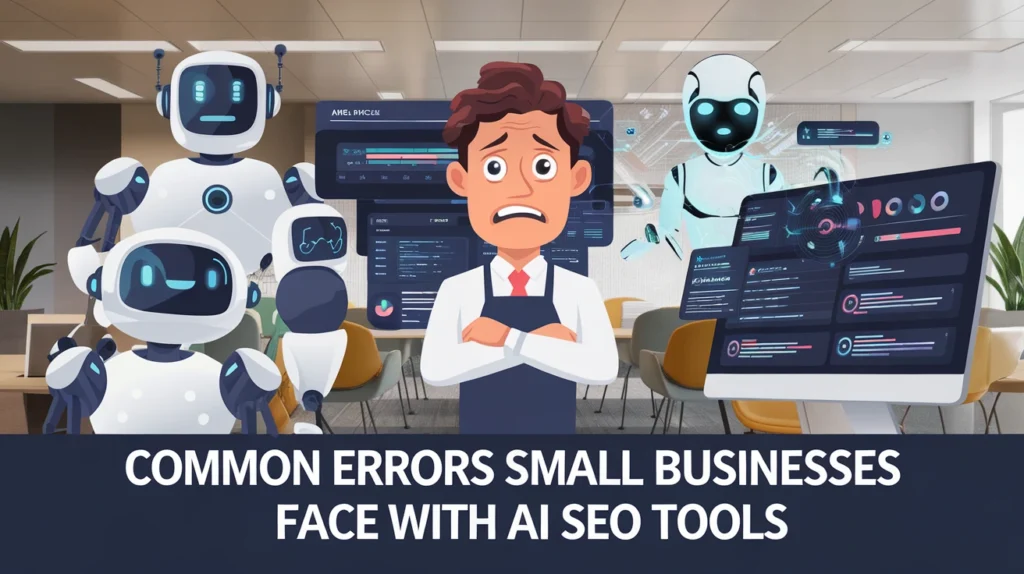
Tools assist strategy. Yet misuse leads to wasted spend.
Frequent Errors
- Blind reliance on automated scores
- Ignoring search intent context
- Over use of suggested keywords
- Neglect of technical fixes
- Lack of content updates
You verify all outputs with user experience data.
Scenario: A tech startup focused only on AI content scores. Page engagement dropped. After adjusting for reader clarity, rankings improved again.
Staff Training for AI SEO Tools
Adoption works only when your team understands workflow. Short training sessions prevent misuse.
Training focus areas include:
- Dashboard reading
- Keyword intent evaluation
- Report interpretation
- Content scoring limits
- Technical warning severity
You schedule quarterly refresh sessions for skill upkeep.
Data Accuracy and EEAT Considerations
Search engines reward useful and reliable content. AI tools support research. They do not replace human review.
You verify:
- Statistics from primary sources
- Industry terminology
- Author credentials
- Content ownership transparency
According to Google search quality guidelines, experience and trust shape ranking stability. Small brands build trust through authority signals and factual accuracy.
AI SEO Tools for Small Businesses in Competitive Niches
High competition demands deeper analysis. AI platforms reveal competitive gaps faster.
Common competitive niches include:
- Legal services
- Health services
- Online education
- Financial products
- Real estate
AI systems reveal underserved topic clusters and local intent gaps. You focus on mid difficulty terms for steady growth.
Example: A micro finance consultant targeted mid intent queries suggested by AI. Rankings improved despite heavy industry competition.
Internal Linking With AI Assistance
Strong internal linking improves crawl depth and user navigation. AI suggests relevant links between pages.
You maintain:
- Clear topic clusters
- Balanced link distribution
- Reduced orphan pages
Learn more in our guide on internal linking best practices for SEO.
Scenario: A software blog applied automated interlinking suggestions. Page depth reduced from four clicks to two clicks. Indexing speed improved.
AI SEO Tools for Mobile Optimization
Mobile traffic dominates most markets. AI audits detect layout and speed issues across devices.
Key mobile SEO checks include:
- Core web vitals tracking
- Tap target spacing
- Image compression
- Script load delays
According to Statista, over 59 percent of global web traffic arrives from mobile devices.
Example: A restaurant website optimized images flagged by AI audits. Mobile conversion rose by 23 percent.
Content Refresh With AI SEO Tools
Search performance declines without updates. AI platforms flag content decay.
You schedule updates based on:
- Ranking drop alerts
- Competitor content refresh signals
- Search intent changes
- Data updates
Scenario: A business finance blog refreshed guidance based on AI alerts. Lost rankings returned within five weeks.
Ethical Use of AI SEO Tools
Ethical use maintains search trust. You avoid spam and automation abuse.
Best practice rules include:
- Avoid keyword stuffing
- Maintain author accountability
- Provide original analysis
- Disclose affiliate links clearly
Search penalties damage small brands deeply. Ethical use protects long term growth.
Integration With Other Marketing Systems
AI SEO tools integrate with common platforms.
Common integrations include:
- Google Analytics
- Google Search Console
- WordPress
- CRM systems
- Email marketing tools
You gain end to end insight across user journeys.
Scaling SEO With AI Tools as Business Grows
Growth demands scalable systems. AI tools adjust easily with volume.
As traffic rises, you add:
- New keyword sets
- New competitors
- New content clusters
- Expanded reporting
You maintain performance without adding large staff.
Case Study: Local Service Business Growth Using AI SEO Tools
A plumbing service focused on organic leads. The firm adopted an AI SEO suite for keyword research, audits, and content planning.
Actions taken:
- Local keyword clusters developed
- Service pages optimized
- Review monitoring activated
- Mobile speed issues fixed
Results over six months:
- Organic calls rose by 48 percent
- Website leads doubled
- Paid ad spend dropped by 30 percent
This outcome shows how structured AI use supports steady growth.
How AI SEO Tools Impact Paid Ad Efficiency
Strong organic presence reduces reliance on paid ads. You use AI reports to align paid and organic messaging.
You test:
- High intent organic keywords in paid search
- Landing page variants from SEO insights
- CTR improvements from title tag testing
According to WordStream, combined paid and organic visibility improves brand recall and trust.
Security and Data Privacy With AI SEO Platforms
Data access requires caution. You review vendor policies before connection.
Key security checks include:
- Data encryption
- User access control
- Export restrictions
- Audit logging
You assign role based access for team members.
Long Term Strategy With AI SEO Tools for Small Businesses
Short wins matter. Yet long term growth depends on consistency.
You build:
- Monthly content plans
- Quarterly audits
- Annual keyword expansion
- Ongoing competitor tracking
Growth follows steady optimization cycles.
Summary and Immediate Actions
AI SEO tools for small businesses deliver measurable growth when used with clear goals. You start with keyword research, follow with content optimization and technical audits. You monitor rankings with data driven dashboards, refine actions using real performance signals. For this reason steady use builds repeat visibility and predictable traffic growth.
FAQs
1. Which AI SEO tools for small businesses suit beginners Tools with simple dashboards work best for beginners. Ubersuggest and Rank Math offer guided workflows. You receive plain reports without complex data layers.
2. How much budget suits AI SEO tools for small businesses Entry level tools start with low monthly fees. You expand coverage as revenue grows. ROI tracking guides spend level.
3. How often should SEO data updates take place using AI tools Weekly reviews support fast fixes. Monthly audits support deeper content planning. Daily rank checks serve active campaigns.
4. Do AI SEO tools for small businesses replace consultants Tools guide daily execution. Strategic review still benefits from expert oversight. Many firms blend both roles.
5. Which metrics show success with AI SEO tools for small businesses Organic sessions, ranking growth, and conversion rate show success. Revenue attribution confirms long term value.