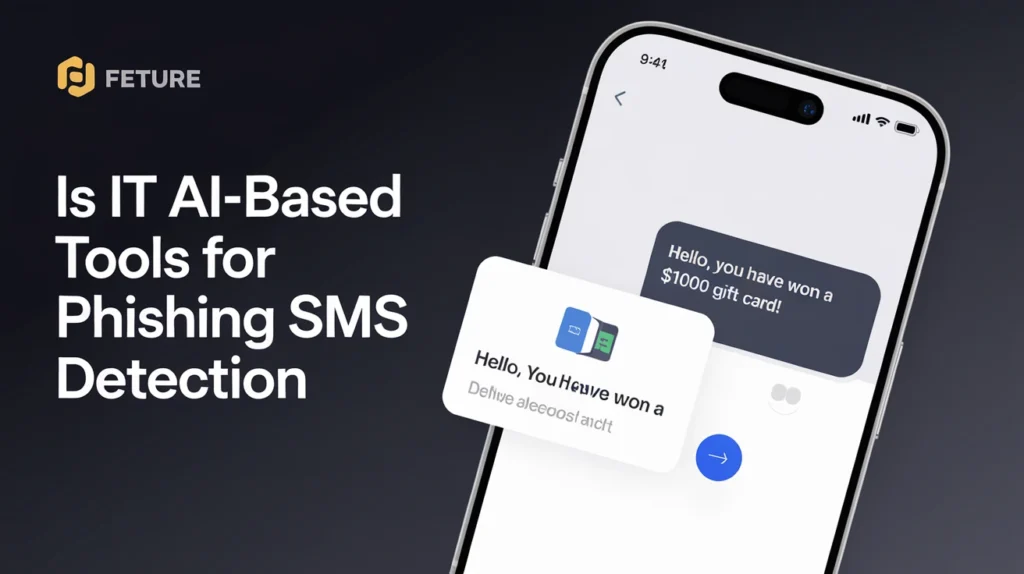
Is it AI-based tools for phishing SMS detection stands as a critical question for anyone who relies on mobile messaging for work, banking, or daily communication. Phishing SMS attacks, also called smishing, target users through deceptive text messages. These messages attempt to steal credentials, financial data, or personal information. Therefore, understanding how AI-based detection works helps protect your identity, your business, and your customers.
Cybercriminals continue to refine SMS scams. Traditional rule-based filters fail to keep pace. AI-based tools now play a central role in identifying and stopping phishing SMS attacks before damage occurs. This guide explains how these tools function, why they matter, and how you should adopt them for personal or organizational security.
Understanding Phishing SMS Threats
What phishing SMS attacks look like today
Phishing SMS attacks rely on urgency, fear, or rewards. Attackers impersonate banks, delivery services, government agencies, or employers. Messages often request immediate action through malicious links or phone numbers.
A common example involves a fake delivery notice. The message claims a missed package and asks for address confirmation. Once the recipient clicks the link, attackers collect login details or payment data. Therefore, awareness of these patterns remains essential.
Why SMS phishing remains effective
SMS messages enjoy high open rates. Many users trust text messages more than email. Mobile screens also hide full URLs, which limits visual verification. As a result, phishing SMS campaigns achieve strong engagement.
According to the Federal Trade Commission, SMS-based scams account for billions in reported losses each year. Telecom providers struggle to block every malicious sender. Therefore, advanced detection approaches became necessary.
Real-life scenario
A small business owner receives a text posing as a bank fraud alert. The message urges immediate verification. Without AI-based filtering, the message reaches the inbox. The owner clicks the link and enters credentials. Funds disappear within minutes. This scenario repeats daily across regions and industries.
Is It AI-Based Tools for Phishing SMS Detection and Why AI Matters
How AI changes SMS threat detection
Is it AI-based tools for phishing SMS detection focuses on pattern recognition rather than static rules. AI models analyze message content, sender behavior, language structure, and delivery patterns. Therefore, detection improves as new attack styles emerge.
Traditional filters rely on keyword blocking. Attackers bypass those filters through spelling changes or shortened links. AI systems analyze deeper signals such as intent and contextual meaning.
Core AI techniques used in detection
AI-based phishing SMS detection relies on several methods:
- Natural language processing for text analysis
- Machine learning classification models
- Behavioral analysis of sender activity
- URL reputation scoring
- Network anomaly detection
Each method adds a layer of protection. Combined systems reduce false positives and missed threats.
Example from enterprise security
A financial institution deploys an AI-based SMS firewall. The system monitors inbound messages to employees. When attackers launch a campaign using a new bank impersonation format, the AI flags unusual phrasing patterns. Security teams block the messages within minutes. Loss prevention succeeds due to adaptive learning.
How AI Models Detect Phishing SMS Content
Natural language processing in SMS analysis
Natural language processing examines word choice, syntax, tone, and intent. Phishing messages often include urgency signals such as immediate action requests or account suspension warnings.
AI models compare incoming messages against millions of labeled examples. Therefore, detection focuses on meaning rather than surface keywords.
Behavioral context evaluation
AI systems evaluate sender behavior across time. A sender who contacts thousands of recipients within minutes triggers risk signals. Message timing, frequency, and geographic distribution also matter.
For example, a number sending identical messages across regions within seconds raises suspicion. AI correlates such behavior with known attack patterns.
URL and link intelligence
Many phishing SMS attacks include shortened links. AI-based tools expand URLs, analyze hosting domains, and compare results with threat intelligence databases. Therefore, users receive warnings before opening dangerous links.
Real-life use case
A telecom provider integrates AI-based SMS scanning. When a new shortened link appears across multiple messages, the system expands the link and detects a newly registered domain. The platform blocks delivery across the network within seconds.
Types of AI-Based Tools for Phishing SMS Detection
Telecom-level detection platforms
Telecom providers deploy AI tools at the network layer. These systems analyze message traffic before delivery. Large-scale pattern detection allows early campaign disruption.
Advantages include broad coverage and fast response. Limitations include reduced personalization for individual users.
Enterprise security solutions
Enterprises deploy AI-based SMS security platforms for employee protection. These tools integrate with mobile device management systems and security operations centers.
Key features include:
- Real-time alerts
- User reporting integration
- Incident investigation dashboards
- Compliance reporting
A healthcare organization uses such tools to protect staff from fake patient portal messages.
Consumer-focused mobile apps
Several mobile apps offer AI-powered SMS filtering. These apps analyze messages locally or through cloud-based engines. Users receive alerts or automatic message blocking.
Examples include spam detection apps from mobile OS providers. These tools rely on federated learning to protect privacy.
Benefits of Using AI-Based Tools for SMS Phishing Defense
Improved detection accuracy
AI systems learn from vast datasets. Detection accuracy improves with exposure to new attack types. Therefore, users receive protection against both known and emerging threats.
Reduced false positives
Rule-based filters often block legitimate messages. AI models balance sensitivity with context awareness. Therefore, business-critical messages reach recipients without unnecessary disruption.
Scalability across regions
AI tools scale across languages and regions. Multilingual NLP models detect phishing content in diverse markets. Global organizations benefit from unified protection.
Operational efficiency
Security teams save time through automated detection. AI handles initial screening, while analysts focus on investigation and response.
Challenges and Limitations of AI-Based SMS Detection
Data quality and bias
AI performance depends on training data quality. Poorly labeled datasets reduce accuracy. Therefore, vendors must maintain robust data pipelines.
Adversarial adaptation
Attackers adapt tactics to bypass detection. AI systems require continuous retraining. Static models lose effectiveness over time.
Privacy considerations
SMS content analysis raises privacy concerns. Ethical implementations rely on anonymization, consent, and regulatory compliance. Organizations must align with data protection laws.
Example challenge scenario
A regional bank deploys AI-based detection without proper tuning. The system flags legitimate customer alerts as phishing. Customer complaints increase. After retraining with localized data, accuracy improves.
Selecting the Right AI-Based Phishing SMS Detection Tool
Key evaluation criteria
When choosing a tool, focus on these factors:
- Detection accuracy metrics
- Model update frequency
- Integration options
- Compliance certifications
- Vendor transparency
Therefore, procurement teams should request performance benchmarks and real-world case studies.
Questions to ask vendors
- How frequently does the model retrain
- Which data sources support threat intelligence
- How does the platform handle multilingual content
- What privacy safeguards exist
Clear answers indicate maturity and reliability.
Internal linking suggestion
Learn more in our guide on mobile security risk assessments for enterprises.
Implementing AI-Based SMS Detection in Organizations
Deployment strategies
Organizations typically deploy AI-based tools through:
- Telecom partnerships
- Mobile device management integration
- Security gateway deployment
Each approach suits different risk profiles and budgets.
User education and reporting
AI detection improves when users report suspicious messages. Feedback loops help models learn faster. Therefore, training employees on reporting procedures strengthens protection.
Metrics for success
Track performance through:
- Phishing SMS detection rates
- User-reported incidents
- False positive trends
- Incident response time
Regular reviews support continuous improvement.
Regulatory and Compliance Considerations
Data protection laws
SMS content analysis must align with regulations such as GDPR and CCPA. Vendors should offer data minimization and retention controls.
Industry standards
Financial services and healthcare sectors face stricter requirements. AI-based tools should support audit trails and compliance reporting.
Expert perspective
According to cybersecurity analysts at Gartner, adaptive AI-based detection reduces SMS phishing exposure significantly when paired with governance controls.
Future Trends in AI-Based SMS Phishing Detection
Advanced language models
Future systems rely on deeper semantic understanding. Context-aware models detect subtle social engineering cues.
Cross-channel correlation
AI tools increasingly correlate SMS data with email and voice threats. Unified detection improves campaign visibility.
Collaborative intelligence sharing
Telecoms and enterprises share anonymized threat data. Collective defense strengthens ecosystem resilience.
Practical Steps You Should Take Today
For individuals
- Enable AI-powered spam filtering on mobile devices
- Avoid clicking unknown links
- Report suspicious messages promptly
For businesses
- Assess SMS exposure risk
- Pilot AI-based detection platforms
- Train staff on phishing awareness
Immediate action reduces attack success rates.
FAQs About Is It AI-Based Tools for Phishing SMS Detection
Is it AI-based tools for phishing SMS detection effective for individuals
AI-based tools protect individual users by analyzing message content and sender behavior. Mobile apps and built-in OS filters offer strong baseline defense. Consistent reporting improves accuracy over time.
Is it AI-based tools for phishing SMS detection suitable for small businesses
Small businesses benefit from AI-based SMS detection through reduced fraud risk. Cloud-based solutions offer affordable deployment options. These tools scale with business growth.
Is it AI-based tools for phishing SMS detection reliable across languages
Modern AI models support multilingual analysis. Detection accuracy improves with diverse training data. Global organizations gain consistent protection across regions.
Is it AI-based tools for phishing SMS detection compliant with privacy laws
Reputable vendors design platforms with privacy safeguards. Data anonymization and compliance certifications support lawful deployment. Organizations must review vendor practices carefully.
Is it AI-based tools for phishing SMS detection replacing user awareness
AI tools support defense but user awareness remains essential. Training complements automated detection. Combined approaches deliver stronger security outcomes.
Final Takeaway and Action Plan
Is it AI-based tools for phishing SMS detection represents a necessary evolution in mobile security. SMS phishing attacks continue to grow in scale and sophistication. AI-based detection offers adaptive, scalable, and accurate defense for individuals and organizations.
You should evaluate current SMS exposure today. Deploy AI-based tools aligned with your risk profile. Educate users and monitor performance metrics. These steps reduce fraud, protect data, and strengthen trust across communication channels.