You’re scrolling through messages late at night, half-focused, when a friend replies with a quick “ofc.” No punctuation, no extra words—just three letters. You pause for a second. You know what it means… or at least you think you do. “Of course,” right? But why does such a simple abbreviation carry so much tone, intention, and even emotion depending on how it’s used?
In today’s fast-moving digital world, small phrases like “ofc” do more than save time—they shape how we communicate, connect, and interpret each other. Whether it’s used to reassure someone, brush something off, or subtly express attitude, “ofc” is far more layered than it seems at first glance.
This article explores the meaning of “ofc” in depth—breaking down its usage, emotional nuances, real-life scenarios, and hidden implications. By the end, you’ll not only understand what it means but also how to read between the lines when you see it—and use it more effectively yourself.
What Does “OFC” Mean?
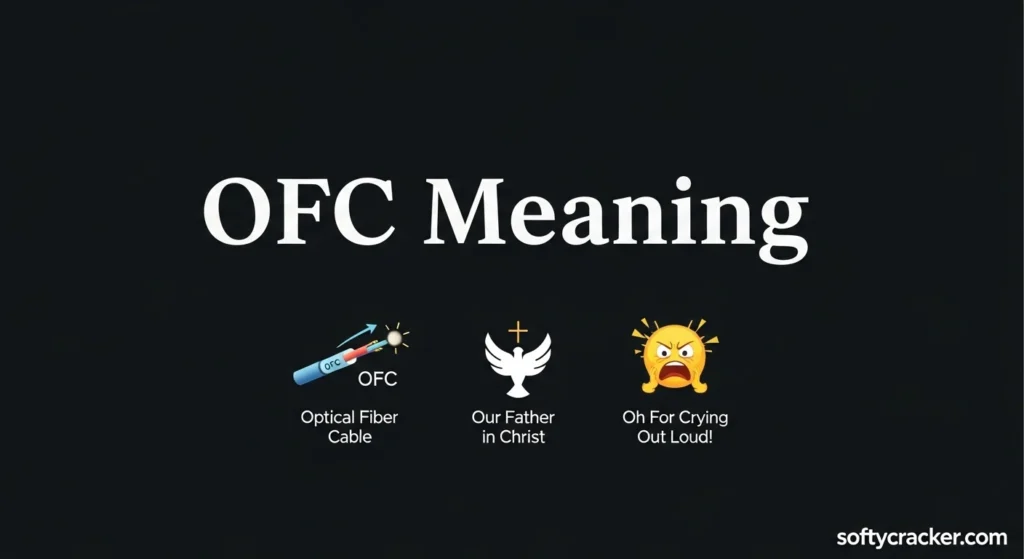
At its core, “ofc” is a shorthand abbreviation for the phrase “of course.” It’s commonly used in texting, social media, and casual online conversations to express agreement, affirmation, or reassurance.
But while the literal meaning is simple, the way it’s perceived can vary depending on context, tone, and relationship dynamics.
For example:
- “Can you help me with this?” → “ofc”
- “You forgot again?” → “ofc I did 🙄”
Both use the same abbreviation, yet they convey completely different emotional undertones.
In essence, “ofc” acts as a linguistic shortcut, but also as a subtle emotional signal. It can mean:
- Yes, definitely
- Obviously
- No problem
- Or even sarcasm in certain contexts
Understanding “ofc” requires more than just knowing its definition—it requires paying attention to the situation it appears in.
The Rise of Shortened Language in Digital Communication
The popularity of “ofc” didn’t happen randomly. It’s part of a broader shift toward brevity in communication.
As messaging platforms became dominant, people naturally started shortening words to type faster and communicate more efficiently. “Of course” became “ofc,” just like “you” became “u” and “because” became “bc.”
This evolution reflects a deeper change in how we think about communication:
- Speed often matters more than formality
- Clarity is sometimes sacrificed for convenience
- Tone is inferred rather than explicitly stated
“OFC” fits perfectly into this system. It’s quick, widely understood, and flexible enough to fit many conversational contexts.
However, this convenience also introduces ambiguity. Without tone of voice or facial expression, a simple “ofc” can sometimes be misinterpreted.
The Emotional Tone Behind “OFC”
One of the most interesting aspects of “ofc” is how much emotional weight it can carry despite being so short.
Depending on how it’s used, “ofc” can feel:
- Warm and supportive
- Neutral and casual
- Dismissive or sarcastic
Supportive Tone
When someone says “ofc!” in response to a request, it often signals eagerness to help.
Example: “Can you stay a bit longer?” “ofc!”
Here, it feels friendly and reassuring.
Neutral Tone
Sometimes it’s just a quick acknowledgment.
Example: “Did you send the file?” “ofc”
No strong emotion—just confirmation.
Sarcastic Tone
In other cases, it can carry subtle irritation.
Example: “Another delay?” “ofc…”
Now it suggests frustration or inevitability.
The key takeaway is that “ofc” doesn’t have a fixed emotional meaning—it adapts to the context.
When “OFC” Feels Genuine vs. Automatic
There’s a subtle difference between using “ofc” thoughtfully and using it out of habit.
When it’s genuine, it feels intentional:
- It reassures the other person
- It strengthens trust
- It communicates willingness
But when it’s automatic, it can feel:
- Dismissive
- Lazy
- Lacking emotional depth
Example Comparison
Genuine: “Can I count on you?” “ofc, I’ve got you.”
Automatic: “Can I count on you?” “ofc”
The second response isn’t wrong, but it feels less engaged. Over time, these small differences can shape how people perceive your communication style.
“OFC” in Different Social Contexts
“OFC” doesn’t mean the same thing in every environment. Its interpretation shifts depending on where and how it’s used.
Friends and Casual Conversations
Among friends, “ofc” is relaxed and friendly. It often signals closeness and ease.
Example: “Are you coming tonight?” “ofc!”
Professional Settings
In work environments, “ofc” can sometimes feel too informal.
Example: “Will you handle this task?” “ofc”
It may come across as lacking professionalism unless the workplace culture is casual.
Online Communities
On platforms like forums or social media, “ofc” is widely accepted and often used to express agreement quickly.
Understanding your audience is key to using it appropriately.
The Role of Context in Interpreting “OFC”
Context is everything when it comes to interpreting “ofc.”
The same word can mean different things depending on:
- The previous message
- The relationship between people
- The timing of the response
Example Scenarios
Scenario 1: Quick Reply “Can you send it now?” “ofc”
This feels efficient and cooperative.
Scenario 2: Delayed Reply “Can you send it now?” (2 hours later) “ofc”
Now it feels slightly off—maybe careless or inattentive.
Context shapes meaning more than the word itself.
How “OFC” Reflects Personality and Communication Style
Interestingly, how often and how someone uses “ofc” can reveal aspects of their personality.
People who use it frequently may:
- Prefer quick, efficient communication
- Be comfortable with informal language
- Value simplicity over elaboration
On the other hand, those who avoid it might:
- Prefer clarity and full sentences
- Be more formal or expressive
- Pay closer attention to tone
Neither approach is better—it’s just a reflection of communication style.
Common Misunderstandings of “OFC”
Because “ofc” is so short, it’s prone to misinterpretation.
Some common misunderstandings include:
Assuming Sarcasm
Sometimes a simple “ofc” is taken as rude when it wasn’t intended that way.
Overestimating Enthusiasm
Adding “ofc” doesn’t always mean strong excitement—it might just be habitual.
Ignoring Tone Indicators
Without emojis or punctuation, tone becomes harder to read.
These misunderstandings highlight the limitations of text-based communication.
“OFC” vs. Similar Expressions
“OFC” isn’t the only way to express agreement. It exists alongside similar phrases, each with slightly different nuances.
“Sure”
More neutral and polite.
“Definitely”
Stronger and more enthusiastic.
“Obviously”
Can sound confident—or sarcastic.
“No problem”
Focuses on reassurance.
“OFC” sits somewhere in the middle—casual, flexible, and context-dependent.
The Psychology Behind Using Short Responses
Why do we prefer short responses like “ofc”?
It often comes down to cognitive efficiency.
Short phrases:
- Reduce effort
- Speed up interaction
- Keep conversations flowing
However, they also:
- Limit emotional expression
- Increase ambiguity
- Require interpretation
This balance between efficiency and clarity is at the heart of modern communication.
When You Should (and Shouldn’t) Use “OFC”
Knowing when to use “ofc” can improve how your messages are received.
Use It When:
- The conversation is casual
- You want to respond quickly
- The tone is already friendly
Avoid It When:
- The situation is formal
- Emotional clarity is important
- The message could be misinterpreted
Being intentional with your language makes a noticeable difference.
Adding Tone: Emojis, Punctuation, and Variations
You can modify “ofc” to better express tone.
Examples:
- “ofc!” → enthusiastic
- “ofc :)” → warm and friendly
- “ofc…” → hesitant or sarcastic
These small additions help reduce ambiguity and make your message clearer.
Real-Life Scenarios Where “OFC” Matters
Consider how “ofc” plays out in everyday life:
Helping a Friend
“Can you talk?” “ofc”
Simple, reassuring, and supportive.
Group Planning
“Are you joining us?” “ofc!”
Shows excitement and participation.
Subtle Frustration
“Another problem?” “ofc…”
Hints at annoyance without stating it directly.
These examples show how much meaning can fit into just three letters.
The Evolution of Language Through Abbreviations
“OFC” is part of a larger linguistic shift toward abbreviation-based communication.
Over time, these shortcuts:
- Become widely accepted
- Gain nuanced meanings
- Reflect cultural trends
Language is constantly evolving, and “ofc” is a small but meaningful example of that evolution in action.
Practical Tips for Using “OFC” Effectively
To use “ofc” well, keep a few principles in mind:
- Match your tone to the situation
- Consider how the other person might interpret it
- Add context when needed
- Avoid overusing it in important conversations
Communication isn’t just about what you say—it’s about how it’s received.
Conclusion
“OFC” may seem like a simple abbreviation, but it carries surprising depth. It can reassure, confirm, dismiss, or even express sarcasm—all depending on context and tone. In a world where communication is increasingly fast and text-based, understanding these nuances becomes essential.
By paying attention to how and when you use “ofc,” you can communicate more clearly and avoid misunderstandings. And by learning to read between the lines, you’ll better understand what others really mean when they use it.
In the end, it’s not just about saving time—it’s about preserving connection in even the shortest messages.
FAQs
What does “ofc” stand for?
“OFC” stands for “of course,” a phrase used to express agreement, confirmation, or reassurance.
Is “ofc” considered rude?
Not inherently, but it can feel dismissive depending on context and tone.
Can “ofc” be used in professional communication?
It’s generally better to avoid it in formal settings unless the environment is very casual.
Does “ofc” always mean yes?
Mostly yes, but it can also imply sarcasm or inevitability in certain contexts.
How can I make “ofc” sound more friendly?
Adding an exclamation mark or emoji, like “ofc!” or “ofc 😊,” can make it warmer.
Is “ofc” the same as “sure”?
They are similar, but “ofc” can feel slightly more casual and context-dependent.
Why do people use “ofc” instead of “of course”?
Primarily for speed and convenience in digital communication.