You’re scrolling through your messages late at night, half-focused, half-distracted, when a short reply pops up: “cm?” For a second, you pause. Is it a typo? A code? A hidden meaning? In a world where communication moves at lightning speed, even two tiny letters can carry multiple interpretations depending on the context, tone, and relationship between people.
That’s exactly why understanding what “CM” means in text is more important than it seems. It’s not just about decoding slang—it’s about avoiding confusion, responding appropriately, and staying socially aware in digital conversations. Whether you’re chatting with friends, replying to a colleague, or navigating online communities, “CM” can shift meaning in subtle but important ways.
In this guide, we’ll break down everything you need to know about “CM”—from its most common meanings to deeper interpretations, real-life examples, emotional context, and practical usage. By the end, you won’t just know what it stands for—you’ll understand how to read between the lines when you see it.
CM Meaning in Text: The Basics Explained
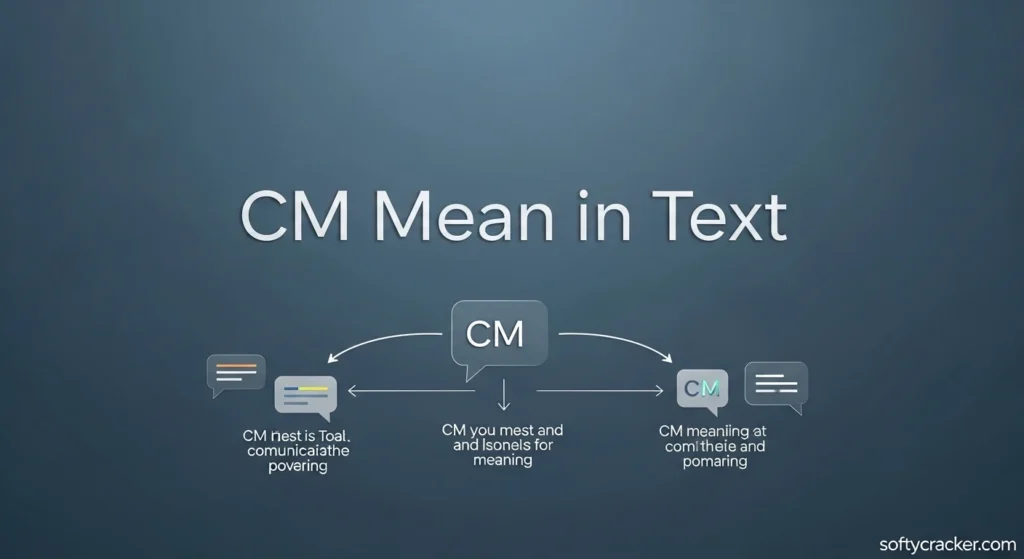
At its core, “CM” is an abbreviation that can represent different phrases depending on the context. Unlike widely fixed slang terms, “CM” is flexible and often depends on who is using it and where it appears.
The most common meanings include:
- Call Me
- Check Message
- Come
- Community Manager (in professional contexts)
What makes “CM” interesting is how casually it blends into conversations. Someone might type “cm later” assuming you instantly understand it as “call me later.” But without context, it can feel vague or even confusing.
Think of “CM” as a shortcut—a quick way to compress a longer message into something faster. In fast-paced texting environments, especially on messaging apps or social media, this kind of abbreviation helps people communicate efficiently.
However, efficiency sometimes comes at the cost of clarity. That’s why understanding the surrounding words, tone, and relationship between speakers is essential.
Why “CM” Has Multiple Meanings
Language in digital spaces evolves differently than traditional language. Instead of strict definitions, meanings are shaped by usage patterns, communities, and trends.
“CM” developed multiple meanings because:
- People prefer shorter messages
- Context fills in missing details
- Different communities adopt different shorthand
For example, in a gaming chat, “cm” might mean “come,” as in joining a team or moving to a location. In contrast, in a business Slack channel, “CM” might refer to a Community Manager role.
This fluidity reflects how humans naturally adapt language. Instead of relying solely on fixed meanings, we interpret based on experience and environment.
So when you see “CM,” your brain is actually doing quick contextual analysis—figuring out what makes the most sense in that moment.
“CM” as “Call Me”: The Most Common Usage
One of the most widely recognized meanings of “CM” is “Call Me.” It’s simple, direct, and often used when texting feels insufficient.
When People Use “Call Me”
- When something is too complex to explain via text
- When urgency is involved
- When emotional tone matters
For example:
“Hey, cm when you’re free.”
This message suggests the sender wants a more personal or detailed conversation. It may signal importance or even concern.
Emotional Context Behind “Call Me”
“CM” in this sense often carries emotional weight. It can mean:
- “I need to talk about something important”
- “This isn’t something I want to text”
- “I want to hear your voice”
So even though it’s just two letters, it can signal urgency, intimacy, or seriousness.
“CM” as “Check Message”: A Subtle Reminder
Another common interpretation is “Check Message.” This is typically used when someone wants you to notice something they’ve already sent.
Example Scenario
Imagine you missed a message earlier, and someone follows up with:
“cm pls”
In this case, they’re likely asking you to go back and read a previous message.
Why People Use It
- To avoid repeating themselves
- To gently nudge without sounding pushy
- To keep conversations efficient
This version of “CM” is more passive than “call me.” It’s not urgent—it’s more like a reminder.
“CM” as “Come”: Informal and Context-Based
In casual conversations, especially among younger users or in gaming/chat environments, “CM” can simply mean “come.”
Example Usage
- “cm here” → Come here
- “cm fast” → Come quickly
This usage is highly context-dependent and often appears in:
- Online games
- Group chats
- Informal texting
Why It Works
Short commands are easier to type quickly, especially during fast-paced interactions. In environments where speed matters, abbreviations like “CM” become natural.
Professional Meaning of CM: Community Manager
Outside casual texting, “CM” often stands for Community Manager, especially in professional or digital marketing contexts.
Where You’ll See This
- Job titles
- LinkedIn posts
- Marketing discussions
- Social media teams
Example
“We need a new CM for our brand.”
Here, “CM” clearly refers to a role, not an action.
Why This Matters
If you misinterpret this meaning in a professional setting, it could lead to confusion or miscommunication. Context is everything—especially when switching between personal and professional conversations.
How Context Changes the Meaning of “CM”
Understanding “CM” isn’t about memorizing definitions—it’s about reading context.
Key Factors to Consider
1. Relationship
- Friend → Likely casual meaning (call me, come)
- Boss → Likely professional meaning
2. Platform
- WhatsApp → Informal
- Email → Formal
3. Tone
- Urgent tone → “Call me”
- Neutral tone → “Check message”
Real-Life Example
Message:
“cm now”
Interpretations:
- From a friend → “Call me now”
- From a gamer → “Come now”
Same text, completely different meanings.
Emotional Signals Hidden in “CM”
Even simple abbreviations carry emotional undertones.
“CM” Can Signal:
- Urgency
- Curiosity
- Concern
- Authority
For instance:
- “cm asap” → urgency
- “cm?” → curiosity
- “cm now” → command or importance
Recognizing these subtle signals helps you respond appropriately and avoid misunderstandings.
Common Misunderstandings of “CM”
Because “CM” has multiple meanings, it’s easy to misinterpret.
Typical Mistakes
- Assuming it always means “call me”
- Ignoring context clues
- Overthinking simple messages
Example
Someone sends:
“cm here”
You might think they want a call—but they actually mean “come here.”
Misunderstandings like this can lead to awkward or delayed responses.
How to Respond When You See “CM”
The best response depends on context.
If It Means “Call Me”
- Call them directly
- Or reply: “Can I call in 10 minutes?”
Else If It Means “Check Message”
- Review previous messages
- Respond accordingly
If It Means “Come”
- Acknowledge quickly
- Act if relevant
If Unsure
- Ask for clarification
“Do you mean call or come?”
Clarity always beats assumption.
“CM” in Social Media and Online Culture
On platforms like Instagram, Discord, or Snapchat, “CM” appears frequently due to the culture of brevity.
Why It’s Popular
- Saves time
- Fits character limits
- Matches fast communication styles
Trend Insight
Short abbreviations like “CM” are part of a broader shift toward:
- Minimal typing
- Instant responses
- Context-based understanding
It reflects how digital communication prioritizes speed over detail.
Real-Life Scenarios Where “CM” Appears
Scenario 1: Friends Chatting
“cm later bro” Meaning: Call me later
Scenario 2: Gaming
“cm base now” Meaning: Come to base
Scenario 3: Workplace
“Our CM will handle it” Meaning: Community Manager
Scenario 4: Follow-Up Message
“cm pls” Meaning: Check message
These examples show how versatile—and context-sensitive—“CM” really is.
Practical Tips to Understand Text Abbreviations Like “CM”
1. Look at the Full Conversation
Don’t isolate the message—read what came before.
2. Consider the Sender
Different people use abbreviations differently.
3. Pay Attention to Tone
Urgency vs casual tone changes meaning.
4. Don’t Hesitate to Ask
Clarifying avoids mistakes.
5. Learn Common Patterns
The more you see “CM,” the easier it becomes to interpret.
The Bigger Picture: What “CM” Teaches About Communication
“CM” is more than just an abbreviation—it’s a reflection of how communication is evolving.
We’re moving toward:
- Faster exchanges
- Shorter messages
- Context-driven understanding
But with that comes a challenge: clarity can sometimes be lost.
Understanding terms like “CM” isn’t just about slang—it’s about becoming a better communicator in a digital world.
Conclusion
“CM” may look like a simple two-letter abbreviation, but its meaning can shift dramatically depending on context, tone, and environment. Whether it stands for “call me,” “check message,” “come,” or even “community manager,” the key to understanding it lies in reading between the lines. By paying attention to who sent it, where it appears, and how it’s used, you can interpret it accurately and respond with confidence.
In a world where communication is becoming faster and more condensed, mastering small details like this makes a big difference. Instead of guessing or misinterpreting, you’ll be able to navigate conversations smoothly and naturally. And ultimately, that’s what effective communication is all about—clarity, connection, and understanding, even in just two letters.
FAQs
What does CM mean in texting?
CM usually means “Call Me,” “Check Message,” or “Come,” depending on context.
Is CM always used for “call me”?
No, although “call me” is common, it can also mean other things like “come” or “check message.”
How do I know what CM means in a message?
Look at the context, tone, and relationship with the sender to determine the correct meaning.
What does CM mean in professional chats?
In professional settings, CM often stands for “Community Manager.”
Is CM considered slang?
Yes, in casual texting it’s considered informal slang or shorthand.
Should I use CM in formal communication?
It’s better to avoid abbreviations like CM in formal emails or professional writing.
What should I do if I don’t understand CM?
Ask for clarification—it’s the simplest way to avoid confusion.