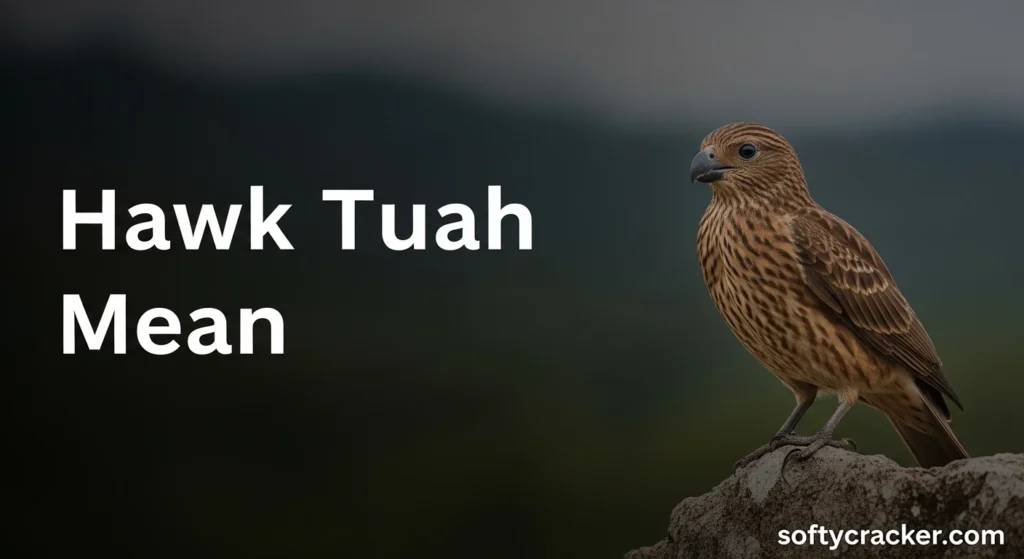
Imagine scrolling through your feed late at night, half-distracted, when suddenly a short clip stops you in your tracks. Someone laughs, leans forward, and says a phrase that sounds oddly expressive—“hawk tuah.” It’s unexpected, a little shocking, and somehow unforgettable. Within hours, it’s everywhere: memes, comments, reactions, and debates. You might find yourself wondering—what does it actually mean, and why has it captured so much attention so quickly?
“Hawk tuah” is more than just a quirky phrase. It’s a perfect example of how internet culture transforms a simple sound into a layered form of communication. What began as a spontaneous moment has evolved into a widely recognized slang expression, carrying humor, exaggeration, and cultural nuance. Understanding it isn’t just about decoding a phrase—it’s about understanding how people communicate, joke, and connect in the digital age. This article explores the meaning, context, interpretations, and real-life implications of “hawk tuah,” helping you see why it resonates far beyond its original moment.
The Basic Meaning of “Hawk Tuah”
At its core, “hawk tuah” is an onomatopoeic expression—a phrase designed to imitate a sound. Specifically, it mimics the act of spitting. The words themselves don’t have a literal dictionary definition; instead, their meaning comes from how they sound and the context in which they are used.
The phrase gained traction because it exaggerates a very recognizable human action. When someone says “hawk tuah,” they are essentially recreating the sound of clearing one’s throat and spitting in a dramatic, almost theatrical way. This exaggeration is what makes it memorable and humorous.
However, the meaning doesn’t stop at the surface level. In many online contexts, “hawk tuah” is used metaphorically or suggestively, often implying boldness, confidence, or an unapologetic attitude. It can also carry adult humor depending on how and where it’s used.
What makes it interesting is that its meaning isn’t fixed. Like many viral phrases, it shifts depending on tone, audience, and situation. For some, it’s just a funny sound effect. For others, it represents a moment of raw, unfiltered expression.
How “Hawk Tuah” Became Viral
The rise of “hawk tuah” is a textbook example of how internet virality works. It didn’t emerge from a carefully planned campaign or a scripted performance. Instead, it came from a spontaneous moment captured on camera.
The Power of Authentic Moments
People are naturally drawn to authenticity. The original moment felt real, unscripted, and slightly outrageous—qualities that make content highly shareable. Viewers felt like they were witnessing something genuine rather than staged.
Social Media Amplification
Platforms like TikTok, Instagram, and X (formerly Twitter) played a major role in spreading the phrase. Short-form video content thrives on quick, memorable moments, and “hawk tuah” fits perfectly into that format.
Meme Culture at Work
Once the phrase entered meme culture, it took on a life of its own. Users began remixing it, adding captions, and using it in unexpected contexts. This adaptability is key to any viral trend’s longevity.
In a matter of days, “hawk tuah” transformed from a single clip into a widespread cultural reference.
The Role of Humor in Its Popularity
Humor is central to why “hawk tuah” resonates with so many people. It’s not just what the phrase means—it’s how it’s delivered.
The exaggerated sound itself is inherently funny. It’s bold, slightly absurd, and a bit shocking. This combination creates a kind of humor that feels spontaneous and unfiltered.
There’s also an element of surprise. Most people don’t expect to hear something like “hawk tuah” in a casual conversation. That unexpectedness makes it more memorable.
Additionally, humor often thrives on shared understanding. When people recognize the reference, it creates a sense of belonging. Laughing at the same joke—even a simple one—can build a subtle connection between strangers.
In this way, “hawk tuah” isn’t just a phrase—it’s a shared comedic experience.
Cultural Context and Interpretation
To fully understand “hawk tuah,” it’s important to consider cultural context. Not everyone interprets it the same way, and that’s part of what makes it so interesting.
In some communities, it’s seen as harmless humor—a playful exaggeration of a common sound. In others, it may carry more suggestive or edgy connotations.
Cultural background, age, and familiarity with internet slang all influence how the phrase is perceived. Younger audiences, especially those active on social media, are more likely to understand and embrace it quickly.
Meanwhile, those less immersed in digital culture might find it confusing or even inappropriate.
This variation in interpretation highlights a broader truth: language is fluid. The meaning of a phrase isn’t just in the words themselves—it’s shaped by the people who use it.
The Suggestive Layer: Why It Sparks Debate
One reason “hawk tuah” has sparked discussion is its suggestive undertone in certain contexts. While the phrase itself mimics a spitting sound, it’s often used in ways that imply something more adult.
This dual meaning creates a kind of tension. On one hand, it’s playful and comedic. On the other, it can be interpreted as provocative or explicit.
Why Suggestiveness Drives Engagement
Content that sits on the edge of appropriateness tends to attract attention. It invites reactions, comments, and debates—all of which increase visibility.
Different Comfort Levels
Not everyone is comfortable with this kind of humor. Some people enjoy the boldness, while others prefer more subtle or family-friendly content.
The Line Between Humor and Offense
The phrase illustrates how easily humor can cross into controversial territory. What’s funny to one person might feel inappropriate to another.
Understanding this dynamic helps explain why “hawk tuah” is both widely محبوب and occasionally criticized.
Real-Life Scenarios Where It’s Used
To see how “hawk tuah” functions in everyday communication, it helps to look at real-life scenarios.
Casual Conversations
Friends might use the phrase jokingly to exaggerate a situation or mimic a dramatic reaction. It’s often accompanied by laughter and a lighthearted tone.
Social Media Comments
Online, “hawk tuah” appears in comment sections as a reaction. It might be used to emphasize something bold, shocking, or unexpectedly funny.
Meme Captions
Creators often use the phrase as a caption to add humor or attitude to an image or video. It works especially well in exaggerated or over-the-top scenarios.
In each case, the phrase acts as a kind of expressive shortcut—conveying emotion and humor without needing a full explanation.
Why People Relate to It
Part of the appeal of “hawk tuah” lies in its relatability. While the phrase itself is unusual, the underlying idea—expressing something boldly and without filter—is something many people understand.
Everyone has moments where they feel unrestrained, where they say or do something without overthinking it. “Hawk tuah” captures that energy in a simple, memorable way.
It also taps into a broader desire for authenticity. In a world where much of what we see online is curated and polished, raw, unfiltered moments stand out.
The phrase becomes a symbol of that authenticity—imperfect, spontaneous, and real.
The Psychology Behind Viral Slang
The success of “hawk tuah” isn’t random. It follows patterns that psychologists and communication experts have observed in viral content.
Simplicity
The phrase is short and easy to remember. This makes it more likely to be repeated and shared.
Emotional Impact
It triggers a reaction—whether it’s laughter, surprise, or curiosity. Emotional responses increase engagement.
Repetition
As more people use the phrase, it becomes familiar. Familiarity, in turn, makes it feel more acceptable and widely understood.
These factors combine to create a feedback loop, where the phrase continues to grow in popularity.
Common Misunderstandings
Like many viral phrases, “hawk tuah” is often misunderstood.
Some people assume it has a fixed, explicit meaning, when in reality it’s highly context-dependent. Others may take it too literally, missing the humor or exaggeration behind it.
There’s also a tendency to overgeneralize. Just because the phrase can be used suggestively doesn’t mean it always is.
Understanding these nuances helps prevent miscommunication and ensures that the phrase is used appropriately.
The Impact on Language and Communication
“Hawk tuah” is a small but telling example of how language evolves in the digital age.
New phrases can emerge overnight, spread globally within days, and become part of everyday conversation. This rapid evolution reflects the speed and interconnectedness of modern communication.
It also shows how language is becoming more visual and auditory. Phrases like “hawk tuah” rely on sound and performance as much as words.
In this sense, communication is becoming more dynamic—blending speech, gesture, and digital media into a single expressive system.
When (and When Not) to Use It
Knowing when to use “hawk tuah” is just as important as understanding its meaning.
Appropriate Contexts
- Casual conversations with friends
- Informal social media interactions
- Meme culture and humorous content
Situations to Avoid
- Professional or formal settings
- Conversations with people who may not understand the reference
- Contexts where suggestive humor could be inappropriate
Being mindful of context helps ensure that the phrase is received as intended.
Lessons You Can Take From the Trend
Beyond its humor, “hawk tuah” offers a few practical insights.
First, it shows the power of authenticity. Genuine, unscripted moments often resonate more than polished content.
Second, it highlights the importance of adaptability. The ability to reinterpret and remix content is a key part of modern communication.
Finally, it reminds us that language is constantly evolving. Staying curious and open-minded helps you keep up with these changes.
These lessons apply not just to internet culture, but to communication in general.
The Future of Viral Expressions Like This
If “hawk tuah” teaches us anything, it’s that viral expressions are unpredictable. They can emerge from anywhere and spread rapidly.
As social media continues to evolve, we can expect more phrases like this—short, expressive, and highly adaptable.
Some will fade quickly, while others may leave a lasting impact on language.
The key factor will always be connection. Phrases that resonate emotionally and culturally are the ones that endure.
Conclusion
“Hawk tuah” may seem like a simple, even silly phrase at first glance, but its rise reveals something deeper about how we communicate today. It’s a blend of sound, humor, context, and cultural nuance—an example of how meaning can be created and shared in real time.
From its spontaneous origin to its widespread popularity, the phrase captures the essence of modern internet culture: fast-moving, expressive, and constantly evolving. It reminds us that language isn’t static—it’s shaped by people, moments, and shared experiences.
Whether you see it as a joke, a meme, or a cultural phenomenon, “hawk tuah” offers a glimpse into the creativity and unpredictability of human expression. And in a world where communication is always changing, that’s something worth paying attention to.
FAQs
What does “hawk tuah” literally mean?
It’s an onomatopoeic phrase that mimics the sound of spitting, often used in an exaggerated or humorous way.
Is “hawk tuah” always suggestive?
No, its meaning depends on context. It can be purely humorous or carry suggestive undertones depending on how it’s used.
Why did “hawk tuah” go viral?
Its authenticity, humor, and adaptability made it highly shareable across social media platforms.
Can I use “hawk tuah” in everyday conversation?
Yes, but it’s best suited for informal settings and among people who understand the reference.
Is it appropriate for professional settings?
No, it’s generally considered too informal and potentially inappropriate for professional environments.
Does “hawk tuah” have a fixed definition?
Not really. Its meaning is flexible and shaped by context, tone, and audience.
Will “hawk tuah” stay popular long-term?
Like most viral phrases, its popularity may fade over time, but it could still influence future slang and meme culture.