Introduction
You’re mid-conversation with a friend over text. The chat is flowing quickly—short replies, emojis, half-sentences that still somehow make perfect sense. Then suddenly you see it: “I’m going out later, wby?” It looks small, almost forgettable, but it carries meaning that keeps the conversation alive. If you pause for a second, you might wonder: what exactly does “wby” mean, and why is it so commonly used in modern texting culture?
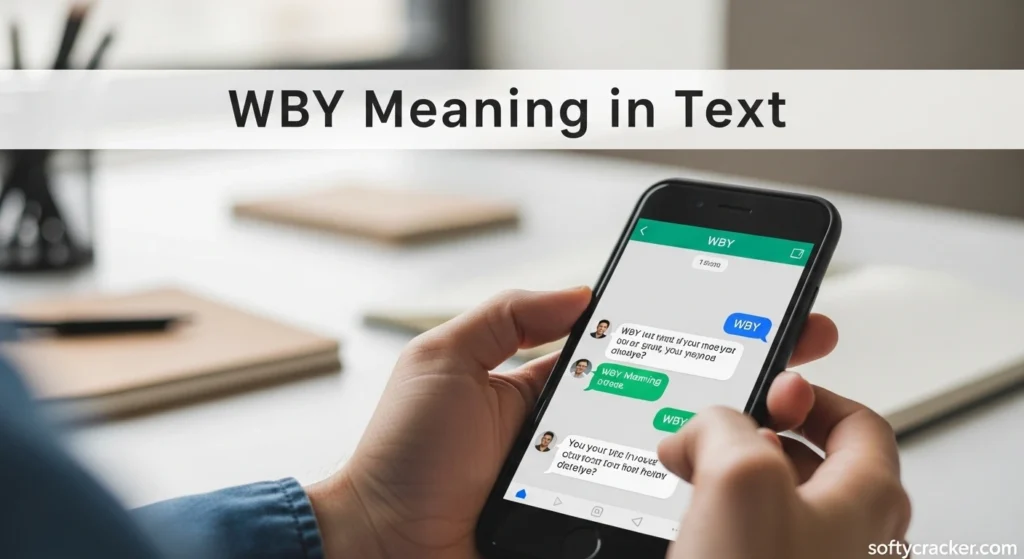
“WBY” stands for “What About You?” It’s one of those compact internet abbreviations designed to make conversations faster, smoother, and more natural in digital spaces. While simple on the surface, it plays a surprisingly important role in keeping communication balanced, polite, and engaging. Instead of typing a full sentence, users rely on WBY to quickly shift attention back to the other person.
In this article, we’ll break down everything about WBY—its meaning, usage, emotional tone, real-life examples, misunderstandings, and why it continues to thrive in online communication today.
What Does WBY Mean in Text?
WBY is a widely used texting abbreviation that stands for “What About You?” It is typically used when someone wants to return a question or show interest in the other person’s thoughts, situation, or feelings. Instead of writing the full phrase, users shorten it to “wby” to keep conversations quick and fluid.
For example, if someone says, “I’m tired today, wby?” they are not only sharing their own state but also inviting the other person to respond. It functions as a conversational bridge—keeping dialogue balanced instead of one-sided.
Why it matters in digital communication
In fast-paced messaging environments like WhatsApp, Instagram DMs, or Snapchat, brevity is key. People prefer shorter responses that still carry meaning. WBY helps maintain conversational flow without slowing things down.
It also signals social awareness. When someone uses WBY, they are actively including the other person, making the conversation feel mutual rather than self-focused. That small abbreviation carries an important relational function: it keeps engagement alive.
Origin and Evolution of WBY
The rise of WBY is closely tied to the broader evolution of internet slang and texting culture. As mobile phones became central to communication in the early 2000s, users began shortening common phrases to save time and effort. “What about you?” naturally became “WBY” as part of this linguistic compression trend.
Initially, such abbreviations were popular in SMS texting due to character limits. Over time, even after those limits disappeared, the habit remained because it was efficient and culturally embedded.
WBY gained further popularity through social media platforms where fast-paced interaction is the norm. Apps like Twitter (now X), Instagram, and Snapchat reinforced shorthand communication styles, making abbreviations like WBY mainstream.
Today, WBY is not just a shortcut—it is part of digital language evolution. It reflects how users adapt language for speed while maintaining emotional connection and clarity.
How WBY Is Used in Casual Chats
In everyday conversations, WBY is often used as a quick way to turn attention back to the other person. It typically appears at the end of a message, especially after someone shares their own update.
Common usage patterns
- “I just got home, wby?”
- “I love this movie, wby?”
- “Busy day here, wby?”
In each case, the speaker first shares something about themselves and then uses WBY to invite a response. This makes conversations feel more natural and reciprocal.
Why it feels so natural
WBY mimics real-life conversation habits. In face-to-face communication, people naturally respond with “What about you?” after speaking about themselves. The abbreviation simply transfers that behavior into digital form, making texting feel more human despite its brevity.
It also reduces effort while maintaining politeness, which is essential in casual communication.
WBY in Social Media Contexts
On social media platforms, WBY is often used in comments, captions, and direct messages. It helps users engage others without writing long replies.
For example, under an Instagram post someone might comment:
- “Looks fun! WBY?”
Here, WBY invites interaction and encourages the original poster or other users to respond.
Role in engagement
WBY also plays a subtle role in boosting engagement metrics. On platforms where interaction matters, asking “WBY” encourages replies, which increases conversation threads.
In stories and polls
People often use WBY in story replies or polls:
- “Chilling today, wby guys?” This makes the audience feel included, transforming passive viewers into active participants.
In this context, WBY becomes more than slang—it becomes a tool for digital connection-building.
Emotional Tone Behind WBY
Although simple, WBY carries a distinct emotional tone. It usually reflects interest, politeness, and conversational openness.
Neutral but friendly tone
WBY is not emotionally heavy. It doesn’t express strong feelings by itself, but it signals that the speaker cares enough to ask about the other person. That makes it friendly and approachable.
Subtle emotional signals
Depending on context, WBY can also suggest:
- Curiosity (“Tell me about you”)
- Care (“I want to know how you are doing”)
- Engagement (“I’m not just talking about myself”)
Even though it is just three letters, WBY helps maintain emotional balance in conversations, ensuring that dialogue is not one-sided.
Real-Life Conversation Examples
Understanding WBY becomes easier when seen in real interactions.
Example 1: Friends chatting
- A: “I just finished work, exhausted.”
- B: “Same here, wby?”
Example 2: Casual check-in
- A: “Going to the gym now.”
- B: “Nice, wby?”
Example 3: Online interaction
- A: “This weather is amazing today.”
- B: “True! WBY enjoying it?”
In all these examples, WBY acts as a conversational checkpoint. It ensures both participants are equally involved in the discussion.
WBY vs Similar Abbreviations
WBY is often confused with other shorthand expressions like HBU or WYD, but each has a different purpose.
HBU (How About You?)
- More direct version of WBY
- Slightly more formal in tone
- Often interchangeable with WBY
WYD (What You Doing?)
- Focuses on current activity
- More specific than WBY
- Often used to initiate conversation rather than respond
Key difference
WBY is reflective—it responds to something already said and turns the question back to the other person. WYD, on the other hand, is initiating and action-focused.
Misinterpretations of WBY
Although WBY is simple, it is sometimes misunderstood by people unfamiliar with texting slang.
Common confusion
Some users interpret it as a random acronym rather than “What About You?” This can lead to confusion in conversations, especially across different age groups or regions.
Context dependency
Without context, WBY can feel vague. For example:
- “I’m good, wby?” is clear in conversation.
- But “wby?” alone might confuse someone new to slang.
Understanding depends heavily on context and familiarity with digital communication norms.
Professional vs Informal Use of WBY
WBY is primarily an informal expression and is rarely used in professional communication.
Informal settings
It is common in:
- Text messages
- Social media
- Chat apps
- Casual emails among friends
Professional limitations
In workplace communication, using WBY may appear too casual or unprofessional. Instead, people prefer:
- “What about you?”
- “How are you?”
Exception cases
In creative industries or relaxed team environments, WBY might occasionally appear in internal chats, but it is still generally avoided in formal writing.
Regional and Cultural Usage
WBY is globally recognized due to the influence of English-based internet slang. However, its usage varies depending on cultural and linguistic context.
English-dominant regions
In countries where English is widely used online, WBY is instantly understood and frequently used.
Non-native English speakers
For many non-native speakers, WBY is learned through social media rather than formal education. This makes it part of “internet English” rather than academic English.
Cultural adaptation
Some cultures prefer full phrases over abbreviations in formal settings, so WBY remains mostly confined to casual digital spaces regardless of global awareness.
Psychological and Social Significance
Beyond language, WBY reflects deeper social behavior in digital communication.
Encouraging reciprocity
WBY naturally encourages turn-taking in conversation. It prevents communication from becoming one-sided, which is important for maintaining social bonds.
Building connection
Even in short interactions, WBY signals attentiveness. It tells the other person: “I’m not just talking—I’m listening too.”
Digital empathy
In a fast digital world, small expressions like WBY contribute to emotional balance. They create micro-moments of connection that mimic real-life conversational empathy.
Best Practices for Using WBY
To use WBY effectively, context matters more than anything.
Do:
- Use it in casual conversations
- Pair it with friendly messages
- Use it to keep dialogue flowing
Don’t:
- Use it in formal emails or professional settings
- Use it without context if clarity is needed
- Overuse it in serious conversations
WBY works best when it feels natural, not forced. It should enhance communication, not confuse it.
Conclusion
WBY may look like a simple three-letter abbreviation, but it plays a meaningful role in modern digital communication. Standing for “What About You?”, it helps balance conversations, encourages engagement, and maintains conversational flow in a fast-paced online world. From casual chats between friends to social media interactions, WBY acts as a bridge that keeps dialogue two-sided and inclusive.
Its popularity reflects how language continues to evolve with technology—becoming shorter, faster, and more expressive at the same time. While it remains informal, its social value is significant because it reinforces attention and reciprocity in communication. Understanding WBY is not just about decoding slang; it’s about understanding how people connect in the digital age.
FAQs
What does WBY mean in texting?
WBY stands for “What About You?” and is used to ask someone about their situation or feelings.
Is WBY formal or informal?
It is strictly informal and used mainly in casual digital conversations.
Can WBY be used in professional messages?
No, it is not recommended for professional or formal communication.
What is the difference between WBY and HBU?
Both mean “What about you?”, but HBU is slightly more direct, while WBY is more casual.
Is WBY used on social media?
Yes, it is commonly used in comments, chats, and story replies to engage others.
What does WBY mean in a reply?
It usually means the person is returning the question back to you.
Is WBY still popular today?
Yes, it remains widely used in texting and social media conversations globally.