Introduction
Imagine you are in the middle of a lively chat—messages are flying back and forth, laughter is shared, plans are being made—and suddenly, one person disappears mid-conversation. Instead of leaving you confused or ignored, a simple message appears: “BRB.” In just three letters, the entire tone of the conversation shifts from uncertainty to understanding. You wait, knowing they will return shortly.
In today’s fast-paced digital world, where conversations happen across WhatsApp, Instagram, gaming chats, and workplace messaging apps, abbreviations like “BRB” have become essential tools of communication. But what does BRB actually mean, and why has it become such a widely accepted expression across generations and platforms?
This article explores the meaning of BRB in text in a deep and practical way. Beyond its basic definition—“Be Right Back”—we’ll uncover how it is used, why it matters in digital etiquette, its emotional and social significance, and how it shapes modern communication behavior. By the end, you’ll understand not just what BRB means, but how it reflects human interaction in the digital age.
What Does BRB Mean in Text?
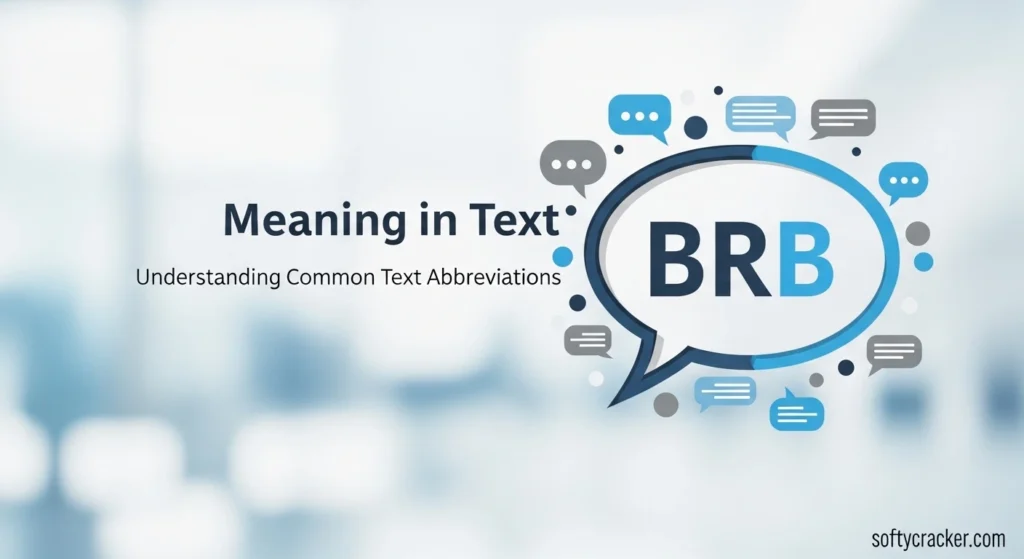
BRB stands for “Be Right Back.” It is a quick, informal way of telling someone that you are temporarily leaving a conversation but will return shortly. It is most commonly used in texting, online chats, and gaming environments where conversations are expected to be continuous or real-time.
At its core, BRB is a reassurance. Instead of disappearing without explanation, the sender signals intention and respect for the other person’s time. This small abbreviation prevents misunderstandings and keeps the flow of communication smooth.
For example, if someone is chatting on WhatsApp and needs to answer the door or grab something to eat, they might simply type “BRB” instead of leaving the other person wondering what happened.
Although simple, BRB carries an important social function: it maintains presence even during absence. It tells the other person, “I’m still here in spirit, just temporarily unavailable.” In digital communication, where silence can often be misinterpreted, BRB acts as a bridge of continuity.
The Origin and Evolution of BRB in Digital Language
BRB emerged during the early days of internet chat rooms and instant messaging platforms like AOL Instant Messenger (AIM), Yahoo Messenger, and IRC channels. In those environments, conversations were fast-paced and real-time, making it essential to communicate short breaks quickly.
Typing long explanations like “I need to go for a few minutes, I’ll be back soon” slowed down conversations. So users naturally shortened it to “BRB,” which became widely accepted and standardized across online platforms.
Over time, BRB evolved beyond chat rooms. It became part of SMS texting culture in the early 2000s, later spreading into gaming communities and social media platforms. Today, even though people use emojis, voice notes, and video calls, BRB remains relevant because of its simplicity and universal understanding.
What makes BRB interesting is that it survived multiple technological shifts. From desktop chat rooms to mobile apps like WhatsApp, Discord, and Instagram, its meaning has remained unchanged. This consistency shows how certain digital expressions become permanent fixtures in human communication.
How BRB Is Used in Daily Conversations
BRB is commonly used in informal conversations where quick, temporary absence is expected. It helps maintain conversational flow without awkward silence or confusion.
Everyday Situations
- Someone is cooking and needs to stir something
- A student is chatting while attending a short family call
- A person steps away from their computer for a few minutes
In each case, BRB serves as a polite interruption marker.
Group Chats and Social Apps
In group chats, BRB is especially useful. Instead of leaving silently, users type BRB to signal temporary inactivity. This avoids confusion when others expect immediate replies.
For example: Person A: “Are you coming to the movie tonight?” Person B: “Yes, BRB, someone’s at the door.”
This simple usage keeps conversations natural and respectful.
BRB is also used strategically in online interactions. Some users use it to pause conversations without closing them entirely, allowing them to return when convenient without losing context.
BRB vs Other Common Text Abbreviations
BRB is part of a larger family of internet slang abbreviations that help streamline communication. Understanding how it differs from similar expressions helps clarify its role.
- AFK (Away From Keyboard): Used mainly in gaming or desktop contexts to indicate absence from the device.
- TTYL (Talk To You Later): Suggests a longer break or end of conversation.
- GTG (Got To Go): Indicates leaving permanently or for a longer duration.
- BBS (Be Back Soon): Similar to BRB but slightly less immediate.
BRB specifically implies a short, temporary absence with intent to return quickly. Unlike TTYL or GTG, it does not signal the end of conversation. This distinction is important because it sets expectations about response time and availability.
In modern communication, choosing the right abbreviation helps maintain clarity and prevents misunderstandings in tone and intention.
The Emotional and Social Meaning Behind BRB
While BRB appears purely functional, it also carries subtle emotional and social meaning. It reflects awareness, respect, and digital etiquette.
When someone uses BRB, they are essentially saying: “I value this conversation enough to inform you before stepping away.” This creates trust in communication, even in a virtual environment.
Without BRB, sudden silence can feel dismissive or rude, especially in active conversations. With BRB, the absence becomes understandable and temporary.
It also reduces anxiety in digital interactions. In group chats or personal conversations, people often wonder if they were ignored. BRB eliminates that uncertainty.
In a broader sense, BRB reflects how humans adapt politeness norms into digital spaces. Even minimal effort expressions like this help maintain emotional balance in online communication.
Context Matters: When to Use BRB Appropriately
BRB is not suitable for every situation. Its effectiveness depends heavily on context and audience.
Suitable Contexts
- Informal chats with friends or family
- Gaming conversations
- Social media messaging
- Casual group discussions
Unsuitable Contexts
- Professional emails
- Formal business communication
- Academic writing or official documents
In professional settings, BRB may appear unprofessional or overly casual. Instead, full sentences like “I will be back shortly” are preferred.
Understanding context ensures that BRB is used effectively without creating confusion or reducing credibility in formal environments.
Common Misunderstandings About BRB
Despite being simple, BRB is sometimes misunderstood, especially by new internet users or older generations unfamiliar with texting slang.
One common misunderstanding is assuming BRB guarantees a specific return time. In reality, it only indicates intention, not exact timing.
Another misconception is that BRB means the person is ignoring the conversation. In fact, it is often the opposite—it shows awareness and consideration.
Sometimes, people also confuse BRB with a permanent exit from conversation. However, unlike GTG or TTYL, BRB specifically implies temporary absence.
These misunderstandings highlight the importance of digital literacy in modern communication. Knowing what abbreviations actually mean helps avoid misinterpretation and unnecessary assumptions.
BRB in Professional vs Casual Communication
BRB is primarily a casual expression, but its usage in semi-professional digital environments is worth understanding.
In workplace messaging apps like Slack or Microsoft Teams, BRB may occasionally be used among colleagues in informal channels. However, in formal discussions or client communication, it is generally avoided.
Professional Alternatives
Instead of BRB, professionals often use:
- “I’ll be back shortly”
- “Stepping away for a few minutes”
- “Will respond soon”
These alternatives maintain clarity while preserving professionalism.
In casual workplace environments, BRB can still appear in internal chats where tone is relaxed. The key factor is audience awareness and communication expectations.
BRB in Gaming and Online Communities
Gaming communities are one of the most active environments where BRB is used frequently. Multiplayer games require real-time coordination, so communication efficiency is essential.
When a player needs to pause—whether to answer a call, fix settings, or take a break—they often type BRB in chat so teammates know they are temporarily inactive.
This prevents confusion and allows teams to adjust strategies accordingly.
In online communities like Discord servers, BRB is also widely used during voice chats or live discussions. It helps maintain flow while respecting the participant’s temporary absence.
In competitive environments, even small communication cues like BRB can significantly impact teamwork and coordination.
Cultural and Generational Usage of BRB
BRB is recognized across multiple generations, but its usage patterns vary.
Younger users, especially Gen Z, often combine BRB with emojis or additional slang to express tone. Older users, particularly those who grew up during early internet days, may use it more literally and sparingly.
Culturally, BRB has become part of global internet language. Even in non-English-speaking regions, it is widely understood due to the influence of social media and gaming culture.
Its simplicity makes it universal, transcending language barriers and becoming a shared digital expression across cultures.
Alternatives to BRB and Modern Communication Trends
As digital communication evolves, new alternatives and behaviors are emerging alongside BRB.
People now use:
- Emojis (⏳, 🚶♂️) to indicate temporary absence
- Voice notes explaining short breaks
- Status indicators like “Away” or “Do Not Disturb”
- Automated replies in messaging apps
Despite these innovations, BRB remains relevant due to its speed and clarity.
However, modern communication trends emphasize richer expression. Instead of just BRB, users may say: “BRB, grabbing food 🍜” This adds context and personality, making communication more expressive and human-like.
Practical Lessons from BRB Usage
BRB may seem like a small abbreviation, but it teaches several important lessons about communication:
- Clarity prevents misunderstanding
- Small signals build trust in conversations
- Respecting attention improves digital relationships
- Efficiency does not require complexity
In a world overloaded with messages, BRB demonstrates how even three letters can maintain connection, reduce confusion, and improve conversational flow.
It also highlights how human communication naturally evolves to become faster, shorter, and more efficient while still preserving meaning.
Conclusion
BRB, or “Be Right Back,” is far more than just a texting abbreviation. It represents a shift in how humans manage presence, attention, and communication in digital spaces. From early chat rooms to modern messaging apps, it has remained a consistent and reliable signal of temporary absence.
Its strength lies in simplicity. It prevents confusion, maintains conversational flow, and reflects basic digital courtesy. Whether used in gaming, casual chats, or social media, BRB continues to serve as a small but powerful tool for managing online interaction.
Ultimately, BRB reminds us that even in fast-paced digital conversations, a little clarity goes a long way. It is not just about stepping away—it is about staying connected, even when briefly absent.
FAQs
What does BRB mean in text messages?
BRB stands for “Be Right Back,” indicating that someone will temporarily leave a conversation but return shortly.
Is BRB still commonly used today?
Yes, BRB is still widely used across texting apps, gaming platforms, and social media.
Is BRB formal or informal?
BRB is informal and best suited for casual conversations rather than professional communication.
How long does BRB usually mean?
There is no fixed time, but it generally implies a short break lasting a few minutes.
What is the difference between BRB and AFK?
BRB is more casual and used in chats, while AFK (Away From Keyboard) is often used in gaming or desktop contexts.
Can BRB be used in professional chats?
It is generally avoided in formal settings, where full phrases like “I’ll be back shortly” are preferred.
Why do people use BRB instead of typing full sentences?
BRB saves time, keeps conversations flowing, and provides quick clarity during real-time communication.