Introduction
You’re scrolling through your phone late at night. A friend sends you a message that reads, “That video was so funny, I’m ROFL 😂.” You pause for a moment. You get the sense that it’s something about laughter, but what exactly does it mean? Is it just another internet abbreviation, or does it carry a deeper tone in digital conversations?
In today’s fast-moving online world, short forms like ROFL have become a natural part of how people express emotions. Instead of typing full sentences, we rely on compact expressions that carry humor, reaction, and personality in just a few letters. ROFL is one of those expressions that instantly signals laughter—but its usage, intensity, and context matter more than most people realize.
Understanding “ROFL meaning in text” is not just about decoding slang; it’s about understanding how digital communication reflects human emotion, humor, and connection in a world where words are often shortened but feelings are not.
What Does ROFL Mean in Text?
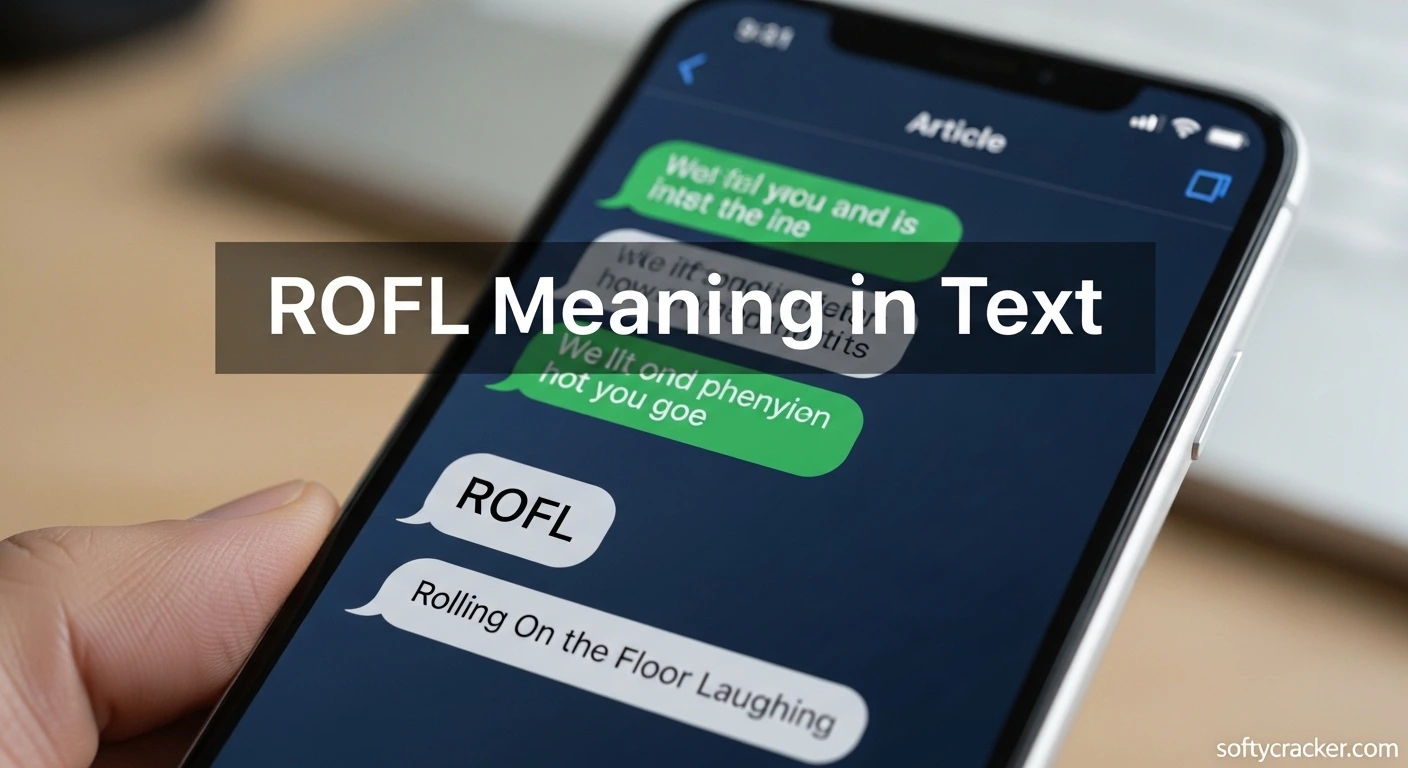
ROFL stands for “Rolling On the Floor Laughing.” It is used to express extreme amusement—when something is so funny that you imagine yourself literally rolling on the floor due to laughter.
Unlike simple “haha” or “LOL,” ROFL represents a stronger emotional reaction. It suggests that the content is not just mildly funny but genuinely hilarious. In digital conversations, it acts as an exaggerated response to jokes, memes, videos, or funny stories.
Core Meaning Breakdown:
- R – Rolling
- O – On
- F – The
- L – Floor Laughing
Although people don’t literally roll on the floor, the phrase creates a vivid mental image of uncontrollable laughter. This exaggeration is what makes ROFL so expressive and popular in online communication.
The Origin and Evolution of ROFL
ROFL emerged in the early internet era, particularly during the rise of chat rooms, forums, and instant messaging platforms like MSN Messenger and AOL. During that time, users were experimenting with shorthand language to communicate faster.
Typing full emotional reactions was time-consuming, so abbreviations like LOL, BRB, and ROFL became practical tools. ROFL quickly gained popularity because it expressed a stronger emotional reaction than LOL.
Over time, ROFL evolved beyond just text chats. It entered memes, social media posts, gaming chats, and even casual spoken conversations among younger generations. Today, while newer slang exists, ROFL still holds nostalgic value and is recognized globally as a classic internet expression of laughter.
Its endurance shows how early internet culture shaped modern digital communication.
ROFL vs LOL vs LMAO: Understanding the Differences
Many people confuse ROFL with similar abbreviations. While they all relate to laughter, their intensity differs.
LOL (Laugh Out Loud)
LOL is the mildest form. It indicates something is funny or amusing but not necessarily hilarious.
ROFL (Rolling On the Floor Laughing)
ROFL is stronger. It suggests uncontrollable laughter, often in response to something extremely funny.
LMAO (Laughing My A** Off)
LMAO sits between LOL and ROFL in intensity but is often considered closer to ROFL in emotional expression.
Comparison Insight:
- LOL → Light amusement
- LMAO → Strong laughter
- ROFL → Extreme, exaggerated laughter
In real conversations, people often mix them depending on their mood, exaggeration level, or even humor style.
Emotional Context Behind ROFL
ROFL is not just a word—it’s a digital emotion marker. It helps people express humor in a way that feels more animated than plain text.
When someone uses ROFL, they are not just saying something is funny; they are amplifying their reaction to match the humor intensity. It adds personality to otherwise flat text-based communication.
In many cases, ROFL is also used socially. People use it to:
- Show friendliness
- Encourage jokes
- Keep conversations lively
- Signal shared humor
Interestingly, sometimes ROFL is used even when something is only mildly funny, simply to maintain social engagement or avoid awkward silence in chats.
Real-Life Chat Examples of ROFL
Understanding ROFL becomes easier when we see it in action.
Example 1: Friendly Chat
A: “I tried cooking pasta and burned it completely.” B: “ROFL 😂 you really did that?”
Example 2: Meme Reaction
A: Sends a meme of a cat falling off a couch B: “ROFL this is too accurate!”
Example 3: Gaming Context
Player 1: “I jumped off the map by accident.” Player 2: “ROFL bro how?”
In all these examples, ROFL intensifies the reaction. It transforms simple laughter into a shared emotional experience.
When and How to Use ROFL Appropriately
Using ROFL correctly depends on context, audience, and platform.
Appropriate Situations:
- Casual chats with friends
- Social media comments
- Meme reactions
- Gaming conversations
Situations to Avoid:
- Formal emails
- Professional communication
- Academic writing
- Serious discussions
ROFL works best in relaxed, informal environments where humor is expected. Using it in formal settings may appear unprofessional or inappropriate.
It is also important to avoid overusing ROFL. If used too frequently, it may lose its impact and feel exaggerated or insincere.
Common Misunderstandings About ROFL
Many people misinterpret ROFL due to its exaggerated nature.
Misconception 1: It means literal action
Some think ROFL implies actual physical rolling on the floor. In reality, it is purely symbolic.
Misconception 2: It is outdated
While newer slang exists, ROFL is still widely understood and used, especially in casual digital spaces.
Misconception 3: It always means extreme laughter
Sometimes ROFL is used casually without strong emotion, especially in quick responses.
Understanding these nuances helps avoid miscommunication in digital conversations.
ROFL in Social Media Culture
Social media platforms like Instagram, TikTok, and X (Twitter) have kept ROFL alive through memes and viral content.
People often comment ROFL on:
- Funny reels
- Viral memes
- Relatable videos
- Comedy clips
Even though emojis have become dominant, ROFL still holds its place because it adds a nostalgic internet flavor.
On platforms where character space matters, abbreviations like ROFL remain useful for quick emotional expression. It bridges generational gaps between early internet users and newer digital audiences.
ROFL in Professional Communication Boundaries
In professional environments, ROFL is generally avoided. However, there are subtle exceptions in informal workplace chats.
Acceptable Contexts:
- Casual team chats (Slack, internal messaging)
- Friendly coworker interactions
- Lighthearted workplace memes
Not Acceptable:
- Emails to clients
- Formal reports
- Job applications
- Official communication
The key is understanding tone sensitivity. While ROFL can build rapport in informal settings, it can damage professionalism if used incorrectly.
Variations of ROFL: ROFLMAO and Beyond
ROFL has inspired several variations that intensify humor expression.
ROFLMAO
Stands for “Rolling On the Floor Laughing My A** Off.” It indicates even stronger amusement.
LMAOROFL
A combination of both LMAO and ROFL, used for exaggerated humor reactions.
ROFLcopter (humorous variation)
An old internet meme term combining ROFL with “helicopter” imagery, used humorously in early meme culture.
These variations show how internet language evolves creatively to express stronger emotions.
Psychological Insight: Why We Use ROFL
ROFL is more than slang—it reflects human psychology in digital communication.
Humor is a social bonding tool. When people use ROFL, they:
- Show emotional alignment with others
- Strengthen social connections
- Reduce conversational tension
- Express identity and personality
Digital communication lacks tone, facial expressions, and body language. Abbreviations like ROFL fill that gap by simulating emotional reactions.
In essence, ROFL helps make online conversations feel more human.
The Future of ROFL in Digital Language
Language on the internet evolves quickly. New slang, emojis, and memes constantly emerge. However, ROFL has shown surprising resilience.
While younger users may prefer emojis like 😂 or newer slang, ROFL still survives as a cultural artifact of early internet humor.
It may not dominate future communication, but it will likely remain:
- A nostalgic expression
- A recognizable internet classic
- A symbol of early digital humor culture
Its simplicity ensures it will never fully disappear.
Conclusion
ROFL is more than just an abbreviation—it is a window into how humans express humor in digital spaces. Standing for “Rolling On the Floor Laughing,” it captures exaggerated amusement in a simple, memorable form. From early chat rooms to modern social media platforms, ROFL has remained a consistent part of internet culture.
Understanding its meaning, context, and usage helps us communicate more effectively and interpret online conversations more accurately. Whether used seriously or playfully, ROFL reflects how emotion adapts to the limitations and creativity of text-based communication.
In the end, ROFL reminds us that even in a world of short messages and fast typing, laughter still finds a way to feel loud, shared, and deeply human.
FAQs
What does ROFL mean in text messages?
ROFL means “Rolling On the Floor Laughing” and is used to express extreme amusement or laughter in digital conversations.
Is ROFL still used today?
Yes, although less common than emojis, ROFL is still used in casual chats and online communities.
What is the difference between ROFL and LOL?
LOL indicates mild laughter, while ROFL expresses much stronger and more intense amusement.
Is ROFL appropriate for formal communication?
No, ROFL is informal and should be avoided in professional or official communication.
What does ROFLMAO mean?
ROFLMAO means “Rolling On the Floor Laughing My A** Off,” indicating even stronger laughter than ROFL.
Can ROFL be used sarcastically?
Yes, sometimes ROFL is used sarcastically to react to something mildly funny or ironic.
Why do people use ROFL instead of emojis?
Some people prefer ROFL for nostalgic reasons or to add variety to their digital expressions.
Is ROFL outdated?
Not entirely. While newer slang and emojis are more popular, ROFL is still widely recognized and understood.