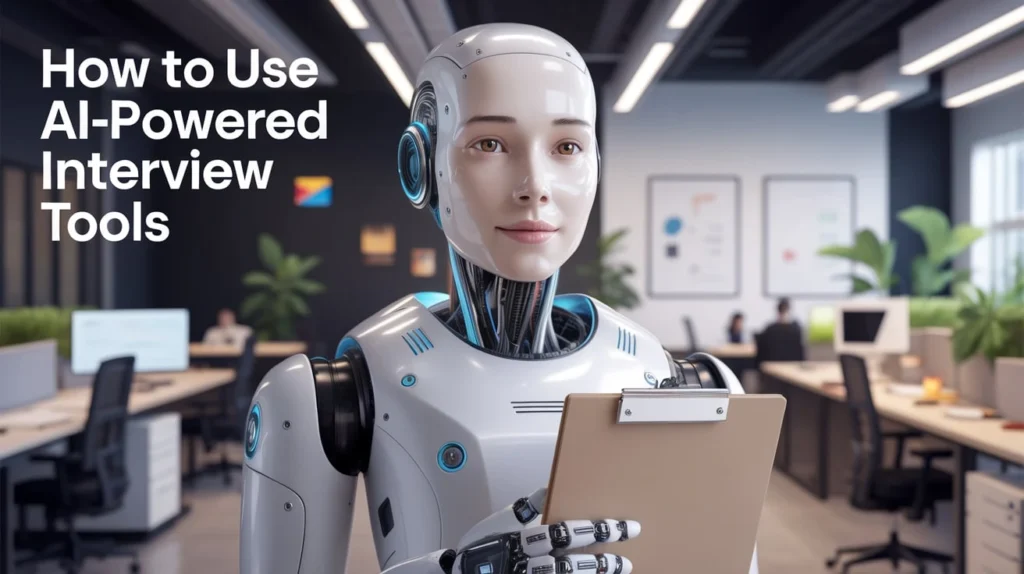
How to use AI-powered interview tools is now an essential skill for companies that hire at scale and for job seekers preparing for modern interviews. These tools help screen candidates, manage interviews, and evaluate skills using structured and data-based methods. Therefore, learning how they work and how to apply them correctly leads to better hiring results and a smoother interview experience.
This extended guide explains everything in clear and simple language. You will find step-by-step explanations, real-life examples, practical tips, and easy actions you can apply immediately. Each section focuses on clarity, fairness, and real outcomes.
Understanding AI-Powered Interview Tools
What AI-Powered Interview Tools Are
AI-powered interview tools are software platforms that support interviews using automated systems and data models. They assist with tasks such as resume screening, interview scheduling, video interview analysis, and skill evaluation. Therefore, recruiters spend less time on repetitive work and more time on decision-making.
These tools do not replace human judgment. Instead, they organize information in a consistent way so decisions rely on evidence rather than memory.
For example, a growing e-commerce company received over 2,000 applications for customer support roles. By using AI interview software, the hiring team reviewed candidates in days instead of weeks.
Common Types of AI Interview Tools
Different tools serve different hiring stages. Choosing the right type depends on your goals.
Tool TypeWhat It DoesExample UseResume screening toolsRank applicationsEntry-level hiringOne-way video interviewsRecord candidate answersHigh-volume rolesLive interview assistantsSupport interviewersTechnical interviewsSkill testing platformsMeasure job skillsCoding or writing rolesBehavioral analysis toolsReview communicationSales or service roles
According to research shared by SHRM, structured interview tools improve hiring accuracy and fairness.
Why Companies Use AI-Powered Interview Tools
Faster Hiring Processes
Traditional hiring takes time. Scheduling interviews, reviewing notes, and comparing candidates often slow progress. AI tools automate many of these steps. Therefore, hiring teams move faster without lowering standards.
A logistics firm hiring seasonal workers cut hiring time by nearly half after adopting automated video interviews.
More Consistent and Fair Interviews
AI-powered interview tools apply the same criteria to every candidate. Structured questions and scoring systems reduce personal bias. In addition, many platforms track fairness indicators across gender, age, and background.
Harvard Business Review reports that structured interviews predict job success more accurately than unstructured conversations.
Better Decision-Making with Data
AI interview platforms convert answers into clear scores and summaries. Recruiters compare candidates using shared metrics. Therefore, decisions rely on consistent information rather than personal impressions.
How to Choose the Right AI-Powered Interview Tool
Define Your Hiring Goals
Start with clear objectives. Without goals, tool selection becomes difficult.
Ask yourself:
- Which roles require faster screening
- Which skills matter most
- How many candidates you expect
For example, a healthcare provider focused on compliance and data security due to patient-facing roles.
Review Essential Features
Not all tools offer the same capabilities. Focus on features that match your hiring process.
Important features include:
- Custom interview questions
- Transparent scoring explanations
- Data privacy controls
- Integration with applicant tracking systems
- Accessibility options for candidates
According to Gartner, transparency improves trust in AI hiring systems.
Check Vendor Trust and Reliability
Vendor quality affects long-term success. Review case studies and security certifications.
Look for:
- Independent audits
- Clear data handling policies
- Customer support availability
Preparing for AI-Assisted Interviews
Creating Clear Interview Questions
Strong questions lead to meaningful results. Avoid vague or generic prompts.
Effective question formats include:
- Real work situations
- Skill demonstrations
- Past experience descriptions
For example, a marketing team asked candidates to explain how they handled a campaign failure.
Training Your Hiring Team
AI tools require proper training. Recruiters should understand how scores are generated and interpreted.
Training topics include:
- Reading scorecards
- Recognizing bias indicators
- Giving candidate feedback
Therefore, teams apply insights correctly and consistently.
How to Use AI-Powered Interview Tools for Screening
Resume Screening with AI
Resume screening tools rank candidates based on job requirements. They analyze skills, experience, and keywords.
Best practices include:
- Writing clear job descriptions
- Avoiding unnecessary requirements
- Reviewing excluded profiles
A fintech startup refined screening rules after noticing strong candidates being filtered too early.
Pre-Interview Skill Assessments
Skill tests help reduce interview volume.
Common formats include:
- Writing tasks
- Coding challenges
- Scenario-based questions
Therefore, interviews focus on candidates who meet core role needs.
Using Video Interviews with AI Support
One-Way Video Interviews
Candidates record answers on their own schedule. AI tools review clarity, structure, and relevance.
Benefits include:
- Flexible scheduling
- Consistent evaluation
- Reduced interviewer bias
A retail brand used one-way interviews for store supervisors across multiple locations.
Live Interviews with AI Assistance
Live interview tools support interviewers during conversations. They provide reminders, note capture, and follow-up suggestions.
For example, a technical interviewer received prompts to assess system design skills during a live session.
Understanding and Using AI Interview Scores
What Interview Scores Mean
AI scores reflect how closely responses match predefined criteria. They do not measure personality or potential alone.
Typical score areas include:
- Skill accuracy
- Communication clarity
- Behavioral indicators
Therefore, recruiters should review scoring explanations before making decisions.
Balancing AI Scores with Human Review
AI supports decisions, but humans remain responsible. Recruiters should review interviews and add context.
LinkedIn Talent Solutions reports stronger hiring outcomes when AI insights support, not replace, human judgment.
Legal and Ethical Responsibilities
Protecting Candidate Data
Interview data includes personal information. Companies must protect privacy and follow laws.
Best practices include:
- Clear consent forms
- Limited data retention
- Secure storage systems
GDPR requires candidates to understand how automated tools process their data.
Monitoring Bias and Fairness
AI systems require regular review. Bias audits help detect patterns that affect certain groups.
Therefore, fairness remains a continuous responsibility.
Improving Candidate Experience with AI Interviews
Clear Instructions and Expectations
Candidates perform better when instructions are simple and transparent.
Provide details about:
- Interview format
- Time limits
- Technical requirements
A consulting firm reduced drop-off rates after improving candidate guidance.
Offering Useful Feedback
Feedback builds trust and employer reputation. AI summaries support faster responses.
For example, candidates received skill-based feedback within two days.
How Job Seekers Use AI-Powered Interview Tools Successfully
Preparing for AI-Assessed Interviews
Candidates should practice structured answers. Clear speech and focused responses help scoring accuracy.
Preparation steps include:
- Reviewing job requirements
- Practicing timed answers
- Testing equipment
Understanding Evaluation Criteria
Most AI tools assess clarity, relevance, and structure. Candidates should stay on topic and answer directly.
Career coaches report improved outcomes after mock AI interview practice.
Real-Life Case Studies
Large Company Hiring Improvement
A global manufacturing company adopted AI-powered interview tools for engineering roles. Hiring time dropped by 35 percent. Offer acceptance rates improved due to quicker decisions.
Startup Hiring at Scale
A startup hiring 200 support agents used one-way video interviews. Recruiters handled volume without extra staff. Candidate satisfaction improved according to surveys.
Measuring Results and Return on Investment
Key Metrics to Track
Track outcomes to measure success.
Common metrics include:
- Time-to-hire
- Interview completion rates
- Offer acceptance rates
- Employee performance reviews
Therefore, decisions rely on measurable outcomes.
Continuous Improvement
Review results every quarter. Adjust questions and scoring models based on performance data.
Internal linking suggestion: Learn more in our guide on structured interview questions.
Best Practices for Long-Term Use
Regular Tool Evaluation
Roles evolve over time. Update interview criteria accordingly.
Collaboration Across Teams
HR, legal, and technical teams should work together. Shared responsibility ensures compliance and performance.
Future Developments in AI Interviewing
Performance Prediction Tools
New systems link interview results with job performance data.
Global and Multilingual Hiring
Language processing improvements support international hiring.
According to McKinsey, responsible AI adoption supports workforce diversity and inclusion.
Frequently Asked Questions
How to use AI-powered interview tools for small companies
Small companies start with resume screening and one-way interviews. These tools reduce workload while maintaining fairness.
How to use AI-powered interview tools without losing human control
Use AI scores as guidance only. Human review ensures context and fairness.
How to use AI-powered interview tools for remote hiring
Remote hiring benefits from video interviews and automated scheduling. Teams maintain consistency across locations.
How to use AI-powered interview tools ethically
Ethical use requires transparency, consent, and regular bias reviews. Compliance teams should remain involved.
How to use AI-powered interview tools as a job seeker
Job seekers prepare clear and structured answers. Understanding role requirements improves performance.
Final Action Steps for Immediate Use
How to use AI-powered interview tools effectively depends on clear goals, simple processes, and ethical oversight. These tools improve speed, fairness, and decision quality when applied correctly. Recruiters should begin with pilot roles, train teams carefully, and review results regularly. Job seekers should practice structured responses and understand evaluation criteria. Start small, measure outcomes, and expand usage based on real results.