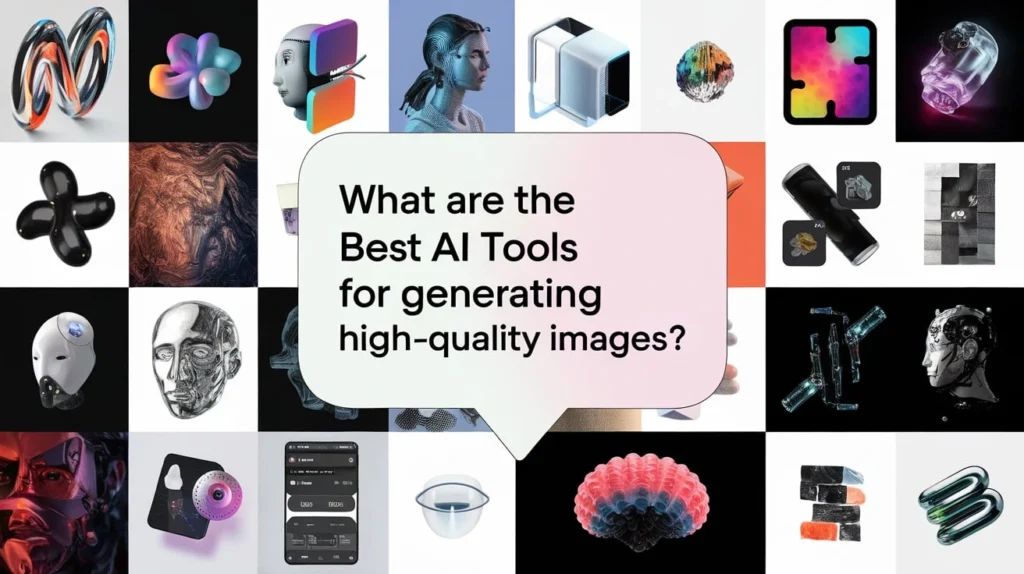
What are the best AI tools for generating high-quality images? It’s a question many creators, marketers, and business owners ask as AI reshapes the visual world. High-quality images are essential today because attention spans are short and competition is fierce. Strong visuals help brands stand out, boost engagement, and tell better stories. AI image generators now make this easier, faster, and more affordable than ever.
In this comprehensive guide, you’ll discover the top AI tools, how they work, where they excel, and how to choose the best one for your needs. You’ll also learn practical examples, prompt strategies, and real-world use cases that show how AI can transform your creative workflow.
Let’s dive in.
Why High-Quality AI Images Matter More Than Ever
Strong visuals shape how people think, feel, and act. In digital spaces, they serve as the first point of connection with your audience. Because of this, the need for high-quality images has skyrocketed in marketing, e-commerce, entertainment, and education.
AI image generators allow users to produce stunning images in minutes. Businesses can now create product photos, editorial visuals, or ad-ready scenes without hiring photographers or renting studios. According to industry insights and creative agency reports, AI-generated imagery often reduces project timelines from weeks to hours. This makes AI not just a creative tool but a competitive advantage.
Think of AI image models like on-demand artists or photographers who work at lightning speed. They understand instructions, adjust to your style, and deliver polished results without long waits. That level of efficiency is changing creative industries at their core.
How AI Image Generators Produce High-Quality Images
Before exploring the best tools, it helps to understand what makes an AI-generated image look crisp, clear, and professional.
Most generators rely on three core technologies:
Diffusion Models
Diffusion models start with random noise and reconstruct images step-by-step. This technique allows for exceptional detail and accurate visual structure.
GANs (Generative Adversarial Networks)
GANs use two competing models: one creates images and another critiques them. This “adversarial” process improves realism, texture, and depth.
Vision-Language Models (VLMs)
VLMs combine visual data with language understanding. They interpret complex prompts and produce images that match your intent.
These technologies work together to understand color, lighting, composition, anatomy, perspective, and emotion. For example, if you request “a high-quality portrait of an elderly woman under warm window light,” the AI recognizes what “high-quality” means in photography terms: clear skin texture, natural shadows, warm highlights, and depth.
What Are the Best AI Tools for Generating High-Quality Images?
This section explores the strongest tools available today. Each one has unique strengths, preferred use cases, and different learning curves.
DALL·E (DALL·E 3 and DALL·E 4)
DALL·E is one of the leading tools for generating high-quality images. It’s popular for its realism, prompt accuracy, and ability to follow detailed instructions. Many users highlight DALL·E’s capacity to produce images that feel believable, consistent, and commercially ready.
Strengths
- Produces clean, detailed images
- Exceptional understanding of complex prompts
- Great for product photos, portraits, and editorial scenes
- Smooth style consistency
- Integrated with ChatGPT for guided prompt refinement
Weaknesses
- Less customizable than open-source models
- Results may require several attempts for perfection
Best For
Brands, social media managers, product designers, and creators who want reliable, polished results with minimal effort.
Midjourney
Midjourney is known for its artistic edge and cinematic quality. It can produce high-quality images across many genres, from fashion to fantasy. Many designers describe its style as “high-detail, polished, and atmospheric.”
Strengths
- Stunning aesthetic quality
- Exceptional fine details and lighting
- Perfect for art, portraits, and stylized scenes
- Strong community support and resources
Weaknesses
- Requires Discord for use
- Sometimes overly stylized for realistic projects
Best For
Artists, illustrators, creative directors, and anyone building mood boards or conceptual images.
Adobe Firefly
Adobe Firefly blends high-quality image generation with professional editing tools. Because it’s built into Photoshop and Illustrator, it fits seamlessly into existing design workflows. Firefly’s “Generative Fill” tool is widely used for photo editing, background extensions, and composite imagery.
Strengths
- Easy for designers familiar with Adobe
- High-resolution outputs
- Safe, commercially licensed training data
- Great for modifying existing photos
Weaknesses
- Slightly less realistic than Midjourney or SDXL in some cases
- Requires an Adobe subscription
Best For
Professional designers, creative teams, and agencies needing integrated design tools.
Stable Diffusion XL (SDXL)
Stable Diffusion XL is the most flexible, customizable AI image model available. It’s open-source, which allows full control over styles, fine-tuning, and outputs. When used with the right model add-ons, SDXL can rival or surpass any commercial generator in quality.
Strengths
- Extremely customizable
- Large community, endless extensions
- You can run it locally for full privacy
- Can create highly unique styles
Weaknesses
- Requires technical skills
- Needs strong hardware for local generation
Best For
Developers, advanced creators, and users who want total creative control.
Runway Gen-2
Runway Gen-2 is known for its strong video generation tools, but it also produces high-quality still images. Its cinematic style is ideal for storytelling and concept design.
Strengths
- Strong for video and motion scenes
- Clean and modern interface
- Great for conceptual and cinematic images
- Collaborative features for teams
Weaknesses
- Not ideal for product photography
- Limited control compared with stable diffusion
Best For
Filmmakers, advertisers, storytellers, and content creators working with video.
Canva AI Image Generator
Canva’s AI image generator is simple, accessible, and built for everyday creators. While it may not match Midjourney’s or DALL·E’s realism, it is a fast way to generate high-quality images for marketing and design.
Strengths
- Extremely easy to use
- Includes templates, editing tools, and design layouts
- Ideal for beginners and business owners
- Fast generation and integrated workflows
Weaknesses
- Less realistic than advanced tools
- Limited control over details
Best For
Social media managers, marketers, educators, and small businesses.
Comparing the Best AI Tools for High-Quality Images
Here’s a quick comparison to help you decide:
AI ToolBest ForRealism LevelEase of UseCustomizationDALL·EProduct and editorial★★★★★EasyMediumMidjourneyArtistic and cinematic★★★★★MediumHighAdobe FireflyProfessional design workflows★★★★☆EasyMediumStable Diffusion XLFull creative control★★★★★HardVery HighRunway Gen-2Cinematic and video content★★★★☆EasyMediumCanva AIMarketing visuals★★★☆☆Very EasyLow
What Makes an AI Image “High Quality”?
High-quality AI images have certain characteristics. When evaluating different tools, look for these features:
Sharp Detail
Clear edges, realistic textures, and crisp subjects contribute to image quality.
Strong Lighting
Good use of shadows, highlights, and color tones improves realism.
Accurate Anatomy
For portraits, hands, faces, and proportions must look natural.
Depth and Perspective
Images with proper depth feel more believable and engaging.
Consistent Style
Consistency is key in branding and professional projects.
AI tools that combine these elements deliver true high-quality visuals.
How to Write Prompts for High-Quality AI Images
Even the best AI tools rely on strong prompts. Here are prompt strategies to produce better results:
Use Clear Descriptions
Describe the subject, setting, lighting, angle, and style.
Add Photography Language
Use terms like macro, wide angle, depth of field, or soft shadows.
Mention Textures and Materials
This creates richness and detail.
Include Emotional or Creative Cues
Warm, dramatic, peaceful, energetic—these help set the mood.
Provide Camera Settings
These are especially effective in DALL·E, Midjourney, and SDXL.
Use Negative Prompts
Exclude distortions or unwanted styles when the model supports them.
Real-World Examples of High-Quality AI Images in Action
E-Commerce
A small candle company can generate lifestyle photos without hiring a photographer. For example, a “candle on a marble table with soft afternoon light and eucalyptus leaves” can look studio-shot.
Marketing
Brands create seasonal images quickly. A clothing retailer can produce summer, fall, and winter scenes without traveling or staging expensive sets.
Film and Media
Directors use AI storyboards to visualize scenes before production. This improves planning and reduces costs.
Education
Teachers generate custom visuals to explain difficult concepts. Students respond well to visual learning.
Social Media
Creators produce unique posts, thumbnails, and storytelling images that stand out in crowded feeds.
These cases show how AI bridges creativity and efficiency in powerful ways.
Case Study: How a Small Restaurant Boosted Sales With AI Images
A small restaurant wanted to update its online menu but lacked a budget for photography. The owner used AI tools to create realistic food images that matched the style and lighting of their actual dishes. They generated photos using prompts like “high-quality photo of a warm pasta dish with parmesan flakes and rustic wooden background.”
After uploading the new menu images, engagement increased. Customers commented on how appealing the dishes looked. The restaurant saw an increase in online orders and foot traffic. This simple change cost almost nothing and delivered a noticeable business impact.
Choosing the Right AI Tool: Questions to Ask
Before you decide which tool to use, ask these questions:
- What type of images do you need? Product shots? Portraits? Art? Architecture?
- What level of control do you want? Beginners may prefer Canva. Advanced users benefit from SDXL.
- What is your budget? Consider subscription fees and usage limits.
- Do you need commercial rights? Always check license terms.
- How important is realism? Some tools lean artistic, others lean photographic.
- Do you need video later on? Runway supports both still and moving images.
Your answers will guide you toward the tool that fits your goals.
Advantages of Using AI for High-Quality Images
Here are the top benefits of using AI image generators:
- Faster than traditional photography
- Cost-effective and accessible
- Highly customizable
- Allows constant experimentation
- Reduces creative blocks
- Enables global teams to collaborate
- Helps creators scale content quickly
AI tools act as creative partners, not replacements. They help you bring more ideas to life in less time.
Potential Drawbacks and Limitations
AI is powerful, but not perfect. Keep these limitations in mind:
- Some images may require touch-ups
- Complex prompts can confuse certain models
- Anatomy distortions still happen
- Licensing rules vary by platform
- Overuse may create generic visuals
- Ethical concerns about training data still exist
Being aware of these limitations helps you use AI more responsibly.
Common Mistakes to Avoid When Generating High-Quality Images
Avoid these frequent issues:
- Writing vague prompts
- Ignoring lighting descriptions
- Using too many adjectives
- Forgetting aspect ratio
- Generating at low resolution
- Not checking commercial rights
A clear, concise prompt often leads to the strongest outputs.
How AI Enhances Creativity
Many worry AI will replace creativity. In reality, AI acts like a supportive assistant. It helps you brainstorm, visualize ideas, and experiment without fear of wasting time or resources.
Think of creativity as climbing a mountain. You still choose the path, but AI gives you tools that make the climb smoother, faster, and more enjoyable. It doesn’t replace the climber—it empowers them.
Internal Linking Tips
To boost SEO, consider linking this article to related posts, such as:
- Learn more in our guide on AI image prompts
- Learn more in our guide on best AI tools for branding
- Learn more in our guide on using AI in marketing
This strengthens your site structure and improves search visibility.
Conclusion: What Are the Best AI Tools for Generating High-Quality Images?
In conclusion, what are the best AI tools for generating high-quality images? The answer depends on your needs, skills, and budget. DALL·E delivers accuracy and realism. Midjourney excels in artistic style. Adobe Firefly integrates well with professional workflows. Stable Diffusion XL offers complete customization. Runway is ideal for video and cinematic storytelling. Canva AI provides simplicity for beginners.
AI image generation is no longer optional—it’s a powerful tool that helps creators work smarter, faster, and with more freedom. Whether you are a business owner, marketer, artist, or student, these tools open doors to creativity you may never have explored before.
Start experimenting, keep refining your prompts, and enjoy the limitless possibilities that AI brings to your visual projects.
FAQs About AI Tools for Generating High-Quality Images
What are the best AI tools for generating high-quality images for beginners?
Beginners often prefer Canva AI, Adobe Firefly, or DALL·E because they are simple and intuitive. These tools offer strong results without a steep learning curve. Even users with no design experience can create polished visuals.
Which AI image generator produces the most high-quality results?
Midjourney and DALL·E are widely considered the leaders in image quality. They handle detail, lighting, and texture very well. However, Stable Diffusion XL can match them when properly customized.
Can AI-generated high-quality images be used commercially?
Yes, many platforms allow commercial use. However, you should always check the specific licensing terms of each tool. Adobe Firefly is known for clear commercial rights.
How do I make my AI images look more professional?
Use precise prompts, include lighting details, and specify camera settings. In addition, refining images in editing software can enhance realism. Consistency in style also helps professional projects.
Are AI image tools replacing traditional photography?
Not entirely. AI complements photography rather than replacing it. Photographers still provide authenticity, storytelling, and technical skill. AI is best used for mockups, concepts, and rapid experimentation.