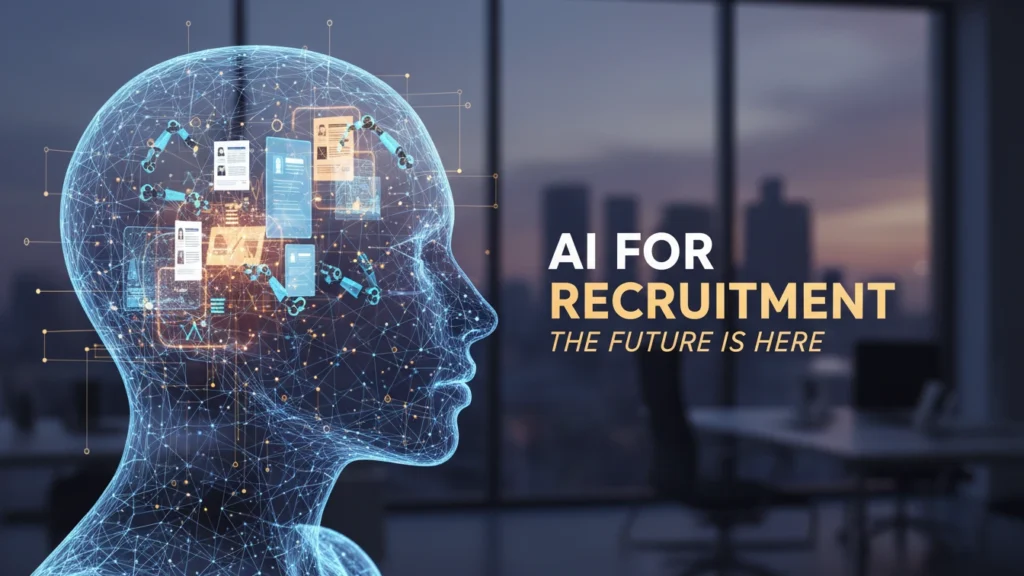
Artificial intelligence for recruitment is redefining how organizations find, evaluate, and hire talent. It improves efficiency, enhances decision‑making, and reshapes candidate experiences across hiring processes. In this comprehensive article, you will learn how AI tools operate in recruitment, the advantages they deliver, the challenges they bring, and practical steps for integrating them responsibly into your talent acquisition strategy.
What “AI for Recruitment” Means
Artificial intelligence for recruitment refers to the use of machine learning, natural language processing, predictive analytics, and automation software to perform or support tasks traditionally handled by human recruiters. These tasks range from resume screening and candidate matching to scheduling interviews and analyzing video responses.
AI for recruitment helps sift through large volumes of applications quickly and offers data‑driven insights into hiring outcomes. By automating routine work and providing predictive recommendations, organizations can focus human expertise on strategic and interpersonal aspects of hiring.
Why AI Is Becoming Essential in Hiring
AI’s role in recruitment is expanding rapidly. According to surveys of hiring professionals, adoption rates of AI tools for candidate screening and related processes are high, with many reporting faster hiring and increased productivity. For example, some industry surveys show that majorities of HR professionals use AI tools to screen resumes and shortlist candidates, with a large share acknowledging reduced time‑to‑hire since adoption began. TIME
In practice, AI is not replacing recruiters but augmenting their capabilities. When deployed responsibly, it handles repetitive tasks, enabling HR teams to engage more meaningfully with candidates.
The Core Benefits of AI for Recruitment
Faster Screening and Shortlisting
Recruiters are often overwhelmed by application volumes, especially for popular roles. AI for recruitment accelerates initial screening by processing applications at scale.
How It Works
- Resume parsing: AI extracts structured data from unformatted resumes, transforming them into searchable information.
- Semantic matching: Algorithms match candidates to roles using context, not just exact keywords. hiregen.com
Impact in Practice
A mid‑sized recruitment firm, using an AI resume parsing tool, processed over 15,000 resumes per month. This reduced screening time by about 80 percent and freed over 120 recruiter hours weekly. hiregen.com
Speed matters not only for recruiters but also for candidates. Faster responses and fewer bottlenecks improve the candidate experience and reduce drop‑out rates.
Better Candidate Matching Through Data
AI systems analyze candidate data against job criteria more deeply than rule‑based systems.
Predictive analytics and matching
Tools use historical data and patterns to identify likely successful hires, going beyond keyword matching to contextual relevance.
- Predictive insights: Algorithms forecast which candidates have the highest potential based on past hiring patterns.
- Consistency: AI applies the same criteria uniformly, reducing subjective variability in screening. RecruiteAI
Example: At an enterprise level, use of AI analytics resulted in a double‑digit increase in employee retention and improvement in acceptance rates for job offers. RecruiteAI
Improved Candidate Engagement
Candidates today expect fast, transparent communication. AI helps companies meet those expectations.
Common approaches
- Chatbots: Automated agents answer candidate questions, process applications, and update candidates on status.
- 24/7 interactions: AI doesn’t adhere to human work hours, providing round‑the‑clock engagement.
Real World Use: Hilton Worldwide deployed an AI chatbot that handled more than 80 percent of candidate queries, improving satisfaction and freeing recruiter time for higher‑value tasks. Meegle
Enhanced Diversity Initiatives
AI’s objective analysis can mitigate unconscious bias in early screening stages.
Targeted job descriptions
AI tools can analyze and optimize language in job postings to attract wider applicant pools, reducing inadvertent bias. The Enterprise World
Inclusive assessments
By focusing on skills and experience instead of demographic cues, AI can support more inclusive shortlists—so long as the training data itself is equitable.
Common Use Cases for AI in Recruitment
Resume Parsing and Automated Shortlisting
AI tools rapidly scan resumes and extract structured data, enabling efficient filtering and ranking of candidates. hiregen.com
Predictive Talent Analytics
Recruiters use AI to identify patterns that correlate with successful hires and long‑term retention, using metrics from workforce history and job performance. RecruiteAI
Intelligent Job Advertising
AI systems optimize job postings across platforms by identifying language and placement strategies that attract the most qualified applicants.
Conversational AI for Candidate Queries
Chatbots reduce email volume and ensure prompt replies to applicant questions about roles, benefits, and the hiring timeline.
Video Interviews with AI Assistance
Some organizations leverage AI in structured video interviews, where responses are analyzed for skills and relevant competencies, saving interviewing time and standardizing evaluation.
Ethical and Practical Challenges
While there are clear benefits to AI for recruitment, limitations and risks must be addressed carefully to ensure fair and compliant hiring.
Algorithmic Bias
AI learns from historical hiring data. If that data contains biases, the AI can replicate or amplify them. Jotform+1
Example: A global study highlighted discrimination risks in AI interview systems when models trained on limited regional data showed higher error rates for candidates with certain accents or backgrounds. The Guardian
Mitigation Strategies Employers should:
- Audit training data for representativeness.
- Apply fairness‑checking tools and third‑party evaluations.
Privacy and Data Protection
AI systems require access to candidate personal data. This raises privacy obligations and regulatory compliance requirements, particularly under GDPR, California laws, and other privacy regimes. TimesPro
Best Practices:
- Only collect data necessary for hiring decisions.
- Use encryption and secure storage.
- Inform candidates about data use and retention.
Loss of Human Touch
Automation can feel impersonal to candidates, especially when AI systems communicate decisions without context or feedback. TimesPro
Practical Step: Combine AI tasks with human interaction in later stages to preserve candidate engagement and subjective assessment.
Transparency and Explainability
Many AI systems operate as “black boxes,” making it hard to understand why a particular candidate was chosen or rejected. Jotform
Actionable Advice: Choose tools that offer explainability features and provide clear rationales for rankings and decisions.
Implementation Costs and Integration
AI technologies can require significant investment in tools, integration, and training—particularly for smaller companies.
Recommendation: Start with modular tools that integrate into existing applicant tracking systems to avoid costly full system overhauls.
How to Implement AI Responsibly
Assess Your Needs
Conduct a skills inventory of your recruitment process. Identify repetitive tasks that are time drains.
Choose the Right Tools
Select software that:
- Integrates with your HR tech stack.
- Offers data privacy compliance.
- Includes bias‑monitoring features.
Train HR Teams
Your HR team must understand:
- How AI recommendations are generated.
- How to interpret and validate outputs.
- When to override AI decisions.
Define Governance and Policies
Clear policies reduce risk. Set rules for:
- Data usage and retention.
- Candidate notification about AI usage.
- Regular bias audits.
Monitor and Iterate
Continually review AI outputs, track diversity metrics, candidate satisfaction, and business outcomes such as time‑to‑hire and retention.
Case Studies: AI in Action
CompanyInitiativeOutcomeUnileverAutomated screening and AI‑led assessmentsReduced time‑to‑hire by 75 percent. MeegleHilton WorldwideAI chatbot for candidate engagementReduced recruiter workload significantly. MeegleEnterprise RecruiterAI analytics for candidate matchingHigher retention and acceptance rates. RecruiteAI
These examples show practical results from deploying AI for recruitment—faster hiring, improved engagement, and data‑driven selection.
Internal Linking Suggestions
To strengthen your site authority and reader navigation, include links to related pages such as: • Learn more in our guide on Applicant Tracking Systems and HR Tech Trends. • See our article on Reducing Hiring Bias with Structured Interviews. • Read our comparison of Top Recruitment Automation Tools for 2025.
Best Practices Checklist for AI in Recruitment
- Audit data sources for bias before training tools.
- Ensure candidates are informed when AI tools are used.
- Combine AI screening with human evaluation.
- Provide candidate feedback where appropriate.
- Review privacy and compliance policies regularly.
Frequently Asked Questions
What exactly is AI for recruitment?
AI for recruitment means using software that can automate hiring tasks—like resume screening or interview scheduling—to improve speed and accuracy in selecting candidates.
Will AI replace human recruiters?
AI augments recruiter capabilities by handling repetitive tasks, but human judgment remains essential for evaluating cultural fit, soft skills, and nuanced decisions.
Can AI recruitment tools introduce bias?
Yes. If an AI’s training data reflects historical biases, the model can replicate them. Regular audits and diverse datasets help reduce bias. Jotform
How does AI improve candidate experience?
AI can respond quickly to candidate queries, reduce waiting times, and personalize communication, creating a smoother application process.
Do candidates prefer human interaction over AI?
Some do, especially for later stages. Combining AI for early tasks with human communication later increases acceptance and satisfaction.