Introduction
You’re scrolling through social media, and suddenly a caption catches your eye: someone is described as “so demure” while sipping coffee, adjusting their outfit, or simply walking into a room with quiet confidence. It feels elegant, almost soft—but also a little mysterious. You pause for a second and wonder: what does demure actually mean in slang today? Is it just about being shy, or is there something deeper hidden in the way people are using it online?
The word “demure” has been around for centuries, traditionally describing someone reserved, modest, or shy in a graceful way. But in modern slang, especially on platforms like TikTok and Instagram, it has evolved into something richer, more expressive, and sometimes even ironic. It can describe personality, aesthetic, behavior, or even a curated online vibe.
Understanding this shift matters because language is constantly evolving, and words like “demure” show how digital culture reshapes meaning in real time. This article breaks down everything you need to know—from traditional definitions to viral usage, emotional undertones, real-life interpretations, and common misunderstandings—so you can confidently understand and use the term in everyday conversations.
1. The Core Meaning of “Demure” in Slang
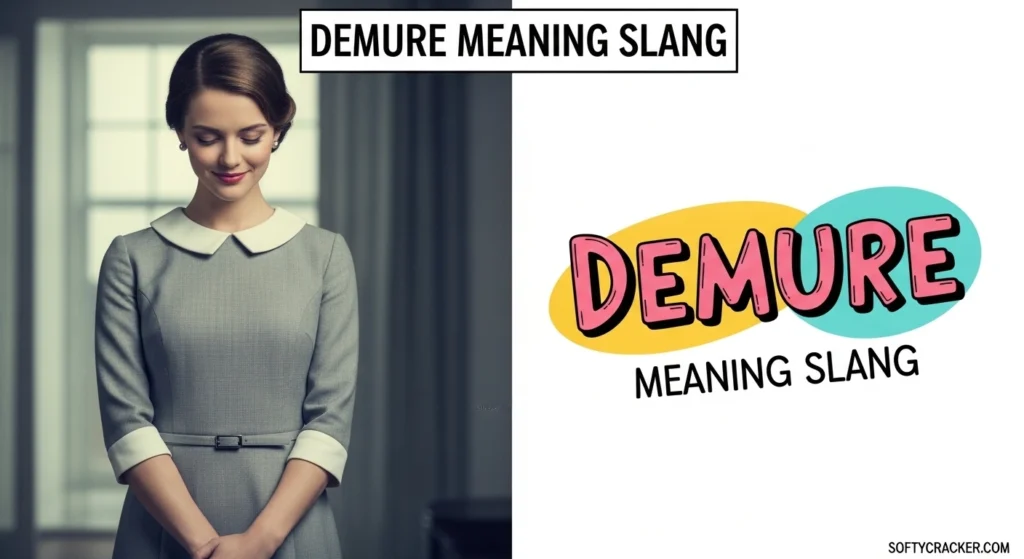
In slang usage today, “demure” generally refers to someone who presents themselves as modest, composed, soft-spoken, and subtly elegant. However, unlike its strict dictionary definition, modern slang gives it a more flexible and expressive identity.
When people say someone is “demure” online, they might be highlighting:
- A calm, controlled demeanor
- A soft or minimal aesthetic
- A playful sense of innocence or restraint
- A quietly confident personality
The key difference in slang is that “demure” is not just about being shy anymore. It can be intentional. Someone might perform demureness in photos or videos as a style choice, rather than it being their natural personality.
H3: Aesthetic vs Personality Usage
In many cases, “demure” is now used more as an aesthetic label than a psychological trait. A person wearing soft colors, speaking gently, or posing in a composed manner might be described this way—even if their real personality is bold or outgoing.
This dual meaning makes the term flexible, trendy, and widely used in digital spaces.
2. Traditional Meaning vs Modern Slang Evolution
Historically, “demure” meant modest, reserved, and shy in a socially acceptable or even idealized way—especially when describing women in older literature. It was associated with politeness, restraint, and proper behavior.
In modern slang, however, the word has expanded beyond rigid expectations. It is no longer limited to describing behavior alone. Instead, it can describe an energy or vibe someone gives off.
For example:
- Traditional: “She is demure at formal events.”
- Slang: “Her whole aesthetic is demure.”
This shift shows how language adapts to culture. Social media users repurpose older words to express identity, mood, and visual storytelling.
The evolution also reflects how younger generations prefer layered meanings. “Demure” today can be sincere, ironic, or even humorous depending on context.
3. How Social Media Redefined “Demure”
Social media platforms have played a major role in reshaping the word. On TikTok and Instagram, “demure” is often used in captions, voiceovers, or trend-based storytelling.
Creators may describe a clip as “very demure” while showing:
- Soft lighting and slow movements
- Minimal makeup looks
- Elegant outfit transitions
- Calm, composed reactions in chaotic situations
This usage is sometimes serious and sometimes sarcastic.
H3: The Viral “Demure Aesthetic” Trend
The “demure aesthetic” trend often emphasizes controlled elegance—think slow coffee pours, soft smiles, and gentle music. But ironically, users sometimes exaggerate it for humor, pairing dramatic captions with overly simple or chaotic clips.
This duality makes the word flexible and meme-friendly, helping it spread quickly across platforms.
4. Emotional Tone and Hidden Connotations
“Demure” carries strong emotional undertones. Even in slang, it often signals calmness, emotional restraint, and quiet confidence.
Depending on context, it can suggest:
- Peacefulness and inner control
- Politeness and emotional softness
- Subtle attractiveness or elegance
- Intentional minimalism
However, it can also carry irony. Someone might say “so demure” when the behavior is actually the opposite—creating a humorous contrast.
This emotional flexibility is why the word feels so powerful in online communication. It allows users to describe not just what someone does, but how they feel or present energy without being overly explicit.
5. How “Demure” Is Used in Everyday Conversations
In texting and online chats, “demure” is often used casually to describe appearance, behavior, or mood.
Common Examples:
- “You looked so demure in that outfit today.”
- “Trying to act demure but failing 😂”
- “She has a very demure vibe in this photo.”
H3: Context Matters
The meaning depends heavily on tone:
- Compliment → elegant, graceful energy
- Joke → ironic or exaggerated softness
- Observation → aesthetic description
Because of this flexibility, it has become a popular word for Gen Z and digital communication styles where tone shifts quickly.
6. Demure in Pop Culture and Influencer Language
Pop culture has amplified the word’s usage. Influencers, celebrities, and content creators often use “demure” to describe fashion looks, personality shifts, or themed content.
In fashion content, it may describe:
- Soft feminine styling
- Neutral or pastel color palettes
- Minimalist makeup looks
- Elegant posture or posing
In personality-based content, it might be used to contrast “bold” vs “soft” personas.
This contrast creates storytelling opportunities. A creator might say they are “not demure at all” in real life but present a “demure aesthetic” online. This tension between real identity and curated image is central to modern social media culture.
7. Misinterpretations and Common Confusions
Despite its popularity, “demure” is often misunderstood.
Common Misinterpretations:
- Thinking it only means “shy”
- Assuming it is outdated or overly formal
- Believing it describes personality only
- Confusing it with weakness or lack of confidence
In reality, modern slang usage does not imply weakness. Instead, it often signals controlled confidence.
A “demure” person in slang can still be strong, expressive, and self-aware. The key is subtlety, not limitation.
Understanding this helps avoid misreading captions or tone in online conversations.
8. Demure vs Similar Slang Words
“Demure” overlaps with several other slang or descriptive terms, but each carries slightly different meaning.
- Soft → emotional gentleness
- Reserved → introverted behavior
- Elegant → refined appearance
- Cute → playful attractiveness
- Graceful → smooth, controlled movement
What makes “demure” unique is its combination of modesty, aesthetic control, and subtle confidence.
It is not just about personality or appearance alone—it blends both into a single expressive identity.
This hybrid nature is why it stands out in modern slang.
9. Real-Life Scenarios Where “Demure” Applies
Imagine a few everyday situations:
A student walks into class wearing simple, well-coordinated clothing, speaking softly but confidently during presentation. A friend might say, “That was very demure of you.”
Or someone posts a quiet morning routine video with soft music, minimal editing, and calm visuals. Viewers might comment, “Such a demure vibe.”
H3: Story-Based Example
A person who is usually loud and energetic decides to present a calmer version of themselves online. They use soft filters, slower captions, and minimal movement. Even though it’s a curated version, viewers interpret it as “demure”—showing how perception shapes meaning more than reality.
These examples show how flexible the word has become in daily expression.
10. Psychological Layer Behind “Demure” Behavior
From a psychological perspective, “demure” behavior often relates to self-regulation and social awareness.
People may choose a demure presentation when they want to:
- Project calmness
- Create a sense of mystery
- Avoid attention overload
- Emphasize elegance over loudness
In digital spaces, this becomes a form of identity management. Users selectively present quieter, softer versions of themselves depending on audience and platform.
This does not necessarily reflect personality—it reflects context-based expression.
11. Why “Demure” Became a Viral Slang Term
The rise of “demure” in slang is not accidental. It reflects broader cultural trends:
- The popularity of aesthetic-based content
- The shift toward curated digital identities
- Interest in soft, calming visuals online
- Humor through ironic labeling
Words that are visually expressive tend to go viral because they translate easily into images, videos, and captions.
“Demure” fits perfectly into this ecosystem because it is both descriptive and atmospheric. It is less about strict meaning and more about feeling and presentation.
12. Key Takeaways for Understanding and Using “Demure”
Understanding “demure” in slang requires flexibility. It is not a fixed definition but a contextual expression.
To use it correctly:
- Pay attention to tone and context
- Don’t limit it to “shy”
- Recognize aesthetic usage
- Understand both sincere and ironic applications
Ultimately, it is a word about subtle expression—how someone presents themselves in a calm, composed, or intentionally understated way.
Conclusion
The slang meaning of “demure” shows how language evolves alongside culture. What once strictly described modest behavior has transformed into a versatile expression of aesthetic, emotion, and identity. Today, it can describe a person’s vibe, a curated online persona, or even a humorous contrast between appearance and reality.
At its core, “demure” is about subtle presence—quiet confidence, controlled elegance, and intentional softness. Whether used sincerely or ironically, it reflects how people communicate identity in a world shaped by visual storytelling and digital expression. Understanding it helps decode modern conversations more accurately and appreciate the creativity behind everyday slang. Language is never static, and “demure” is a perfect example of how meaning grows, shifts, and adapts to the way we live now.
FAQs
What does “demure” mean in modern slang?
It refers to someone or something that appears soft-spoken, modest, elegant, or subtly composed, often used as an aesthetic or vibe.
Is “demure” only used for girls or women?
No, although it is often associated with feminine aesthetics, anyone can be described as demure in slang depending on presentation or vibe.
Is “demure” a compliment?
Usually yes, but it depends on tone. It can be sincere praise or used ironically in memes or jokes.
What is the opposite of demure?
Words like loud, bold, flashy, or expressive are often considered opposites in slang usage.
How is “demure” used on TikTok?
It is used to describe aesthetic videos, soft visuals, calm behavior, or even sarcastic contrasts in personality.
Does demure mean shy?
Traditionally yes, but in slang it goes beyond shyness and includes elegance, control, and aesthetic presentation.
Can “demure” be used sarcastically?
Yes, many online users use it ironically to describe behavior that is actually bold, chaotic, or the opposite of calm.