Introduction
Imagine opening a group chat where someone introduces themselves as “He/they… but only when I’ve had coffee,” while another friend insists on being called “Your Majesty” for the rest of the week. A few messages later, someone changes their display name to “bro/she/legend,” and nobody even stops to ask why—it just fits the energy of the conversation. In today’s digital world, language is no longer fixed, formal, or predictable. It bends, adapts, and sometimes even jokes with us.
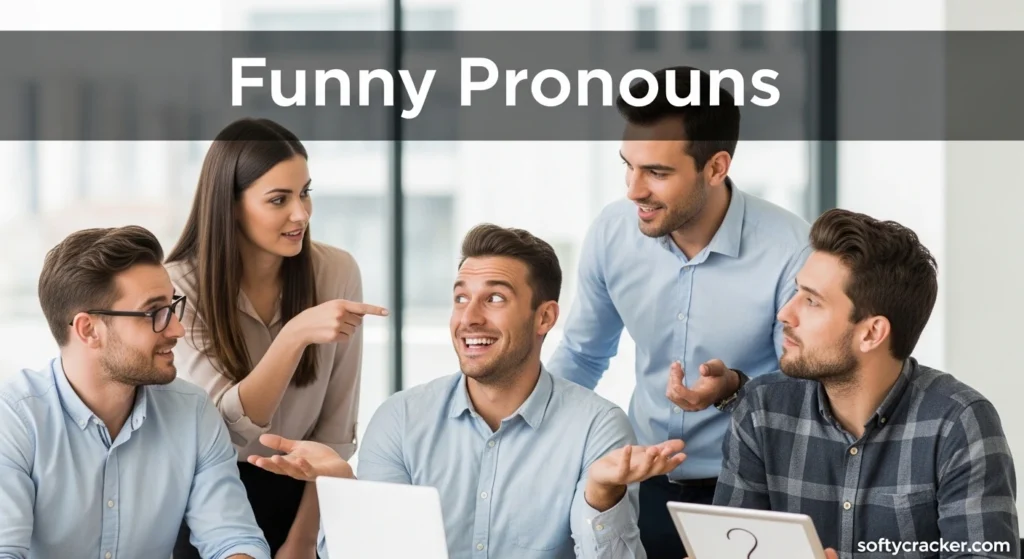
This is where the idea of funny pronouns comes in—not as a strict linguistic category, but as a cultural phenomenon born from internet humor, identity play, and online creativity. These playful pronouns often mix traditional pronoun usage with memes, jokes, or exaggerated self-descriptions. While they may look chaotic at first glance, they actually reveal a lot about how people express personality, belonging, and humor in modern communication.
Understanding funny pronouns is not just about internet slang. It’s about seeing how language evolves when people are free to experiment with identity, irony, and community expression in real time.
What Are Funny Pronouns Really?
Funny pronouns are informal, humorous, or creatively altered pronoun-like expressions used in online or casual communication. Unlike traditional pronouns such as he, she, or they, these versions are not necessarily tied to grammatical rules or identity structures. Instead, they often serve as jokes, personality signals, or social bonding tools.
For example, someone might jokingly say, “I use he/him/why am I like this,” or “she/they/based mode activated.” These are not linguistic replacements in formal settings but playful extensions of self-expression.
At their core, funny pronouns function more like social emojis than grammatical necessities. They add tone, personality, and humor to text-based conversations where facial expressions and voice cues are missing.
Why they matter
Funny pronouns reflect how people adapt language for emotional clarity online. In a world dominated by texting and social media, tone can easily be misinterpreted. Humor becomes a bridge, helping people express identity without sounding too rigid or overly serious.
The Origins of Funny Pronouns in Internet Culture
Funny pronouns didn’t appear overnight. They evolved gradually from meme culture, fandom spaces, and early internet forums where users experimented freely with identity and language.
In the early days of online communities, usernames and bios often included exaggerated self-descriptions like “King of Chaos” or “Professional Napper.” Over time, these playful identity markers merged with pronoun formats, creating hybrid expressions like “he/them/chaos entity” or “she/her/big mood.”
Fandom culture, especially on platforms like Tumblr and later Twitter and TikTok, played a huge role. Users began blending identity language with humor as a way to stand out and bond with like-minded communities.
Funny pronouns became a natural extension of this trend—part satire, part identity expression, and part linguistic creativity. They reflect the internet’s tendency to remix serious concepts into playful formats.
How Humor Changes the Function of Pronouns
Pronouns traditionally serve a grammatical purpose: they replace nouns to avoid repetition and clarify identity. Funny pronouns, however, shift this function entirely. They are less about grammatical efficiency and more about emotional expression.
Instead of simply identifying someone, humorous pronouns perform personality. They communicate tone, attitude, and sometimes even sarcasm before a full sentence is read.
For instance:
- “they/them/mild chaos” suggests playful unpredictability
- “he/him/resident clown” signals self-aware humor
- “she/her/chronically online” adds cultural context
This transformation shows how language evolves in digital environments. When communication becomes text-heavy, people compensate by embedding emotional cues directly into structure.
Funny pronouns essentially turn grammar into performance art.
Common Examples of Funny Pronouns in Online Spaces
Funny pronouns can take many forms depending on the community, platform, or individual style. Some are subtle, while others are intentionally absurd.
Typical formats include:
- Traditional pronouns + joke add-ons: “she/her/brain empty”
- Meme-based identity phrases: “he/him/sleep deprived goblin”
- Hyperbolic titles: “they/them/lord of snacks”
- Situational humor: “she/they/depends on WiFi”
Why these formats work
They are short, instantly recognizable, and easy to remix. In fast-moving digital conversations, brevity matters. These expressions allow users to communicate humor and personality without long explanations.
They also function as identity signals within communities. When someone uses similar humor patterns, it creates a sense of belonging and shared cultural understanding.
Meme Culture and the Evolution of Funny Pronouns
Meme Language as a Foundation
It has always thrived on exaggeration and remixing. Funny pronouns are simply another layer of this creative ecosystem. They borrow the structure of serious identity language and overlay it with absurdity or humor.
Viral Influence on Pronoun Creativity
On platforms like TikTok and Twitter, trends spread rapidly. A single humorous pronoun format can become a viral template within days. People adapt it, modify it, and push it further until it becomes part of broader internet vocabulary.
Community-driven humor
Different communities also develop their own variations. Gaming spaces might favor chaotic or competitive humor (“he/him/respawn king”), while fandom spaces lean toward character-based jokes.
This constant remixing keeps the concept alive and evolving.
Social Media Contexts Where Funny Pronouns Appear
Funny pronouns thrive in environments where identity presentation is flexible and creativity is rewarded. Social media platforms provide exactly that space.
On profiles, bios, comment sections, and usernames, users often experiment with humor as a way to stand out. A funny pronoun line can serve as an instant personality snapshot.
Where they are most common:
- TikTok bios and captions
- Twitter/X display names
- Discord usernames and roles
- Instagram profiles and stories
Each platform shapes how these pronouns evolve. For example, Discord communities often use them as inside jokes, while TikTok users use them for quick comedic impact.
Identity vs Humor: When Things Get Misunderstood
One of the most important aspects of funny pronouns is the potential for misunderstanding. Because pronouns are also deeply tied to identity, humorous variations can sometimes blur lines between self-expression and clarity.
Some people may misinterpret jokes as actual pronoun preferences or vice versa. This creates confusion, especially in spaces where both serious identity expression and humor coexist.
Key tension points:
- Clarity vs creativity
- Respect vs satire
- Identity vs performance
Most communities navigate this through context. If something is clearly part of a joke or meme environment, it is understood as humor. However, in mixed or unfamiliar settings, misinterpretation is common.
This highlights an important lesson: context matters as much as content in digital communication.
Funny Pronouns in Professional and Formal Spaces
While funny pronouns thrive online, they are generally not appropriate in formal environments such as workplaces, academic submissions, or official documentation.
The reason is simple: professional communication prioritizes clarity and standardization. Humor-based pronouns can introduce ambiguity or appear unprofessional in structured settings.
However, some workplaces with strong creative cultures or tech-driven environments may allow lighthearted expression in internal chat systems or team-building contexts.
Best practice approach:
- Keep humorous pronouns for informal settings
- Adapt tone depending on audience
- Avoid ambiguity in professional communication
Understanding this boundary ensures that humor enhances communication rather than disrupting it.
The Role of Funny Pronouns in Online Communities
Funny pronouns are more than jokes—they function as social glue in digital communities. Shared humor creates bonding, and language plays a major role in that process.
When someone uses a humorous pronoun format, it often signals that they understand the culture of the space they’re in. It becomes a form of belonging.
Community benefits:
- Builds shared identity through humor
- Reduces social tension in conversations
- Encourages creativity and participation
In this sense, funny pronouns are not random—they are structured signals of cultural alignment within online groups.
Psychological Appeal of Funny Pronouns
Humor in language serves several psychological functions, and funny pronouns are no exception.
First, they reduce social pressure. By joking about identity, people soften how they present themselves, making interactions feel less rigid.
Second, they increase relatability. Humor signals approachability, which encourages engagement.
Third, they provide creative control over identity expression. In digital spaces where identity is often reduced to text, humor allows users to reclaim individuality.
In short, funny pronouns give people a way to be seen as both expressive and approachable at the same time.
Misinterpretations and Social Conflicts
Despite their playful nature, funny pronouns can sometimes lead to misunderstandings. These usually happen when context is missing or when audiences are unfamiliar with internet humor norms.
Common issues include:
- Assuming humor is seriousness
- Misreading identity cues
- Cross-cultural misunderstanding of slang
These conflicts highlight the importance of digital literacy. Understanding tone, context, and platform culture is essential for interpreting modern language correctly.
Most misunderstandings are resolved quickly once context is clarified, but they reveal how fluid and evolving online communication has become.
The Future of Playful Language and Funny Pronouns
Language is constantly evolving, and funny pronouns are part of a larger trend toward flexible, expressive communication. As digital spaces continue to grow, we can expect even more creative forms of identity expression.
Future variations may become more personalized, interactive, or even AI-influenced. The line between identity, humor, and digital persona will likely continue to blur.
What remains constant is the human desire to express individuality in ways that feel authentic and engaging. Funny pronouns are just one example of how language adapts to meet that need in the internet age.
Conclusion
Funny pronouns may seem like a small or purely humorous detail in online communication, but they reveal something much deeper about modern language and identity. They show how people use humor to express personality, build community, and navigate the complexities of digital interaction. From meme culture to social media bios, these playful expressions demonstrate that language is no longer confined to strict rules—it is flexible, creative, and deeply social.
At their core, funny pronouns are not about replacing traditional language but about expanding it. They reflect a world where identity can be both serious and playful, structured yet fluid. As online culture continues to evolve, so too will the ways people choose to represent themselves. And in that evolution, humor will likely remain one of the most powerful tools for connection and expression.
FAQs
What are funny pronouns?
Funny pronouns are humorous or playful adaptations of traditional pronouns used online to express personality, humor, or identity in a lighthearted way.
Are funny pronouns official grammar rules?
No, they are not part of formal grammar. They are informal expressions used mainly in digital communication and social media.
Where are funny pronouns commonly used?
They are mostly found on social media platforms like TikTok, Twitter/X, Discord, and Instagram bios.
Do funny pronouns replace real pronouns?
No. They are not replacements but additions used for humor or personality expression.
Why do people use funny pronouns?
People use them to express creativity, build community connections, and add humor to their online identity.
Can funny pronouns cause confusion?
Yes, sometimes they can be misunderstood if the context is unclear or if someone is unfamiliar with internet culture.
Are funny pronouns appropriate in professional settings?
Generally no. They are best suited for informal or social contexts rather than formal or workplace communication.