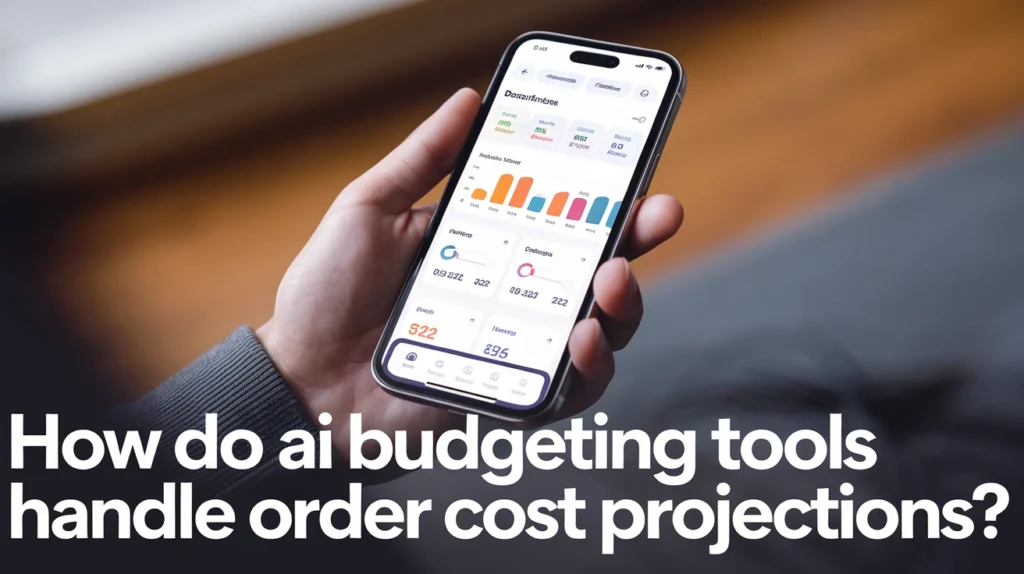
bHow do AI budgeting tools handle change order cost projections is a question many construction managers, project owners, and financial teams are now asking. Change orders disrupt budgets, shift timelines, and impact cash flow. Even small adjustments can cascade into major financial consequences. Traditional spreadsheets and manual forecasting struggle to keep up. However, AI-powered budgeting tools bring new accuracy, speed, and visibility to this critical part of project management.
This in-depth guide explains how AI tools generate projections, what data they use, how they detect risk early, and why these systems are transforming project budgeting. You’ll learn how the technology works, when to trust it, and how to use it responsibly. Each section is written for real-world decision makers—construction executives, finance teams, contractors, and anyone managing large, change-heavy projects.
Introduction: Why Change Order Projections Matter More Than Ever
Change orders are a normal part of modern construction. Designs evolve. Supply costs shift. Labor availability fluctuates. Regulations adjust. Clients refine expectations. Even weather patterns influence site activity. Every change order alters the financial picture.
Yet, attempting to estimate the final cost of these changes using manual methods often leads to:
- Budget overruns
- Slow approvals
- Disputes between owners and contractors
- Inefficient resource allocation
- Missed deadlines
AI budgeting tools help teams shift from reactive guessing to proactive forecasting. And they give leaders the clarity they need to make confident decisions.
Imagine having a financial “GPS system” for your entire project. When the route changes, the map updates instantly. That is exactly what modern AI budgeting systems aim to provide.
What AI Budgeting Tools Actually Do
To understand how do AI budgeting tools handle change order cost projections, it helps to know what these systems are designed to accomplish. AI budgeting software typically performs three core functions:
1. Automated cost forecasting
The system analyzes historical data, current pricing trends, labor rates, productivity metrics, and project conditions to forecast expected costs.
2. Real-time scenario modeling
AI models simulate multiple scenarios to highlight how a change order will affect budgets, schedules, and resource demands.
3. Dynamic risk assessment
The system identifies risk triggers such as material delays, unusual labor requests, weather impacts, or scope abnormalities.
Unlike traditional budgeting, AI tools continuously learn as new data enters the system. This means projections become more accurate over time.
How AI Budgeting Tools Process Inputs for Change Orders
To create accurate cost projections, AI systems use multiple data sources. They do not rely on a single estimate or static spreadsheet. Instead, they analyze:
Historical project data
- Previous change orders
- Material pricing from past jobs
- Labor productivity
- Subcontractor performance
Live market data
- Commodity pricing
- Supplier lead times
- Fuel and transportation cost indices
- Regional labor cost trends
Project-specific variables
- Current progress reports
- On-site productivity
- Actual vs. planned resource usage
- Weather forecasts
- Updated design files
Contract terms
- Allowances
- Escalation clauses
- Subcontractor agreements
- Contingency allocations
This multi-layered approach helps AI tools predict realistic outcomes instead of relying on guesswork.
How Do AI Budgeting Tools Handle Change Order Cost Projections? The Step-by-Step Process
Here is the core process behind the question how do AI budgeting tools handle change order cost projections:
1. Input Detection and Categorization
The system identifies what type of change order has been submitted (material change, design shift, schedule adjustment, labor modification, etc.).
2. Scope Impact Analysis
AI determines which parts of the project will be affected and how those effects cascade across cost categories.
3. Cost Component Breakdown
The system separates the change order into cost buckets such as:
- Materials
- Labor
- Equipment
- Subcontractors
- Fees
- Contingency adjustments
- Indirect costs
4. Predictive Modeling
AI compares historical outcomes of similar change orders with current project conditions. It then generates a cost impact range instead of a single value, improving accuracy.
5. Scenario Simulation
The system models multiple outcomes (best case, most likely, worst case).
6. Real-Time Budget Adjustment
The master project budget updates automatically, reflecting the new projections.
7. Risk Visibility & Alerts
AI highlights risks such as cost escalation or schedule delays before they happen.
8. Recommendation Engine
The tool may suggest:
- Alternative suppliers
- Revised timelines
- Cost-saving substitutions
- Resource reallocation
This sequence creates a transparent and defensible financial projection.
Why AI Is More Accurate Than Traditional Cost Estimation
Traditional estimation methods struggle because humans can’t easily process:
- Thousands of historical data points
- Shifting market conditions
- Real-time performance data
- Interconnected project variables
- Multiple possible cost scenarios
AI tools excel at identifying patterns and correlations across huge datasets. A system may notice that when lead times increase by 10%, labor costs for a specific crew usually rise by 7% due to downtime. Humans rarely spot such patterns.
Case Studies: AI in Action for Change Order Projections
Real-life examples help illustrate how these tools work.
Example 1: Commercial Building Change Order
A contractor receives a structural steel change order. AI detects rising steel prices and predicts a 14% cost increase within 45 days. It alerts the team, enabling them to lock pricing early. This saves $52,000 in material costs.
Example 2: MEP System Redesign
A mechanical redesign requires new routing. The AI budgeting tool analyzes past MEP change orders and estimates additional labor hours with 92% accuracy. This helps the contractor negotiate a fair, data-driven price.
Example 3: Supply Delay Compensation
AI notices that shipping delays on specialized equipment historically lead to 8–12 days of idle labor. It builds these costs into the projection automatically, preventing budget surprises.
How AI Improves Transparency in Change Order Negotiations
Change order disputes often arise from unclear documentation. AI improves transparency by:
- Providing standardized cost breakdowns
- Linking projections to data sources
- Showing impact on schedule and labor
- Explaining assumptions in plain language
AI-backed documentation reduces conflict. It also speeds up approvals because all parties see the same data.
How Contractors, Owners, and Finance Teams Use AI Tools Differently
Different stakeholders use AI tools for different goals.
Contractors
- Reduce risk of underquoted change orders
- Improve cash flow projections
- Benchmark subcontractor pricing
Owners
- Validate contractor proposals
- Prevent inflated cost increases
- Manage contingency budgets
Finance teams
- Forecast month-end costs
- Align budgets with real-time data
- Produce accurate financial statements
Building a Responsible AI Budgeting Workflow
Good forecasting isn’t only about accuracy. It’s also about ethical and responsible use. Teams must treat AI as a support system rather than a replacement for human judgement.
Key practices include:
- Reviewing all outputs manually
- Understanding the assumptions behind predictions
- Disclosing when AI is used in cost documentation
- Protecting sensitive project data
- Monitoring for bias in historical datasets
AI works best when paired with skilled human insight.
Common Misconceptions About AI Cost Projection Tools
Many people misunderstand what AI can and cannot do. Here are common misconceptions:
“AI eliminates the need for estimators.”
AI enhances estimators. It does not replace expertise.
“Artificial Intelligence projections are always right.”
AI improves accuracy but still requires review.
“It doesn’t understand unique project conditions.”
Modern tools incorporate project-specific data to adjust predictions.
“AI makes decisions automatically.”
AI assists; decision-making remains human-led.
Advantages and Limitations of AI in Change Order Forecasting
Advantages
- Faster cost projections
- Better accuracy through pattern analysis
- Objective, data-driven output
- Instant updates when project variables change
- Improved transparency
- Reduced human error
Limitations
- Accuracy depends on data quality
- Poorly trained models may miss unusual conditions
- Results can be misunderstood without proper training
- Not all AI tools integrate with all project management systems
Understanding both sides helps teams use AI better.
How AI Tools Calculate Cost Ranges Rather Than Single Estimates
One major improvement from AI tools is shifting from single-line estimates to cost ranges. Instead of saying, “This change order will cost $32,500,” AI might project:
- Best case: $29,600
- Likely: $32,200
- Worst case: $38,700
These ranges prepare teams for realistic outcomes. They also support better contingency planning.
The Future of AI in Change Order Management
Expect rapid advancements in tools that automate and enhance budgeting workflows. Future trends include:
- AI tools syncing automatically with BIM models
- Predictive scheduling linked to cost forecasting
- AI-driven vendor pricing comparisons
- Real-time procurement risk alerts
- Voice-activated budget reporting
- Predictive cash flow modeling tied to change orders
The construction finance industry is shifting toward dynamic, data-driven decision-making.
Conclusion — Why AI Budgeting Tools Are Transforming Change Order Forecasting
This guide explained how do AI budgeting tools handle change order cost projections and why these systems are revolutionizing project financial management. AI tools enhance accuracy, reduce dispute risk, and improve transparency. They help teams manage uncertainty by predicting cost impacts before they occur.
When used responsibly, AI budgeting systems give project leaders the clarity and confidence they need to keep budgets under control and make smarter decisions. The combination of advanced analytics and human judgement creates a powerful framework for modern construction budgeting. By embracing AI tools early, organizations stay competitive, reduce financial risk, and improve outcomes across every phase of the project.
FAQs
1. How do AI budgeting tools handle change order cost projections compared to traditional methods?
AI tools analyze historical data, market trends, and real-time project metrics to generate more accurate cost ranges. Traditional methods rely on manual calculations and limited data, which increases risk.
2. What data do AI tools use to estimate change order costs?
They use a mix of historical change order data, supplier pricing, labor productivity, project progress reports, and contract terms. This multi-source approach improves forecasting accuracy.
3. Can AI detect risks associated with change orders?
Yes. AI tools flag unusual material costs, labor spikes, supplier delays, and schedule risks linked to specific types of change orders. This allows teams to act quickly.
4. Do AI budgeting tools replace estimators or project managers?
No. They support experts by providing fast, data-driven insights. Final decisions still rely on human judgement.
5. Are AI cost projections accurate?
They are typically more accurate than manual forecasts because they analyze large datasets and learn over time. However, human review is still essential.