Introduction
You’re scrolling through a chat when a message pops up: “I was only jp 😅”. You pause for a moment. JP? Is it a name? An abbreviation? A typo? Or something deeper hidden in internet slang you’re expected to just know? In today’s fast-moving digital conversations, even two-letter expressions can carry layers of meaning, emotion, and context that completely change how a message is understood.
“JP” is one of those compact abbreviations that often confuses people because its meaning shifts depending on where and how it is used. For some, it simply means “just playing,” while in other contexts it can refer to “Japan” or even specialized uses in professional or gaming spaces. Understanding it is not just about decoding slang—it’s about understanding tone, intent, and communication style in modern digital culture.
In this article, we’ll break down “JP meaning in text” from every angle: its most common interpretations, emotional nuances, real-life usage examples, misunderstandings, and how you can confidently interpret it in any conversation. By the end, you’ll not only know what JP means—you’ll know how to read between the lines like a digital native.
1. Understanding the Basic Meaning of JP in Text
At its core, “JP” is an abbreviation that depends heavily on context. Unlike fixed acronyms such as “LOL” or “BRB,” JP does not have one universal meaning. Instead, it is a flexible shorthand used across texting, gaming chats, and social media platforms.
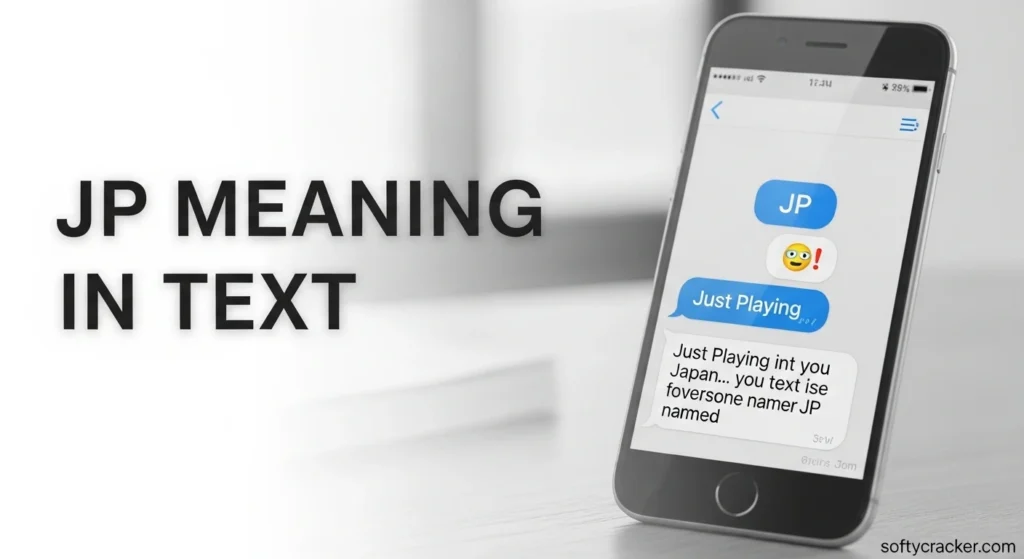
The most widely accepted meaning in casual conversations is “just playing.” It is often used to indicate that someone is joking or not being serious. For example, if someone says something slightly harsh and then adds “jp,” it is a way of softening the statement.
However, JP can also stand for “Japan”, especially in international discussions, travel conversations, or gaming regions. In this case, it refers to the country rather than an emotion or tone.
Because of this dual usage, JP requires careful interpretation. You cannot assume its meaning without looking at the surrounding message. Unlike standardized slang, JP is highly contextual, which makes it both interesting and sometimes confusing in digital communication.
2. The Most Common Meaning: “Just Playing”
The dominant interpretation of JP in modern texting culture is “just playing.” It is used when someone wants to clarify that they were joking after making a statement that could be misunderstood.
For example:
- “You’re terrible at this game… jp 😆”
- “I hate this movie… jp, it’s actually good”
In both cases, JP signals humor, softens tone, and prevents emotional misunderstanding.
Why people use it:
- To avoid sounding rude
- To lighten sarcasm
- To clarify jokes quickly without long explanations
This usage has become especially popular in fast-paced messaging environments like Snapchat, Discord, and Instagram DMs, where users prefer short emotional cues over full sentences.
Interestingly, JP also reflects a broader communication trend: people increasingly rely on abbreviations to regulate emotional tone in digital conversations. Instead of explaining a joke, they simply attach “jp” to make intent clear.
3. JP Meaning as “Japan” in Digital Contexts
Another important meaning of JP is simply “Japan.” This usage is common in global communication, especially in gaming, anime communities, travel discussions, and online forums.
For example:
- “I’m moving to JP next year”
- “JP servers are faster for me”
In these cases, JP is a geographical shorthand used for efficiency. Just like “US” for United States or “UK” for United Kingdom, JP is widely recognized as the country code for Japan.
This usage is especially common in:
- Online gaming (region servers)
- International shipping discussions
- Anime and manga communities
- Travel planning chats
Unlike “just playing,” this meaning is factual rather than emotional. Therefore, understanding the conversation topic is crucial. If the discussion involves geography or gaming servers, JP almost certainly means Japan.
4. JP in Gaming and Online Chat Culture
Gaming culture plays a significant role in how JP is used today. In multiplayer games, communication needs to be fast, clear, and minimal. That’s where abbreviations like JP thrive.
Common gaming usage:
- “Switch to JP server”
- “JP players are strong in this lobby”
- “Lag is better on JP region”
In this context, JP is almost always referring to Japan-based servers or players.
However, gaming chats also use JP as “just playing,” especially during competitive banter. For instance:
- “You’re trash lol jp 😂”
Here, JP ensures that trash talk remains friendly and playful rather than toxic.
This dual usage makes gaming one of the most context-sensitive environments for interpreting JP. Players often rely on tone, emojis, and gameplay situation to understand what is meant.
5. Emotional Tone Behind JP
One of the most important aspects of JP is not just its literal meaning—but its emotional function. When used as “just playing,” JP helps regulate tone in conversations.
Emotional roles of JP:
- Softens sarcasm
- Prevents misunderstandings
- Adds humor
- Maintains social balance
For example, a sentence like “You’re so bad at this” can sound offensive. But adding “jp” transforms it into a joke.
This small abbreviation acts as a tone modifier, which is crucial in digital communication where facial expressions and vocal tone are absent. Without JP, messages can easily be misinterpreted as rude or serious.
In many ways, JP functions like a digital “smile”—a small marker that ensures the emotional intention is correctly understood.
6. Common Misunderstandings About JP
Because JP has multiple meanings, confusion is extremely common. Many people misinterpret it, especially if they are unfamiliar with texting slang.
Typical misunderstandings:
- Thinking JP is a person’s initials
- Assuming it always means Japan
- Misreading jokes as serious statements
- Overlooking tone indicators in messages
For example, someone might read:
- “You lost again jp” and assume it is an insult, when in reality it is meant playfully.
These misunderstandings highlight the importance of context awareness in digital communication. Without it, even simple abbreviations can lead to confusion or unnecessary conflict.
7. How Context Determines JP Meaning
Context is the single most important factor in decoding JP. The surrounding conversation usually reveals its intended meaning.
How to interpret JP correctly:
Look at the topic
- Gaming? Likely Japan server
- Casual joke? Likely “just playing”
Observe tone indicators
- Emojis = playful tone
- Technical terms = geographical meaning
Check conversation flow
If JP appears after a teasing sentence, it usually softens the statement.
Understanding context turns JP from a confusing abbreviation into a clear communication tool.
8. JP in Professional or Other Less Common Uses
While less frequent, JP can appear in formal or semi-formal contexts as well.
Possible meanings include:
- Job Posting (rare shorthand in internal chats)
- Justice of the Peace (legal context)
- Japan (official abbreviation in logistics or shipping codes)
However, in professional communication, JP is usually avoided unless the meaning is already established. Clear communication is preferred over slang in workplaces, so ambiguity is minimized.
Still, recognizing these rare uses helps prevent misinterpretation in specialized environments.
9. Regional and Cultural Differences in JP Usage
The meaning and popularity of JP can vary depending on cultural and regional factors.
In Western online chats, “just playing” is more dominant. In contrast, in international or Asian-based communities, JP is more likely to refer to Japan.
Cultural differences:
- Western texting culture → emotional slang use
- Global/gaming culture → geographical abbreviation
This difference highlights how internet slang evolves differently across communities. A single abbreviation can carry entirely different meanings depending on who is using it and where.
10. Real-Life Chat Scenarios Using JP
To better understand JP, let’s explore real-life conversational examples.
Scenario 1: Friendly teasing
“Bro, you’re so slow 😂 jp” → Means: playful joke, not serious insult
Scenario 2: Gaming chat
“Switch to JP server for less lag” → Means: Japan server
Scenario 3: Social media comment
“You actually believed that? jp 😭” → Means: joking, not serious
These scenarios show how JP shifts meaning effortlessly depending on context. The key is not memorizing definitions—but understanding usage patterns.
11. How to Respond When Someone Uses JP
Knowing how to respond to JP helps you maintain smooth communication.
If it means “just playing”:
- Respond lightly: “lol I know 😄”
- Or play along: “I’ll get you next time”
Else If it means “Japan”:
- Respond with topic relevance: “Oh nice, Tokyo or Osaka?”
If you’re unsure:
- Ask casually: “You mean Japan or just joking?”
The safest approach is always to match the tone of the conversation rather than overanalyze it. JP is meant to simplify communication, not complicate it.
Conclusion
JP is a small abbreviation with surprisingly flexible meaning in digital communication. While it most commonly stands for “just playing,” it can also refer to Japan or appear in niche contexts depending on the conversation. Its true meaning is always shaped by context, tone, and intent rather than a fixed definition.
Understanding JP is less about memorizing slang and more about reading conversations like a whole—paying attention to emotion, topic, and structure. In modern messaging culture, where short expressions carry big meanings, knowing how to interpret terms like JP helps avoid misunderstandings and improves communication clarity. Ultimately, JP reflects how language continues to evolve in the digital age—becoming shorter, faster, but still deeply expressive when understood correctly.
FAQs
What does JP mean in text messages?
JP most commonly means “just playing,” used to show someone is joking and not serious.
Can JP mean Japan in chats?
Yes, JP can also stand for Japan, especially in travel, gaming, or international contexts.
Is JP the same as JK?
No. JK means “just kidding,” while JP usually means “just playing,” though they are similar in tone.
How do I know what JP means in a message?
Check the context—gaming or geography usually means Japan, while jokes usually mean “just playing.”
Is JP formal or informal slang?
JP is informal and mostly used in casual texting or online conversations.
Can JP be used in professional communication?
Rarely. It is generally avoided in formal settings unless the meaning is already clear.
Why do people use JP instead of full words?
Because it saves time, keeps messages short, and helps quickly indicate tone in conversations.