Introduction
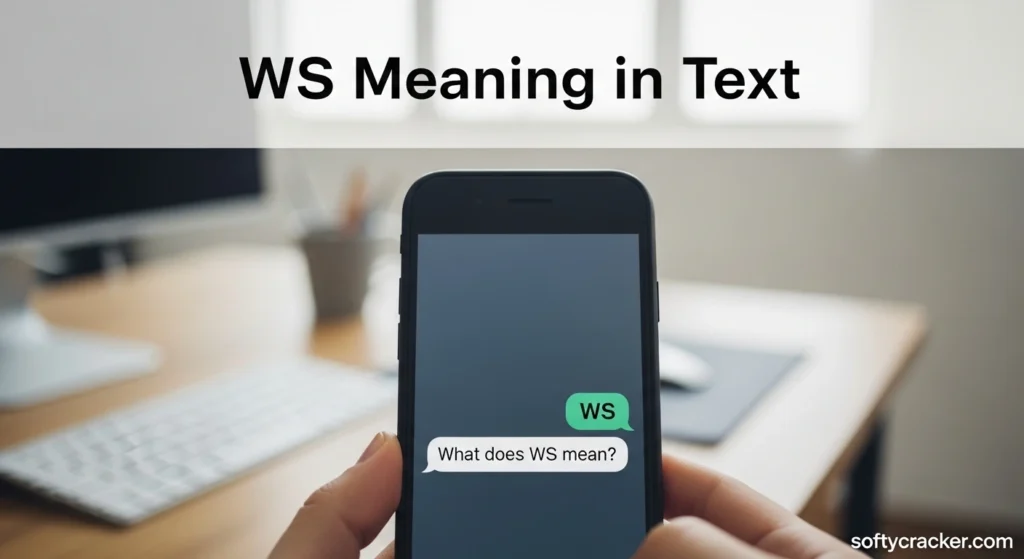
You’re scrolling through a late-night chat when a message pops up: “ws?” It looks simple, almost too simple—but it leaves you wondering what it actually means. Is it a greeting, a question, or just casual slang you’re expected to already understand? In today’s fast-moving digital conversations, even two-letter abbreviations like “WS” can carry different meanings depending on who is using them and where they appear.
Texting language has evolved into a compact code of emotions, intentions, and social cues. Words are shortened, meanings shift, and context becomes everything. “WS” is one of those expressions that can confuse people because it doesn’t have a single universal definition. Instead, it changes based on tone, platform, and conversation style.
Understanding “ws meaning in text” matters because misinterpreting it can lead to confusion in chats, missed intentions, or awkward replies. This article breaks down every possible meaning, real-life usage, emotional context, and practical interpretation so you can confidently understand and respond whenever you see it in messages.
WS Meaning in Text: The Core Definition
At its core, “WS” is an informal abbreviation used in digital communication, and its meaning depends heavily on context. Unlike fixed acronyms such as “LOL” or “BRB,” WS is flexible. The most common interpretations include “wassup,” “well said,” or sometimes even shorthand used in specific communities or gaming chats.
In casual texting, especially among younger users, WS often functions as a shorthand greeting similar to “what’s up?” It is used to initiate conversation or check in on someone in a relaxed, informal tone. However, this is not its only interpretation.
The ambiguity of WS is what makes it interesting. It doesn’t carry a single universal meaning, which means users must rely on surrounding text, tone, and relationship with the sender to understand it correctly. For example, a friend saying “ws” at the beginning of a chat likely means “what’s up,” while in a comment section, it might be used to express agreement like “well said.”
This flexibility is both the strength and confusion of WS in modern digital language.
WS as “Wassup” in Casual Conversations
One of the most common meanings of WS is “wassup,” a relaxed version of “what’s up.” This usage is especially popular in informal texting among friends or close contacts.
How It Appears in Chats
You might see it like:
- “ws bro?”
- “ws?”
- “ws, how you been?”
In these cases, WS acts as an opener, signaling interest in starting a conversation without formality. It carries a friendly, laid-back tone and is often used when people don’t want to type full sentences.
Why People Use It
The appeal of WS as “wassup” lies in its speed and simplicity. In fast-paced messaging environments like WhatsApp, Instagram DMs, or Snapchat, users often prefer short expressions that save time while still sounding natural.
Emotional Tone
When used this way, WS is usually neutral to positive. It doesn’t indicate urgency or seriousness—it’s more like a verbal nod, saying “I’m here, let’s talk.” Understanding this helps avoid overthinking what might actually be a simple greeting.
WS Meaning as “Well Said”
Another widely accepted interpretation of WS is “well said.” This usage appears more often in comment sections, group chats, or discussions where someone is agreeing with a strong or meaningful statement.
For example:
- Person A: “Respect is more important than attention.”
- Person B: “WS 👏”
Here, WS is a form of appreciation. It acknowledges that the previous message was thoughtful, accurate, or emotionally resonant.
Why This Meaning Matters
Unlike the casual greeting version, this usage reflects agreement and validation. It is often used when users want to support an idea without writing a long response.
Tone and Context
This version of WS carries a positive and affirming tone. It shows respect for the speaker’s opinion and is commonly used in motivational posts, debates, or philosophical discussions.
Understanding this meaning helps avoid misreading WS as a question when it is actually praise.
Other Possible Interpretations of WS in Text
WS is not limited to just “wassup” or “well said.” In certain communities or niche conversations, it can take on additional meanings.
Common Variations
- Work Shift – used in workplace scheduling contexts
- Web Series – in entertainment discussions
- White Skin – less common and context-specific
- Wall Street – in financial conversations
- Wrong Signal / Wrong Send – in some informal shorthand usage
Each meaning depends entirely on the topic being discussed. For example, in a workplace chat, “ws tomorrow” could refer to a work shift schedule, while in finance, WS might refer to Wall Street updates.
Why Multiple Meanings Exist
Internet slang evolves organically. There is no central authority defining abbreviations, so communities naturally assign meanings based on convenience. This is why WS can feel confusing at first glance.
The key takeaway is that WS is not fixed—it is adaptable language shaped by its environment.
Why Context Determines the Meaning of WS
Context is everything when interpreting WS in text. Without context, the abbreviation is meaningless on its own.
Factors That Influence Meaning
- Who is sending the message
- Platform (WhatsApp, Instagram, gaming chat, etc.)
- Conversation topic
- Previous messages
For instance, if a friend you often chat casually sends “ws,” it likely means “wassup.” But if someone in a discussion thread replies “WS,” they might be agreeing with a statement.
Real-Life Scenario
Imagine two situations:
- In a gaming chat: “ws bro?” → likely “what’s up?”
- In a debate thread: “WS 🔥” → likely “well said”
Same abbreviation, completely different meaning.
Understanding context prevents miscommunication and helps you respond appropriately without confusion.
WS in Social Media Culture
Social media platforms have played a major role in shaping the usage of WS. On platforms like Instagram, TikTok, and Twitter (X), short forms dominate communication.
How It’s Used Online
- In comments: “WS bro 🔥”
- In captions: “WS only facts here”
- In replies: simple acknowledgment or greeting
Why It Became Popular
Speed and engagement are key on social media. Users prefer short expressions that convey emotion quickly. WS fits perfectly into this environment because it is flexible and fast to type.
Community Influence
Different online communities may slightly shift its meaning. For example, meme culture may use WS humorously, while motivational pages use it as “well said.”
Social media essentially acts as a meaning amplifier, expanding WS beyond traditional texting into expressive digital shorthand.
WS in WhatsApp and Private Messaging
WhatsApp remains one of the most common platforms where WS appears frequently. In private chats, its meaning is usually more personal.
Typical Usage
- Starting a conversation: “ws?”
- Checking in: “ws bro, long time no see”
- Casual interaction without formality
Relationship-Based Meaning
The meaning of WS on WhatsApp depends heavily on relationship closeness. Between close friends, it’s casual and warm. Between acquaintances, it might feel slightly vague or unclear.
Communication Efficiency
WS is often used because it reduces effort. Instead of typing full sentences, users rely on shared understanding. This makes communication faster but sometimes less precise.
Common Misunderstandings About WS
Because WS has multiple meanings, misunderstandings are common, especially among new internet users.
Misinterpretation Examples
- Thinking WS always means a question
- Assuming it is formal language
- Confusing it with unrelated technical abbreviations
Why Confusion Happens
The main issue is lack of standardization. Unlike formal abbreviations, WS doesn’t have one fixed definition. People often interpret it based on their personal experience, which can lead to errors.
How to Avoid Confusion
The best approach is to always read the full message context instead of focusing only on WS. Surrounding words usually reveal its intended meaning clearly.
Emotional Tone Behind WS
WS is not just a technical abbreviation—it carries emotional tone depending on usage.
Neutral Tone
When used as “wassup,” it is relaxed and neutral, often indicating casual curiosity.
Positive Tone
When used as “well said,” it expresses agreement, respect, or appreciation.
Social Bonding
In both cases, WS contributes to social bonding. It keeps communication light, efficient, and friendly without requiring long responses.
Understanding emotional tone helps you respond appropriately rather than mechanically.
Real-Life Conversation Examples Using WS
To fully understand WS, it helps to see it in action.
Casual Greeting
- A: “ws?”
- B: “Nothing much, you?”
Agreement
- A: “Honesty is rare these days.”
- B: “WS 🔥”
Ambiguous Context
- A: “ws tomorrow?” Depending on context, this could mean a plan check-in or work shift query.
These examples show how flexible WS is in real communication.
How to Respond When Someone Sends WS
Responding to WS correctly depends entirely on interpretation.
If It Means “Wassup”
- “Nothing much, you?”
- “Hey, all good here”
Else if It Means “Well Said”
- “Thanks!”
- “Glad you agree”
If You Are Unsure
The safest approach is to ask:
- “You mean wassup or something else?”
Clear communication avoids misunderstanding and keeps the conversation smooth.
Practical Communication Lessons from WS
WS may seem small, but it highlights larger truths about digital communication.
Key Lessons
- Context always matters more than words
- Slang evolves quickly and varies by community
- Short forms improve speed but reduce clarity
- Emotional tone is often hidden behind abbreviations
Understanding WS teaches you how modern communication works: fast, adaptive, and heavily contextual. It also reminds us that clarity is always more important than assumption in digital conversations.
Conclusion
WS is a perfect example of how modern texting language evolves beyond fixed meanings. Whether it stands for “wassup,” “well said,” or another context-specific interpretation, its true meaning always depends on the situation in which it is used. This flexibility is what makes it both useful and confusing.
In everyday communication, WS acts as a shortcut for connection—either starting conversations or expressing agreement. But to understand it correctly, you must pay attention to context, tone, and relationship between speakers. Once you do, WS becomes less of a mystery and more of a practical part of digital language.
Ultimately, learning meanings like WS helps you navigate modern communication with more confidence, clarity, and awareness.
FAQs
What does WS mean in text messages?
WS commonly means “wassup” or “well said,” depending on context.
Is WS a formal abbreviation?
No, WS is informal and mostly used in casual digital conversations.
Can WS mean different things?
Yes, it can also refer to work shift, Wall Street, or other context-specific meanings.
How do I know what WS means in a message?
Check the conversation context, tone, and who sent the message.
Is WS used on social media?
Yes, it is commonly used in comments and replies on platforms like Instagram and TikTok.
What should I reply to WS?
If it means “wassup,” reply casually. If it means “well said,” respond with agreement or thanks.
Is WS commonly used today?
Yes, especially in informal chats and quick online interactions.